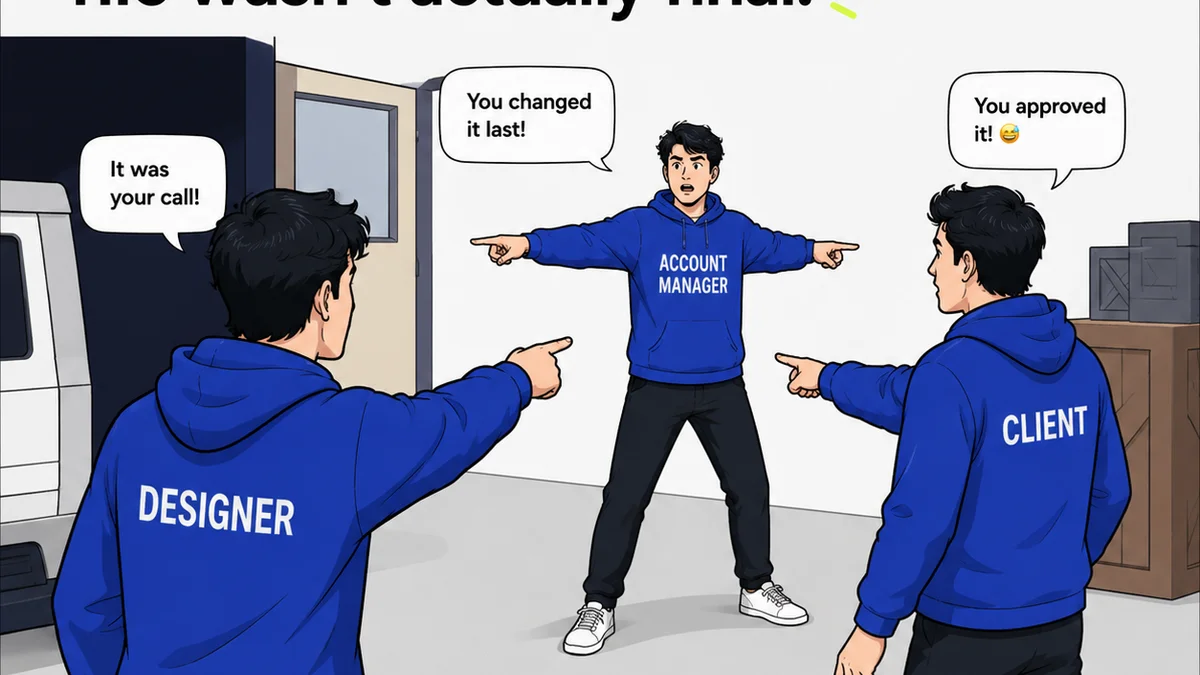
Everyone knows content review is important. It’s a standard part of the creative process. Stakeholders need to see the work. They need to sign off.
None of that is wrong. But it’s incomplete.
The real reason content review matters isn’t about ticking boxes. It’s about de-risking the entire project. It’s about preventing costly rework. It’s about ensuring the final output actually hits the mark.
1. The Illusion of 'Minor Tweaks'
Clients often say, “Just a few small changes.” This is rarely the case. What seems minor to them can cascade into significant effort for your team.
A single “small” copy edit can break a carefully crafted layout. A requested color change might clash with brand guidelines. A suggested image swap could require a whole new illustration or photoshoot.
This perception gap is a major source of friction and wasted hours.
The Operational Truth: Scope Creep Hides in Feedback
Every piece of feedback, no matter how small it seems, carries a potential scope implication. Unmanaged feedback is the fastest route to project scope creep.
It’s not about being difficult. It’s about understanding the interconnectedness of creative elements.
- A change in headline hierarchy affects supporting text.
- A new call-to-action button requires design and copy adjustments.
- A requested font change might not be licensed for commercial use.
Effective content review processes anticipate these ripple effects. They provide clarity on what’s feasible and what constitutes a change request.
2. Quality Control: The Unseen Cost of Rushed Reviews
Think about the last time a project went sideways. Was it a technical issue? A miscommunication? Or was it a missed detail that only became apparent post-launch?
Often, it’s the latter. Rushed reviews lead to overlooked errors.
These aren't just typos. They can be:
- Broken links.
- Incorrect pricing or product details.
- Accessibility violations.
- Inconsistent branding.
- Off-brand messaging.
The cost of fixing these errors after launch is exponentially higher than catching them during a structured review.
The Operational Truth: Review is Risk Mitigation
A robust review process acts as your project's quality control gate. It’s not just about client satisfaction; it’s about protecting your agency’s reputation and profitability.
When reviews are haphazard, details slip through the cracks. This leads to:
- Client frustration over easily avoidable mistakes.
- Internal team burnout from fixing preventable errors.
- Damage to your agency's credibility.
Structured review cycles, with clear guidelines and designated reviewers, minimize these risks.
3. Strategic Alignment: Is the Content Actually Working?
Most review processes focus on aesthetics and surface-level accuracy. Does it look good? Is the spelling correct?
But this misses a crucial element: Is the content achieving its intended goal?
A campaign landing page needs to convert. A blog post needs to engage and inform. An app interface needs to be intuitive.
Are the review comments pushing the content closer to these strategic objectives, or are they pulling it further away?
The Operational Truth: Feedback Must Serve Strategy
Feedback detached from strategic goals can derail a project. A client might love a particular phrase, but if it doesn’t serve the conversion goal, it’s counterproductive.
Effective content review requires reviewers to understand:
- The project's objectives.
- The target audience.
- The key performance indicators (KPIs).
When reviewers are aligned with these strategic pillars, their feedback becomes constructive. It helps refine the message, not just alter the appearance.
4. Collaboration vs. Chaos: The Reviewer Experience
How do your clients or internal stakeholders typically review content? Is it a chaotic thread of emails? A confusing series of Zoom calls? A shared document with conflicting annotations?
This is not collaboration. It's a recipe for confusion and missed instructions.
When the review process is painful, people rush through it. They provide vague comments. They miss crucial details. They get frustrated.
The Operational Truth: A Bad Review Experience Leads to Bad Reviews
The easier you make it for people to provide clear, actionable feedback, the better the feedback will be.
Think about the tools and methods you use:
- Are they intuitive?
- Do they allow for precise annotation?
- Do they consolidate feedback in one place?
- Do they provide version control?
A streamlined, user-friendly review process encourages thoughtful input. It reduces the likelihood of errors and misunderstandings.
Where Revue Fits In
Managing the content review process effectively is critical for creative agencies and in-house teams. It’s the difference between smooth project delivery and endless revision cycles.
Revue is built to bring order to this chaos.
We centralize client feedback, eliminating scattered email threads and confusing annotation layers. Every comment, every revision, every approval is tracked in one place. This provides clear visibility for everyone involved.
Our platform is designed to facilitate precise, actionable feedback. Reviewers can annotate directly on the creative asset, ensuring clarity and reducing ambiguity. This helps mitigate the risk of scope creep and ensures that feedback is always tied back to project goals.
With Revue, you gain an audit trail of all feedback and approvals. This not only streamlines revisions but also protects your team by documenting the entire process. It transforms content review from a potential bottleneck into a strategic advantage, ensuring quality and alignment every step of the way.
Final Thought
Is your current content review process a source of project delays and client friction, or is it a well-oiled machine that ensures quality and strategic alignment?
The answer lies not in the feedback itself, but in how you manage it.
Frequently asked questions
What is the biggest misconception about content review?
The biggest misconception is that content review is just about catching typos or making aesthetic changes. In reality, its core value lies in strategic alignment, risk mitigation, and preventing scope creep by ensuring all feedback serves the project's original goals.
How does content review prevent scope creep?
Effective content review processes establish clear guidelines and track all feedback. This makes it easier to identify when a request goes beyond the original scope, allowing teams to address it as a change order rather than absorbing it as standard work.
What are the risks of a poor content review process?
A poor review process can lead to missed errors, inconsistent branding, client frustration, internal team burnout, costly rework after launch, and damage to your agency's reputation. It transforms a necessary step into a significant project liability.
How can I make the content review process more efficient for clients?
Use intuitive tools that centralize feedback and allow for precise annotation. Provide clear instructions on what kind of feedback is expected and ensure reviewers understand the project's strategic objectives. A streamlined process leads to better, faster feedback.