Everyone talks about creative analytics. They point to engagement rates, click-throughs, and conversion numbers. They tell you what’s working and what isn’t.
None of that is wrong. But it’s incomplete.
The real truth? Most teams are drowning in data but starving for insight. They track surface-level metrics that look good on a dashboard but don't actually improve creative output or client relationships.
1. The Hard Truth: Analytics Aren't Just About Performance, They're About Process
Creative analytics, at its core, should illuminate the entire lifecycle of a creative project. It's not just about whether the final ad performed well. It’s about understanding why it performed well, or didn't.
This means looking at:
- The clarity of initial briefs.
- The efficiency of feedback rounds.
- The impact of revisions on the original concept.
- The speed of approvals.
- The team's capacity and bottlenecks.
These are the operational levers that drive creative success. Without understanding them, you're just guessing.
2. Tools for Understanding Client Feedback
Client feedback is the lifeblood of agency work. But it's often chaotic, contradictory, and buried in email chains.
The Problem: Scattered Feedback
Imagine this: A client provides feedback on a campaign. It comes via email, a Slack message, a quick call, and a scribbled note on a PDF. How do you consolidate that into actionable tasks?
The Solution: Centralized Feedback Platforms
This is where tools designed for direct annotation and centralized communication shine. They allow clients to comment directly on specific elements of a creative asset (images, videos, web pages).
Key Features to Look For:
- Direct annotation on visual assets.
- Version control for feedback.
- Centralized dashboard for all comments.
- Clear task assignment from feedback.
- Client-side ease of use.
These tools transform vague comments like “I don’t like it” into specific, actionable feedback like “Change the font in the headline to Arial Bold.”
3. Tools for Tracking Revisions and Approvals
The revision and approval process is where projects often get bogged down. It’s a constant cycle of sending, waiting, receiving feedback, revising, and resending.
The Problem: Lack of Visibility
When did the client receive the latest version? When is it due back? Who is holding up the process? Without clear tracking, these questions lead to constant follow-ups and delays.
The Solution: Workflow Management & Version Control
Tools that offer clear version control and status tracking are non-negotiable. They create a single source of truth for where a project stands.
What Matters Most:
- Automatic version numbering.
- Clear status indicators (e.g., ‘Pending Review,’ ‘Approved,’ ‘Revision Needed’).
- Automated notifications for deadlines and status changes.
- Audit trails of all changes and approvals.
This visibility reduces ambiguity and friction, allowing teams to move faster.
4. Tools for Measuring Creative Output Quality
This is the hardest part to quantify, but arguably the most important. How do you measure if the *quality* of the creative work is improving, not just the *quantity* of deliverables?
The Problem: Subjective Assessment
Often, quality is assessed subjectively during internal reviews or client meetings. This can lead to inconsistent standards and missed opportunities for improvement.
Data-Driven Quality Indicators:
- Client Satisfaction Scores (Post-Project): While lagging, these can indicate overall quality trends.
- Revision Turnaround Time: Consistently high revision requests on certain types of assets might signal a need for better upfront creative direction or execution.
- Internal Review Feedback Patterns: Are there recurring comments from your own creative directors or QA team?
- Asset Performance Metrics: For digital assets, track conversion rates, engagement, time on page, etc., and correlate them with the creative elements.
While direct quality metrics are elusive, tracking related operational and performance data can reveal patterns that impact quality.
5. Tools for Team Efficiency and Bottleneck Identification
Your team's capacity is finite. Understanding where time is spent and where work gets stuck is crucial for sustainable growth and profitability.
The Problem: Burnout and Missed Deadlines
When teams are overworked, quality suffers, deadlines slip, and morale plummets. This often stems from inefficient workflows and an inability to see where the bottlenecks are.
Efficiency Metrics to Monitor:
- Task Completion Time: How long does a typical revision take? How long does a design sprint?
- Resource Allocation: Who is overloaded? Who has capacity?
- Project Cycle Time: From brief to final delivery, how long does an average project take?
- Rework Percentage: What percentage of time is spent on redoing work versus creating new work?
Tools that integrate project management with time tracking and asset management can provide this level of operational insight.
Where Revue Fits In
The tools mentioned above serve distinct purposes, but they often operate in silos. Email for feedback, PM software for tasks, file-sharing for assets. This fragmentation is precisely the problem Revue was built to solve.
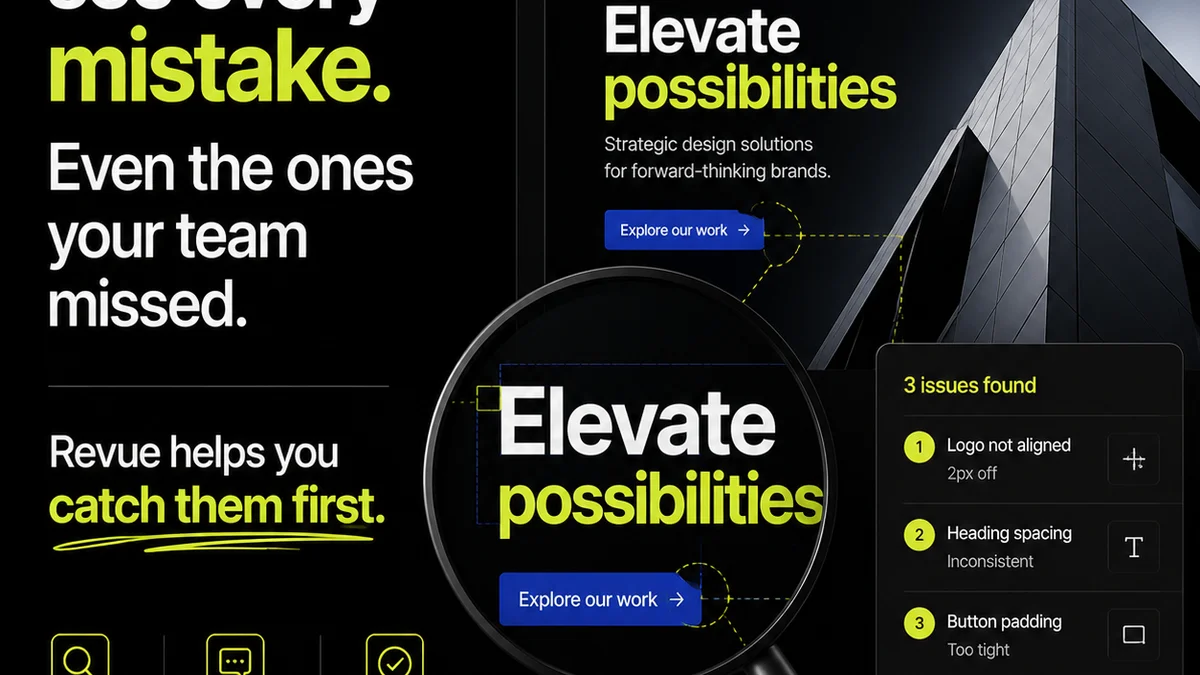
Revue acts as the central nervous system for creative feedback and approvals. It consolidates client comments directly onto creative assets, provides clear version control, and tracks the entire revision and approval workflow.
Instead of digging through emails or disparate platforms, your team gets a single source of truth. This means:
- Faster Feedback Loops: Clients comment directly, reducing misinterpretation.
- Clearer Revisions: Tasks are generated directly from feedback, ensuring nothing gets missed.
- Streamlined Approvals: Clients can approve versions with a click, moving projects forward.
- Reduced Rework: By clarifying feedback and tracking revisions accurately, you minimize costly, time-consuming rework.
Revue doesn't just collect data; it structures the process that generates the data, making your analytics far more meaningful.
Final Thought
Are you using analytics to understand the *health* of your creative process, or just the *performance* of your final output? The tools you choose should empower you to do both.
Frequently asked questions
What are the most important metrics for creative analytics?
Beyond vanity metrics like likes and shares, focus on process-oriented metrics such as feedback turnaround time, revision cycles, approval speed, and project completion time. These reveal operational efficiency.
How can tools improve client feedback quality?
Tools that allow direct annotation on visual assets and centralize all communication prevent scattered, vague feedback. This specificity leads to clearer revisions and better final outputs.
What is the biggest bottleneck in creative workflows?
Often, it's the revision and approval process due to lack of visibility, unclear feedback, and slow communication. Tools with clear version control and status tracking are essential.
Can analytics truly measure creative quality?
Directly measuring creative quality is challenging. However, by tracking related metrics like client satisfaction, revision patterns, and asset performance, you can infer trends and identify areas for improvement.