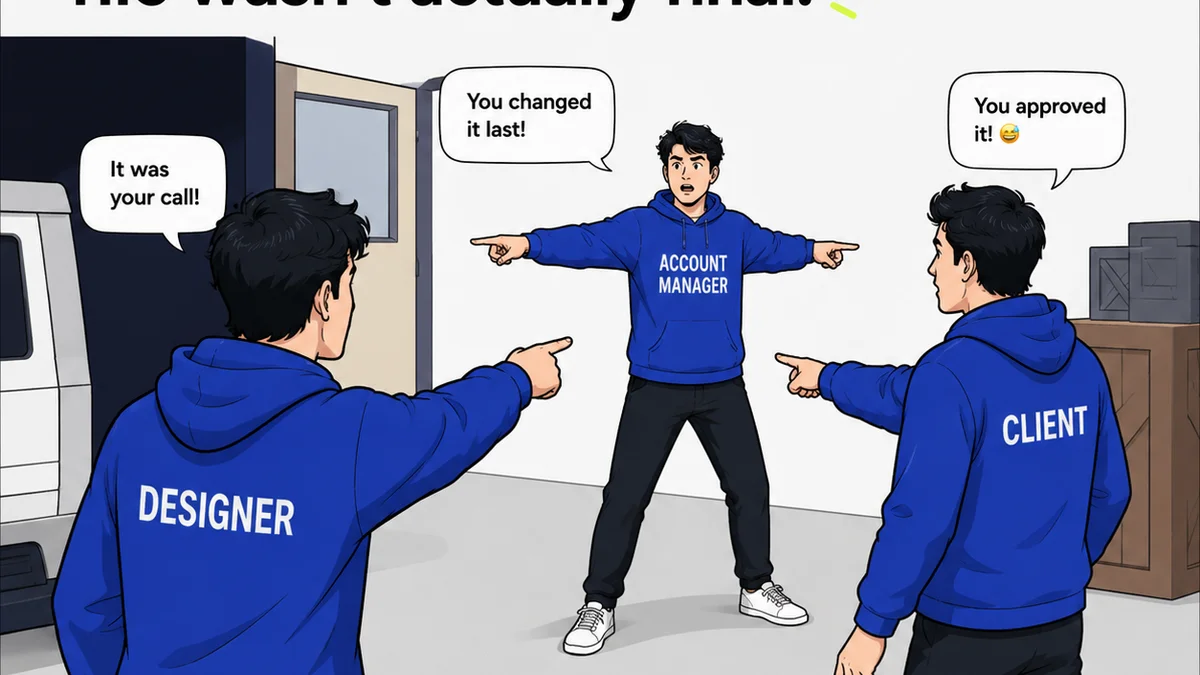
Everyone talks about streamlining creative approvals. They say it’s about clear briefs, good communication, and maybe a project management tool. None of that is wrong. But it’s incomplete.
The hard truth? Most agencies and in-house teams have a *process*, but not a *workflow*. A process is a series of steps. A workflow is a system designed for efficiency, predictability, and control. Without a true workflow, approvals become a bottleneck, a source of friction, and a drain on profitability.
Let's break down what a real creative approval workflow looks like, why yours might be broken, and how to fix it.
1. The Myth of 'Fast' Approvals
The assumption: Clients are just slow. They don’t understand deadlines. They’ll get back to you when they get back to you.
The reality: Often, the bottleneck isn’t the client. It’s your internal process (or lack thereof). Unclear feedback, scattered communication, and endless revision rounds kill momentum. Clients *can* be fast, but only when the path is clear and easy for them.
Feedback Chaos
Think about how feedback typically arrives:
- Emails from multiple stakeholders.
- Slack messages from the account manager.
- Verbal notes from a phone call.
- Comments directly in the design file (if you’re lucky).
This fragmentation makes consolidating notes a nightmare. It’s easy to miss a crucial piece of feedback or misinterpret instructions.
The Revision Treadmill
Without a structured approval workflow, you end up on the revision treadmill. One round bleeds into another, each adding minor tweaks that dilute the original concept and inflate the billable hours.
This isn’t just frustrating; it’s expensive. Every hour spent on unnecessary revisions is an hour not spent on new business, strategic planning, or improving your core services.
2. Building Blocks of a Robust Approval Workflow
A true creative approval workflow is built on a few core principles:
Centralized Feedback Hub
All feedback, comments, and approvals must live in one place. This isn’t just about convenience; it’s about creating a single source of truth. When feedback is scattered, disputes arise about what was said, who said it, and when.
Defined Roles and Responsibilities
Who is the ultimate decision-maker? Who can provide feedback? Who needs to be informed? Clearly defining these roles upfront prevents confusion and ensures that feedback comes from the right people at the right time.
Clear Revision Limits
Agencies often get this wrong by not setting expectations early. Agree on the number of revision rounds included in the project scope. Anything beyond that should trigger a change order.
This isn’t about being difficult; it’s about protecting your time and profitability. It also encourages clients to consolidate their feedback for each round.
Structured Hand-offs
How does a project move from design to development? From copy to legal? Each hand-off needs clear criteria for completion and acceptance. This prevents work from being passed on prematurely or being held up indefinitely.
Automated Notifications and Reminders
The best workflows nudge people. Automated reminders for pending feedback or upcoming deadlines keep the project moving without manual chasing.
3. The Stages of a Creative Approval Workflow
A typical creative workflow involves several key stages:
Stage 1: Creative Development
This is where the magic happens – concepting, designing, writing. The key here is internal quality control before anything goes to the client.
Stage 2: Internal Review
Before client eyes are on it, the work should pass a rigorous internal review. This might involve:
- Creative Director review
- Technical feasibility check (e.g., for web or app design)
- Copyediting and proofreading
- Brand guideline compliance check
Catching issues internally saves time and embarrassment later.
Stage 3: Client Presentation & Feedback
Present the work clearly. Then, guide the client on *how* to provide feedback. Use a tool that allows for contextual comments directly on the creative assets.
Example: Instead of
Frequently asked questions
What is a creative approval workflow?
A creative approval workflow is a systematic process for gathering feedback, managing revisions, and obtaining final sign-off on creative work. It aims to streamline communication, ensure clarity, and expedite the approval process, moving beyond a simple series of steps to an efficient operational system.
Why are creative approvals often delayed?
Delays often stem from fragmented feedback channels (email, Slack, calls), unclear roles and responsibilities, lack of defined revision limits, and insufficient internal review before client presentation. A poorly defined workflow creates bottlenecks.
How can I get faster client feedback?
Establish clear expectations for feedback turnaround times in your contracts. Centralize all feedback in one platform, use contextual commenting tools, and clearly define who the final approver is. Automated reminders can also help prompt timely responses.
What are revision limits and why are they important?
Revision limits define the number of rounds of changes included in the project scope. They are crucial for protecting agency profitability and time, encouraging clients to consolidate feedback, and preventing endless, scope-creeping revisions.
How does a tool like Revue help with approvals?
Revue centralizes client feedback, provides a clear audit trail of all comments and decisions, simplifies revision management, and offers visibility into the status of approvals. This reduces miscommunication and speeds up the sign-off process.