Enterprise creative approval workflows are often painted as a simple linear process: creative is produced, reviewed, approved, and launched. It sounds straightforward enough.
None of that is wrong. But it’s incomplete.
The hard truth is that enterprise creative approval workflows are rarely linear. They’re complex, multi-layered ecosystems rife with potential for miscommunication, delays, and ultimately, diluted creative quality. For enterprise teams, where stakes are higher and stakeholders are more numerous, mastering this workflow isn’t just about efficiency; it’s about protecting the integrity of the creative itself.
1. The Assumption: More Stakeholders Mean Slower Approvals
It’s a given: more cooks in the kitchen means a longer wait for the soup. In the context of creative approvals, this often translates to a fear of involving too many people, leading to truncated feedback cycles or decisions made by too few.
This assumption is only partially true. The real problem isn't the *number* of stakeholders, but the *lack of clarity* around their roles and the *absence of a structured process* to manage their input.
A large enterprise might have legal, compliance, brand, regional marketing, product marketing, and senior leadership all needing a say. If each of these groups operates in a vacuum, or if their feedback is collected haphazardly, chaos ensues. This isn’t a problem of too many voices, but of poorly managed ones.
The Hidden Bottleneck: Unclear Roles and Responsibilities
Who has the final say? Who provides tactical feedback? Who is merely a stakeholder to be informed?
Without defined roles (e.g., using a RACI matrix – Responsible, Accountable, Consulted, Informed), feedback becomes a free-for-all. Everyone feels empowered to opine on everything, leading to conflicting suggestions and decision paralysis.
The Real Enemy: Disconnected Feedback Loops
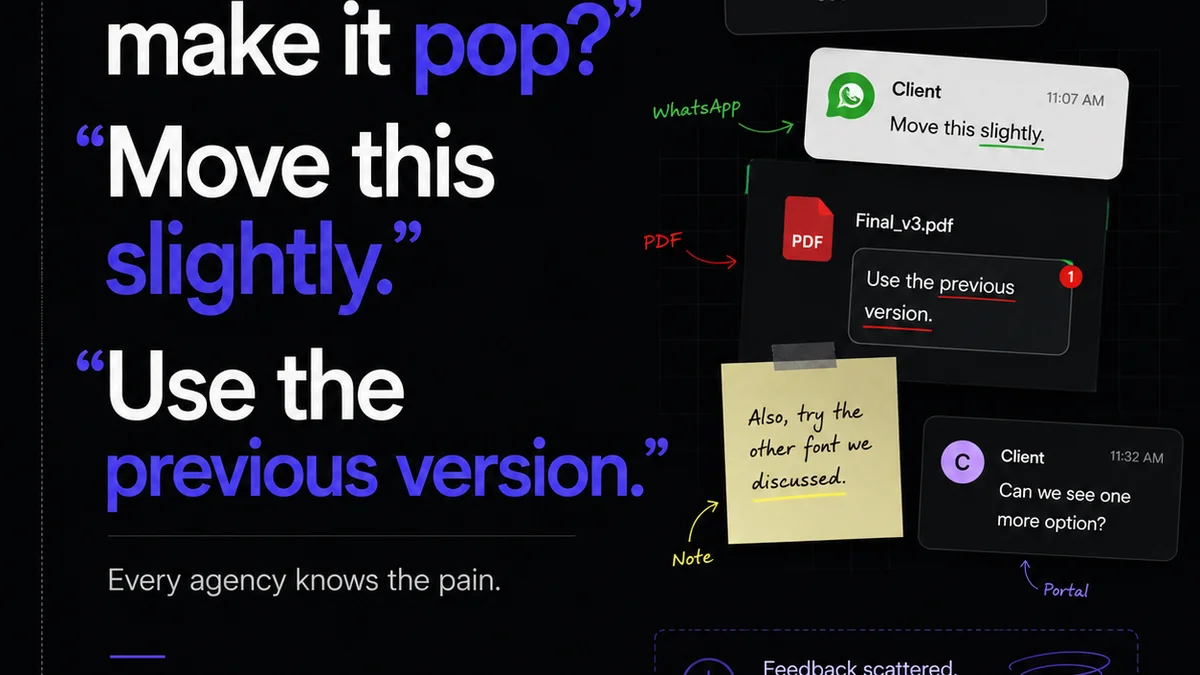
When feedback is siloed – emails here, Slack messages there, annotated PDFs in yet another channel – it’s impossible to see the full picture. This fragmentation:
- Creates version control nightmares.
- Leads to missed feedback.
- Requires significant manual effort to consolidate.
- Opens the door for subjective, gut-feel edits that undermine strategic creative direction.
2. The Assumption: Digital Tools Automate Everything
Many enterprise teams assume that investing in project management software, DAMs, or even specialized creative review tools will magically fix their approval bottlenecks. They deploy technology and expect the workflow to self-optimize.
Technology is a powerful enabler, but it’s not a silver bullet. The most sophisticated tool is useless if the underlying process is broken.
A tool can centralize feedback, but it can’t tell you *who* should be giving feedback, *what kind* of feedback is valuable, or *when* that feedback is most impactful.
The Illusion of Control: Tool Deployment vs. Process Adoption
The act of purchasing and implementing a tool is often mistaken for solving the problem. The real work is in getting teams to *adopt* the tool and adhere to the *processes* it’s designed to support.
This requires training, buy-in, and leadership reinforcement. Without it, teams will revert to their old, inefficient habits, even with a new platform at their fingertips.
The Danger of 'Set It and Forget It'
Enterprise workflows evolve. Marketing campaigns shift, brand guidelines are updated, and regulatory requirements change. A static approval process, even one managed by technology, will quickly become obsolete.
Continuous improvement is key. Regularly auditing the workflow, gathering feedback from users, and making adjustments based on real-world performance is critical.
3. The Assumption: Speed Trumps Quality in Approvals
Under pressure to launch, there’s a temptation to fast-track approvals, cutting corners and accepting work that isn’t truly ready. The thinking is,
Frequently asked questions
What is an enterprise creative approval workflow?
An enterprise creative approval workflow is a structured process for reviewing and approving creative assets (like ads, websites, or videos) within a large organization. It involves multiple stakeholders from different departments (marketing, legal, brand, etc.) and aims to ensure creative aligns with brand guidelines, legal requirements, and strategic objectives before launch.
Why are enterprise creative approval workflows so complex?
They are complex due to the large number of stakeholders involved, each with potentially different priorities and perspectives. Cross-departmental dependencies, regulatory compliance, brand consistency requirements, and the sheer volume of creative assets contribute to this complexity.
How can I streamline my enterprise creative approval process?
Streamlining involves clearly defining roles and responsibilities, centralizing feedback, using dedicated review and approval tools, establishing clear deadlines, and focusing on constructive, actionable feedback. Regular process audits and team training are also crucial.
What are the key roles in a creative approval workflow?
Key roles often include the creator (designer/copywriter), project manager, feedback providers (subject matter experts, regional leads), approvers (decision-makers), and stakeholders (those who need to be informed). Using a RACI matrix helps clarify these roles.