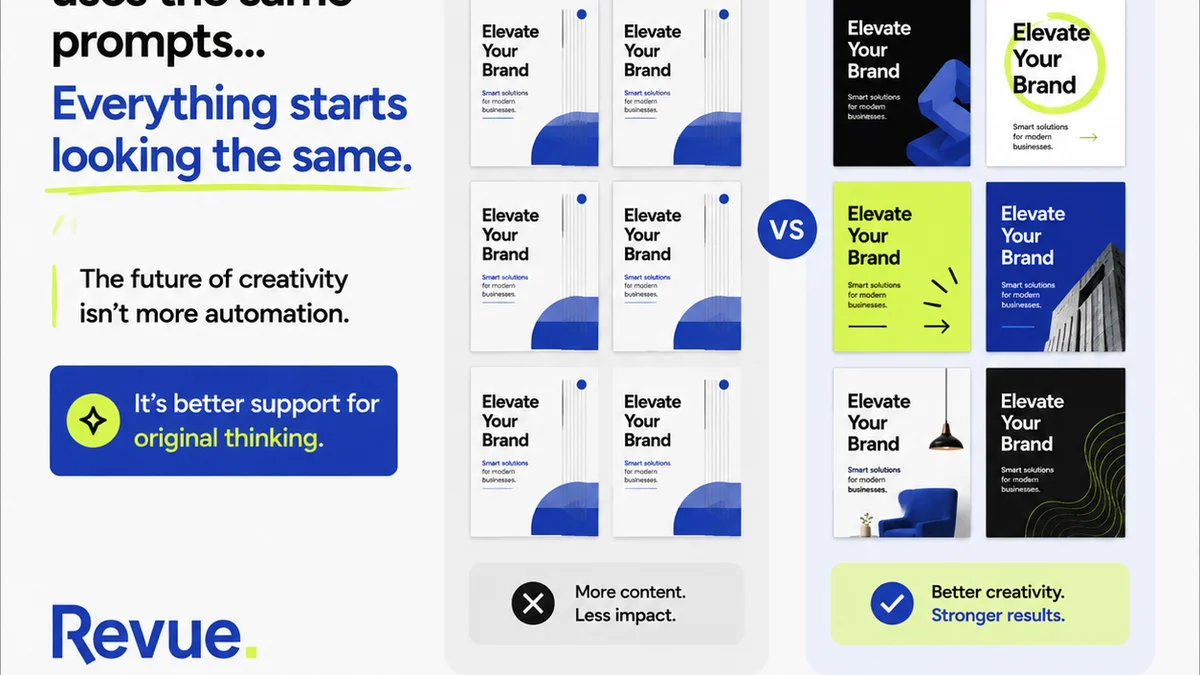
Everyone’s talking about creative automation. The general consensus? It’s all about AI, generating endless images, and automating repetitive tasks. That's not wrong. But it’s far from the whole story, especially for agencies serving the hospitality sector.
The hard truth is that true creative automation for hospitality isn't just about *making* more content. It's about making *better* content, faster, with fewer errors, and with clients who are actually happy with the process. It’s about operational efficiency meeting creative excellence.
1. The Hospitality Client’s Unique Creative Demands
Hospitality clients aren't like other clients. Their needs are often immediate, seasonal, and hyper-local. Think last-minute promotions for a new hotel opening, seasonal menu changes for a restaurant chain, or event collateral for a convention center.
Their creative output needs to be:
- Visually stunning and on-brand.
- Turned around rapidly to capture market opportunities.
- Consistent across multiple touchpoints (websites, social media, print, in-room materials).
- Adaptable to specific locations or events.
- Compliant with brand standards and local regulations.
This complexity often leads to rushed briefs, shifting priorities, and a constant battle against the clock. Standard creative workflows buckle under this pressure.
2. Why Traditional Workflows Fail Hospitality Creatives
The typical agency process for hospitality projects can become a bottleneck. It often involves:
- Manual asset creation and modification for each platform.
- Lengthy email chains for feedback, leading to lost context.
- Version control nightmares.
- Time-consuming internal reviews and approvals.
- Difficulty in scaling production for large, multi-property clients.
This isn't just inefficient; it breeds errors. A typo in a menu, a misaligned logo, or an outdated offer can have immediate negative impacts on a hospitality business’s reputation and revenue.
3. The Real Power: Streamlining the Entire Creative Lifecycle
Creative automation, when applied strategically, tackles these pain points head-on. It’s not just about the design tool; it’s about the entire workflow.
3.1. Templatized Content Creation
For hospitality, consistency is king. Automation allows for the creation of robust templates for common assets like social media posts, digital ads, or print flyers. These templates lock down core branding elements while allowing for dynamic content insertion.
Imagine a hotel group needing to promote a weekend package. Instead of recreating the entire asset for each property, a central template can pull in property-specific details—name, address, special offers, local imagery—automatically.
3.2. Smart Asset Management and Versioning
Hospitality brands have vast libraries of logos, imagery, and brand guidelines. Keeping these organized and accessible is crucial. Automation tools can help tag, categorize, and version assets, making it easy for creatives and even marketing teams to find the right file.
This eliminates the dreaded “Which version of the logo is the latest?” question.
3.3. Streamlined Feedback and Approvals
This is where many creative agencies falter. Manual feedback collection via email or disparate documents is chaotic. Automation platforms provide a centralized space for all stakeholders to review creative, leave specific comments directly on the asset, and track revision history.
For a restaurant group rolling out a new campaign, this means the marketing director, the regional manager, and the legal team can all see the same version, comment in one place, and approve without endless back-and-forth.
3.4. Automated Quality Control
Before anything goes out the door, it needs a final check. Automation can flag common errors:
- Incorrect dimensions for specific platforms.
- Missing required legal disclaimers.
- Brand guideline violations (e.g., incorrect logo usage, color palette issues).
- Typos in critical text fields.
This isn't about replacing human judgment, but about catching the obvious mistakes that can slip through when teams are under pressure.
3.5. Scalable Production
When a hotel chain needs to update its in-room collateral across 50 properties, or a restaurant group launches a new menu nationwide, the demand for creative output spikes. Automation allows agencies to scale production without proportionally increasing headcount.
This means taking on larger clients or more ambitious campaigns without the usual strain on resources.
4. Where Revue Fits In
The operational reality for agencies is that managing feedback, revisions, and approvals for multiple hospitality clients, each with their own teams and processes, can be incredibly complex. This is where a tool like Revue becomes essential.
Revue provides a centralized hub for the entire creative review and approval process. For your hospitality clients:
- Centralized Feedback: All comments, annotations, and discussions happen in one place, directly on the creative asset. No more hunting through email threads or scattered documents.
- Revision Management: Easily track all versions of a creative piece. Stakeholders always see the latest iteration, and you have a clear audit trail of changes.
- Streamlined Approvals: Define clear approval workflows. Get sign-offs faster and reduce the time spent chasing clients for that final click.
- Quality Assurance Visibility: While Revue focuses on the feedback and approval loop, its structure inherently supports a more organized QA process by ensuring all feedback is captured and addressed before final delivery.
By centralizing these critical steps, Revue frees up your team from administrative overhead, allowing them to focus on the creative strategy and execution that hospitality clients truly value.
5. The Future is Efficient Creativity
The perception of creative automation is often skewed towards futuristic, AI-driven tools that replace human designers. The reality, especially for agencies serving demanding sectors like hospitality, is more grounded.
It's about building smarter, more robust workflows that leverage technology to eliminate friction. It’s about ensuring that the creative output is not only beautiful but also strategically sound, consistently executed, and delivered efficiently.
For agencies, this means:
- Reduced errors and rework.
- Faster turnaround times.
- Happier, more confident clients.
- Increased profitability through operational efficiency.
The agencies that thrive will be those that embrace automation not as a replacement for creativity, but as an enabler of it.
Final Thought
Is your agency using creative automation to simply generate more assets, or are you using it to fundamentally improve the *process* of delivering exceptional creative for your hospitality clients?
Frequently asked questions
What is creative automation in the context of hospitality?
For hospitality, creative automation means using technology to streamline the creation, management, and delivery of marketing and creative assets. This includes templated content, smart asset management, automated feedback loops, and quality checks, all aimed at improving efficiency and output quality for businesses like hotels and restaurants.
How does creative automation help with client feedback in the hospitality sector?
Hospitality clients often have complex needs and multiple stakeholders. Creative automation platforms centralize feedback, allowing all parties to comment directly on creative assets in one place. This reduces confusion, speeds up revisions, and ensures everyone is working from the same version, leading to faster approvals and fewer misunderstandings.
Can creative automation really speed up asset production for hospitality campaigns?
Absolutely. By using templates for common assets (like social media ads or digital menus) and automating repetitive tasks, agencies can significantly reduce production time. This allows for quicker responses to market opportunities and more agile campaign execution, which is crucial in the fast-paced hospitality industry.
What are the key benefits of creative automation for a hospitality agency?
Key benefits include faster turnaround times, reduced errors and rework, improved consistency across brand touchpoints, enhanced client satisfaction through a more organized process, and increased agency profitability due to streamlined operations. It allows agencies to scale their services more effectively.