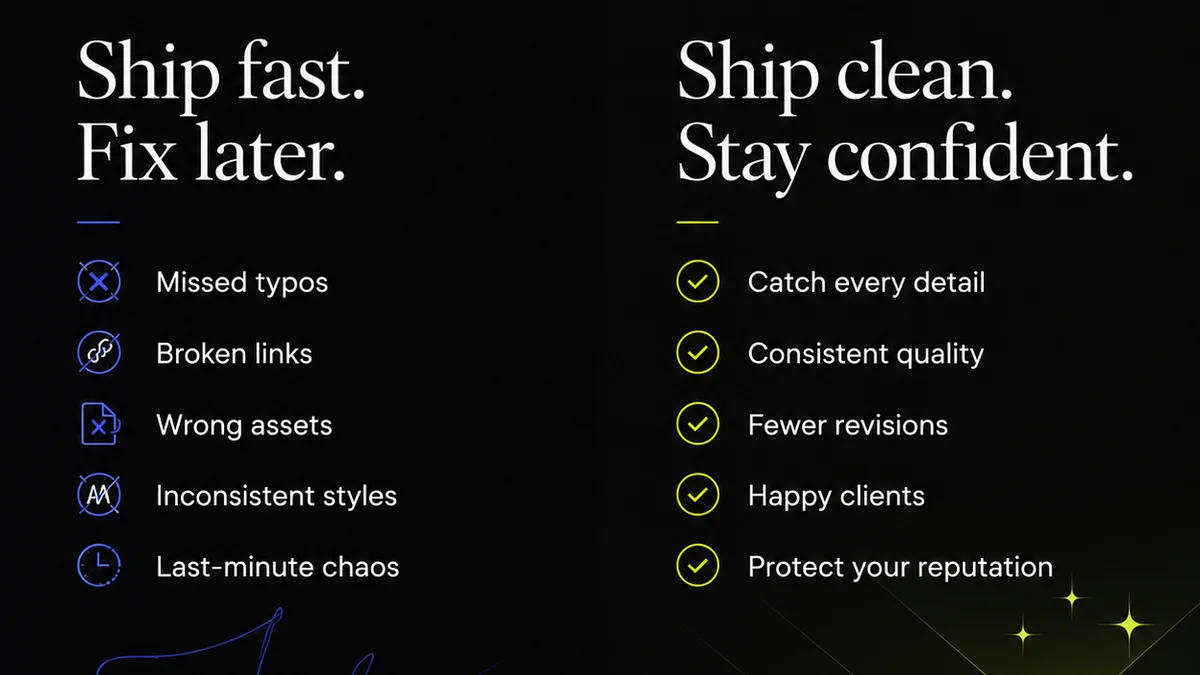
Everyone talks about creative automation. They say it’s about AI writing copy or generating images. That it’s about saving time on repetitive tasks.
None of that is wrong. But it’s incomplete.
The real value of creative automation isn't just about efficiency gains. It’s about reclaiming control over your creative workflow. It’s about moving from reactive chaos to proactive execution.
For agencies and in-house teams, this means less time wrestling with feedback loops and more time doing the actual creative work your clients pay for.
1. The Myth of the Creative Flow State
We like to think creativity happens in a vacuum. That inspiration strikes like lightning and the work just flows. The reality for most teams is far messier.
Your creative flow state is constantly interrupted. By emails. By Slack messages. By status meetings. By chasing down that one piece of feedback from a stakeholder who’s “too busy” to use a proper review tool.
This isn't just annoying. It’s costly.
Each interruption breaks concentration. It requires mental context-switching, which eats up valuable time and energy. A quick check-in can easily turn into a 30-minute detour.
The Hidden Costs of Interruption
- Lost focus and reduced productivity.
- Increased errors due to incomplete information.
- Delayed project timelines.
- Frustrated team members.
- Missed deadlines and unhappy clients.
Creative automation tackles these friction points head-on. It’s not about replacing creatives; it’s about removing the obstacles that prevent them from creating.
2. Beyond the Buzzwords: What is Creative Automation?
Forget the sci-fi scenarios for a moment. At its core, creative automation is about using technology to streamline and optimize the processes involved in producing and delivering creative work.
Think of it as a system that handles the predictable, the repetitive, and the administrative burdens, freeing up human talent for strategic thinking and high-level execution.
This includes:
- Automating feedback collection and consolidation.
- Streamlining revision and approval workflows.
- Managing asset versions and distribution.
- Automating quality assurance checks.
- Integrating with other project management tools.
The goal is to build a more robust, reliable, and predictable creative production pipeline. This is crucial for maintaining quality and meeting client expectations consistently.
The Operational Truth
The truth is, creative work is rarely *just* creative. It’s also project management, communication, administration, and quality control.
Creative automation tools are designed to handle the non-creative parts of the creative process. They build structure around the inherent messiness.
3. The Bottlenecks Killing Your Creative Output
Every agency and in-house team faces bottlenecks. These are the points in the workflow where progress slows to a crawl, often due to manual processes or lack of clarity.
The most common culprits:
- Endless Email Chains: Feedback buried in threads, missed comments, confusion over which version is final.
- Manual Approvals: Waiting for signatures, chasing down stakeholders, version control nightmares.
- Scattered Feedback: Comments from clients, internal teams, and stakeholders all in different places (email, Slack, Word docs, even sticky notes).
- Lack of Visibility: No clear status on approvals, revisions, or upcoming deadlines.
- Repetitive Revisions: Making the same small tweaks across multiple assets without a clear system.
These aren't just minor annoyances. They are significant drag on your team’s output and morale.
When a project stalls because someone forgot to forward an email, that’s not a creative problem. That’s an operational one.
The Impact on Your Bottom Line
Time spent chasing feedback is time not spent on billable work. Delays lead to scope creep and unhappy clients.
A disorganized workflow impacts profitability. It strains resources and can lead to burnout.
4. Where Revue Fits In
This is where a platform like Revue becomes essential. It’s designed to inject order into the creative chaos.
Revue isn’t about automating the creative act itself. It’s about automating the *management* of creative work.
Think of it as the central nervous system for your creative projects:
- Centralized Client Feedback: All stakeholder comments live in one place, directly on the asset. No more digging through emails or Slack.
- Clear Revision and Approval Visibility: Track every version, every comment, and every approval status in real-time. Everyone knows where things stand.
- Streamlined Quality Checks: Implement defined steps for review and approval, ensuring nothing slips through the cracks before final delivery.
- Single Source of Truth: All project communication and decisions related to creative assets are documented and accessible.
By automating these critical, often manual, processes, Revue frees your team to focus on what they do best: creating exceptional work.
5. The Strategic Advantage of Automation
Implementing creative automation isn’t just about fixing problems; it’s about gaining a strategic edge.
Teams that embrace automation report:
- Faster project turnaround times.
- Improved client satisfaction due to clear communication and fewer errors.
- Increased team capacity without hiring more staff.
- Higher quality output through consistent review processes.
- Better data for process improvement.
This isn't about replacing the human element. It's about augmenting it.
It’s about creating an environment where your talented creatives can thrive, unburdened by administrative overhead.
Empowering Your Team
When your team spends less time on coordination and more time on creation, they are happier and more engaged.
Automation empowers them by:
- Reducing tedious administrative tasks.
- Providing clear direction and reducing ambiguity.
- Allowing more time for creative exploration and refinement.
- Ensuring their work is seen, reviewed, and approved efficiently.
This shift is fundamental to building a sustainable, high-performing creative operation.
6. Getting Started with Creative Automation
The thought of implementing new systems can be daunting. But creative automation doesn't require a complete overhaul overnight.
Start small. Identify your biggest workflow bottleneck.
Is it feedback management? Try a tool that centralizes comments directly on proofs. Is it approvals? Look for a system that automates notifications and tracks status.
Focus on tools that integrate with your existing stack where possible.
The key is to choose solutions that solve specific pain points and demonstrably improve your team's ability to deliver quality creative work on time.
The Right Tools for the Job
The landscape of creative tools is vast. But for operational efficiency, look for platforms that excel in:
- Usability: Easy for both your team and clients to adopt.
- Integration: Plays well with your existing project management and creative software.
- Scalability: Can grow with your team's needs.
- Support: Offers reliable help when you need it.
Don't get caught up in every new AI trend. Focus on the practical application of technology to solve real workflow problems.
Final Thought
Is creative automation a luxury or a necessity for modern creative teams?
The answer depends on whether you want to simply survive the complexities of creative production, or truly thrive.
Are you ready to move beyond the assumption that creative work must be inherently chaotic, and embrace the operational discipline that unlocks your team's full potential?
Frequently asked questions
What is creative automation?
Creative automation refers to the use of technology to streamline and optimize the processes involved in producing and delivering creative work. This includes automating tasks like feedback collection, revision tracking, and approvals, rather than automating the creative act itself.
How does creative automation help agencies?
It helps agencies by reducing time spent on administrative tasks and manual coordination, minimizing project delays caused by scattered feedback or slow approvals, improving client communication, and freeing up creative talent to focus on high-value work, ultimately increasing productivity and profitability.
Does creative automation replace creative jobs?
No, the primary goal of creative automation is to augment human capabilities. It aims to remove operational bottlenecks and administrative burdens, allowing creatives to be more productive and focus on the strategic and innovative aspects of their work, rather than replacing them.
Where should an agency start with creative automation?
Begin by identifying the biggest workflow bottleneck in your team, such as feedback management or approval processes. Then, explore tools that specifically address that pain point and integrate with your existing systems. Start with a focused solution before attempting a full overhaul.