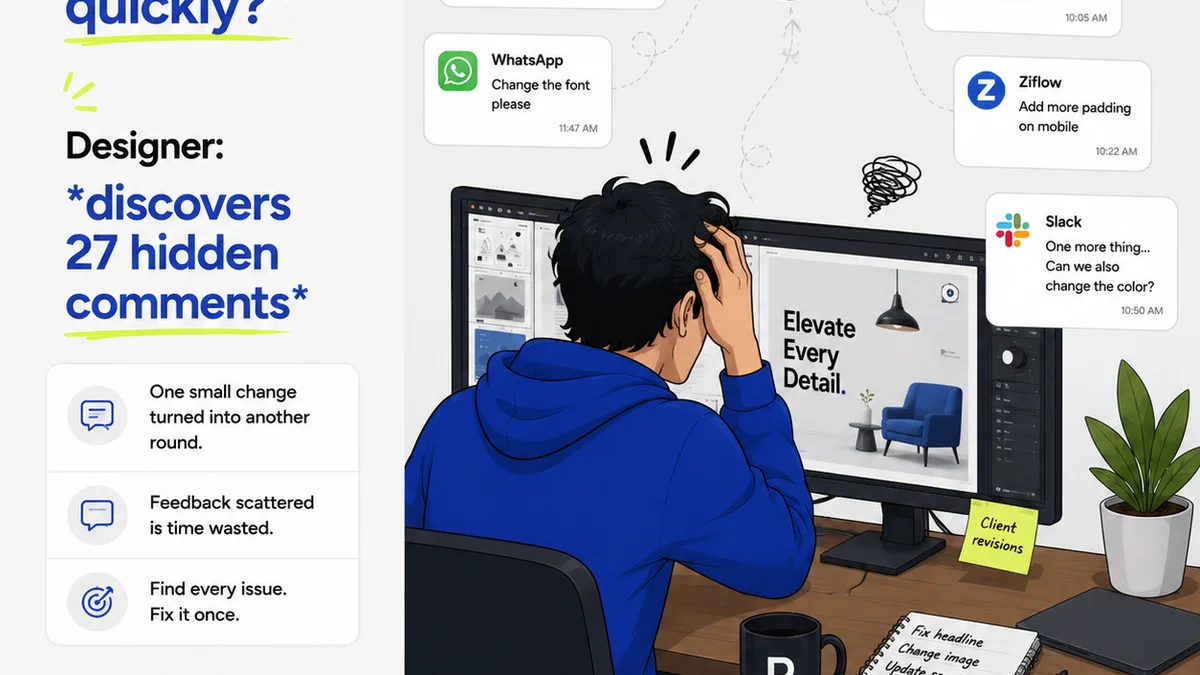
You think creative automation is about making things faster. That’s the headline everyone’s selling. Faster asset generation, faster approvals, faster delivery. And none of that is wrong. But it’s incomplete.
The real promise of automation in creative work isn’t speed. It’s clarity. It’s about removing the friction that slows down good ideas and inflames relationships. It’s about making the complex simple, not just faster.
Most teams chase speed because it’s easier to measure. They slap a new tool onto a broken process and expect magic. They get frustration instead.
1. The Assumption: Automation is About Tools
The common narrative is that you buy a piece of software, plug it in, and suddenly your team is a well-oiled machine. You’ll hear about AI generating images, or platforms that auto-resize banners. These are components, not solutions.
Tools are only as good as the process they’re applied to. A faster way to generate bad assets is still just a faster way to generate bad assets.
The real problem isn’t the speed of creation. It’s the chaos that surrounds it.
The Hard Truth: Automation is About Process
True automation in a creative context is about standardizing and streamlining the *entire* workflow, from brief to final delivery. It’s about eliminating the manual, repetitive, and often undocumented steps that cause delays and errors.
This includes:
- How feedback is gathered and consolidated.
- How revisions are tracked and communicated.
- How assets are named, organized, and stored.
- How approvals are managed and documented.
- How quality checks are performed consistently.
These aren't glamorous problems. They don't get flashy software demos. But they are the bottlenecks that kill creative momentum.
2. The Assumption: More Tools Equal More Efficiency
So, you’ve got a project management tool, a DAM, a proofing tool, a communication app. Maybe an AI image generator. You’re “automated,” right?
Wrong. You’re just fragmented.
Each tool adds another layer of complexity, another place to log in, another place for information to get lost. The data doesn’t talk to itself. You’re spending more time managing the tools than doing the creative work.
The Hard Truth: Integration is Non-Negotiable
Efficiency comes from a connected system, not a collection of isolated apps. Your automation strategy needs to ensure that information flows seamlessly between stages of the workflow.
Think about it:
- Can your client feedback tool directly update the project brief?
- Does your approval system link back to the specific asset version being reviewed?
- Is your DAM integrated with your project management so assets are correctly filed without manual intervention?
If the answer is “no,” you’re creating more work, not less.
3. The Assumption: Automation Eliminates Human Error
“Let the software handle it,” people say. “It’s more accurate.”
Sure, a script won’t forget to change a date. But automation doesn’t eliminate the *human* element of creative work. It changes it.
What happens when the brief is ambiguous? What if the client’s feedback is contradictory? What if the AI generates something wildly off-brand?
The Hard Truth: Automation Amplifies Human Decisions
Automation doesn’t remove the need for human judgment; it frees up humans to *apply* judgment where it matters most. It handles the tedious, repetitive tasks so your team can focus on:
- Strategic thinking and problem-solving.
- Creative concept development.
- Interpreting nuanced feedback.
- Ensuring brand consistency and quality.
- Client relationships and communication.
When your process is automated, the points where human intervention is critical become crystal clear. You’re not bogged down in administrative tasks; you’re actively guiding the creative output.
4. The Assumption:
Frequently asked questions
What's the biggest mistake teams make with creative automation?
The biggest mistake is focusing solely on tools and speed, rather than on standardizing and streamlining the entire creative workflow. Automation should address process friction, not just accelerate existing bottlenecks.
How does automation impact the role of creative professionals?
Automation shifts the focus from administrative and repetitive tasks to higher-level strategic thinking, creative concept development, and nuanced judgment. It frees up professionals to concentrate on the uniquely human aspects of creativity and client interaction.
Is AI the only form of creative automation?
No. While AI plays a role, creative automation encompasses any systematic process that reduces manual effort in the creative lifecycle. This includes workflow management, feedback consolidation, asset organization, and approval tracking, often through integrated software platforms.
How can I tell if my automation strategy is working?
If your team is spending less time on administrative tasks, experiencing fewer errors in asset delivery, and can clearly track feedback and revisions, your automation is likely effective. Look for improvements in clarity and reduced friction, not just perceived speed.