Everyone talks about the creative brief. It’s the foundation of any project, the North Star for the team. You’d think agencies would have perfected it by now. But most still treat it like a necessary evil: a quick document to get signed off before the real work begins.
That’s a mistake. A costly one.
The real truth? A brilliant creative brief isn't just a document; it's a strategic tool. It’s your agency’s first and best line of defense against scope creep, misinterpretation, and endless revision cycles. Get it right, and you create clarity. Get it wrong, and you invite chaos.
1. The Illusion of Clarity: Why Briefs Fail
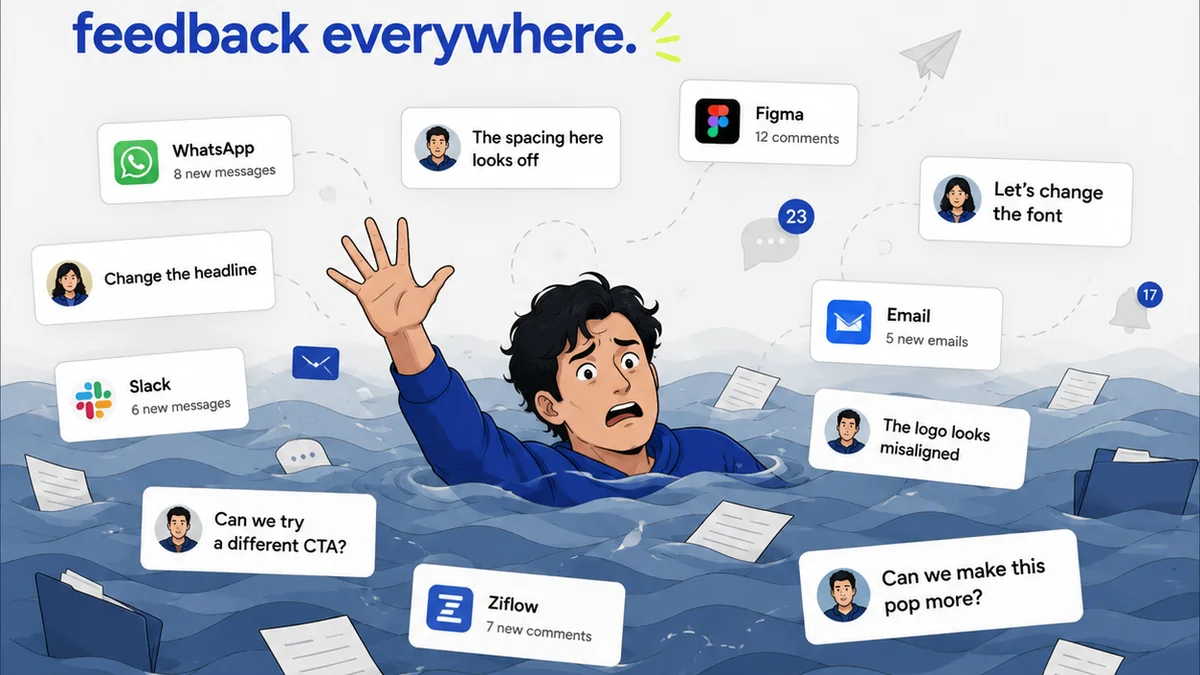
Clients often deliver vague requests. You’ve seen it: “Make it pop.” “We need something fresh.” “More engaging.”
It’s easy to point the finger. Blame the client for not knowing what they want. Blame their lack of marketing savvy. Blame the disconnect between their vision and your execution.
But that’s a cop-out. Your job isn't to interpret vague ideas. Your job is to translate business objectives into creative realities. A weak brief is a symptom of a deeper internal problem: a failure to ask the right questions, to challenge assumptions, and to define success before the pixels start flying.
The core problem is rarely the client’s inability to articulate their needs. It’s the agency’s inability to elicit them. This is where the creative brief process truly begins – not with a client’s email, but with your agency’s proactive inquiry.
The Symptoms of a Weak Brief
- Endless rounds of feedback that go in circles.
- A final deliverable that misses the mark entirely.
- Team frustration and burnout.
- Projects that bleed budget and timelines.
- Clients who are unhappy but can’t articulate why.
These aren't just project management headaches. They're indicators that the brief was flawed from the start. It failed to establish a shared understanding of the problem, the audience, the goals, and the definition of success.
2. Deconstructing the Brief: Beyond the Checklist
A great brief isn't just a form to fill out. It's a collaborative diagnostic tool. It forces both client and agency to get brutally honest about the project.
Think of it less as a set of instructions and more as a mutual agreement on the problem you’re solving.
Key Elements of a Robust Brief
Every brief needs these core components, but the depth and rigor with which you approach them make the difference.
- The Business Problem: What specific business challenge is this creative work intended to solve? (e.g., declining market share, low conversion rates, poor brand recall). This is not about
Frequently asked questions
What is the primary purpose of a creative brief?
The primary purpose of a creative brief is to establish a clear, shared understanding between the client and the agency regarding project goals, target audience, key messages, and success metrics. It serves as a roadmap to guide the creative process and ensure alignment, preventing misinterpretations and scope creep.
How can an agency handle vague client requests?
An agency can handle vague client requests by proactively using the creative brief process to ask clarifying questions. Instead of accepting ambiguous statements like 'make it pop,' delve deeper to understand the underlying business objective. Define what 'pop' means in measurable terms for the specific project and audience.
What are the consequences of a poorly written creative brief?
A poorly written creative brief can lead to significant problems, including endless revision cycles, misaligned deliverables, team frustration, budget overruns, timeline delays, and ultimately, client dissatisfaction. It fails to provide clear direction, increasing the risk of creative work missing the strategic objectives.
How does a strong creative brief benefit the agency team?
A strong creative brief empowers the agency team by providing clear objectives and constraints. It reduces ambiguity, allowing designers and copywriters to focus their efforts effectively. This clarity boosts morale, improves efficiency, and leads to higher quality creative output that directly addresses client needs.