Everyone’s looking for the best creative collaboration software. They scan feature lists, compare pricing tiers, and hunt for the magic bullet that will finally make their teams hum.
None of that is wrong. But it’s incomplete.
The hard truth? The best software isn't about having the most features; it's about how seamlessly it integrates into your actual creative process and eliminates friction. It’s about solving the right problems, not just adding more tools.
1. The Myth of the All-in-One Solution
The market is flooded with platforms promising to do it all: project management, asset storage, communication, proofing, time tracking. Agencies often fall into the trap of thinking a single, feature-rich tool will magically fix all their collaboration woes.
But a jack-of-all-trades is often a master of none. Trying to force every aspect of your creative workflow into one box can lead to:
- Overcomplicated interfaces that slow everyone down.
- Features you pay for but never use.
- Integration nightmares when core functionalities are weak.
- A steep learning curve that kills adoption.
- Frustration when the tool doesn't quite fit your unique agency process.
Your agency’s workflow is unique. The best software adapts to you, not the other way around.
2. Core Pillars of Effective Creative Collaboration
Instead of chasing features, focus on platforms that excel in these critical areas:
Centralized Feedback and Communication
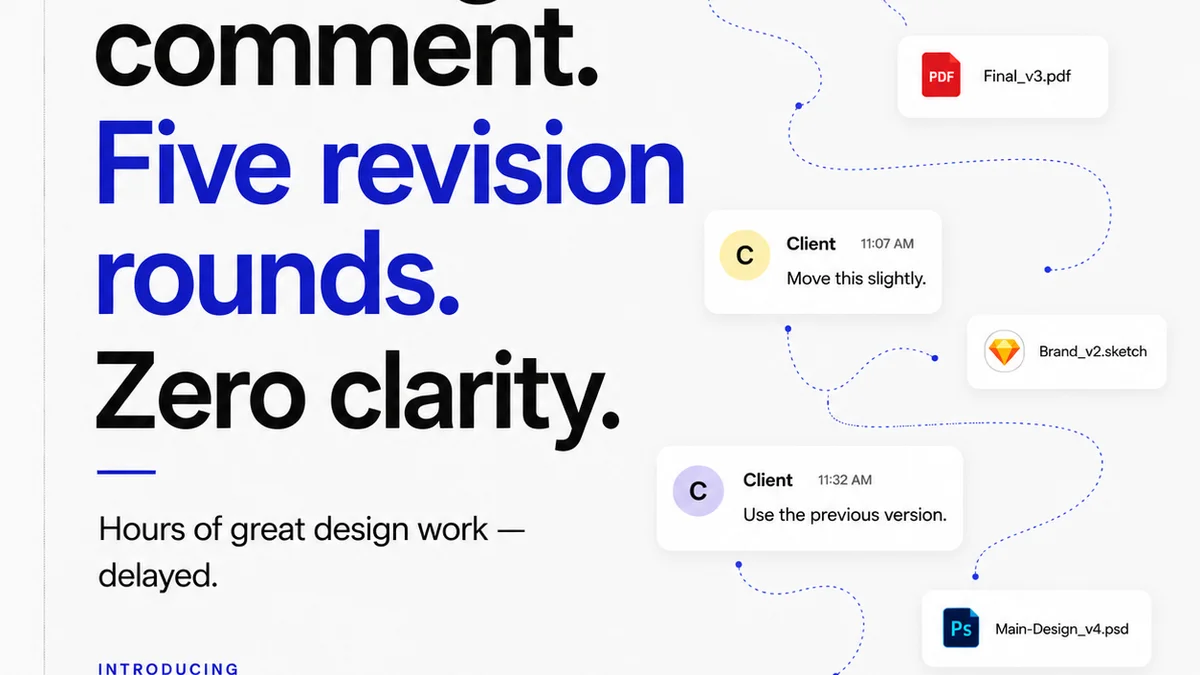
Scattered feedback across emails, Slack messages, and random documents is a recipe for disaster. Good software makes it easy to capture feedback directly on creative assets, keeping conversations contextual and actionable.
This means:
- Visual annotation tools on images, videos, and PDFs.
- Threaded comments tied to specific revisions.
- Clear assignment of feedback to team members.
- A single source of truth for all client input.
This isn't just about convenience; it's about reducing misinterpretations and ensuring everyone is working from the same, up-to-date information.
Streamlined Revision and Approval Workflows
Managing revisions and approvals is where many creative projects get bogged down. The best tools provide clear visibility into the status of each asset and make the approval process straightforward.
Look for:
- Version control that automatically tracks changes.
- Configurable approval stages (e.g., internal review, client approval).
- Automated notifications for pending actions.
- A clear audit trail of who approved what and when.
This clarity prevents bottlenecks and ensures projects move forward efficiently.
Efficient Asset Management and Version Control
Creative teams work with a lot of files. Losing track of the latest version or struggling to find specific assets wastes precious time and can lead to costly mistakes.
Effective software should offer:
- Robust search and filtering capabilities.
- Organized project folders and tagging systems.
- Automatic versioning so you can always revert to previous states.
- Secure cloud storage with appropriate access controls.
Think of it as your agency’s digital library, but one that’s always organized and up-to-date.
Seamless Integration Capabilities
Your agency likely uses other tools – design software, project management platforms, communication apps. The best collaboration software doesn’t operate in a silo. It integrates smoothly with your existing tech stack.
Consider integrations with:
- Adobe Creative Cloud
- Figma
- Google Workspace
- Slack
- Project management tools like Asana or Jira
Native integrations or robust APIs mean less manual data transfer and a more connected workflow.
3. Evaluating Creative Collaboration Software: Beyond the Demo
When you’re evaluating tools, go beyond the slick demo and the feature checklist. Dig into the operational realities:
User Adoption and Training
A powerful tool is useless if your team doesn’t use it, or uses it incorrectly. How intuitive is the interface? What’s the learning curve? What training resources are available?
Consider:
- Pilot testing with a small group.
- Reviewing user interface (UI) and user experience (UX) for clarity.
- Assessing the quality and accessibility of help documentation.
Low adoption rates are a silent killer of software investments.
Scalability and Performance
Can the software grow with your agency? Will it handle an increasing number of projects, users, and large files without slowing down?
Test for:
- Performance under load (uploading large files, multiple users accessing simultaneously).
- The ability to add users and projects easily.
- Reliable uptime and data security.
A tool that buckles under pressure creates more problems than it solves.
Cost-Effectiveness and ROI
Look beyond the sticker price. Calculate the total cost of ownership, including training, potential integration costs, and the productivity gains (or losses).
Ask yourself:
- What is the tangible impact on project timelines?
- How much time is saved by reducing miscommunication and rework?
- Does the software prevent costly errors or missed deadlines?
The true value lies in the problems it solves and the efficiency it unlocks.
Where Revue Fits In
Many creative teams struggle with the chaos of scattered feedback and unclear revision histories. This is precisely where Revue excels.
Revue is built to bring clarity and control to the creative review process. It’s not trying to be your project manager or your chat app. Instead, it focuses on solving the critical bottleneck of client feedback and creative approvals.
With Revue, you can:
- Centralize all client feedback directly on creative assets, eliminating email chains and lost comments.
- Manage revision versions and approvals with clear visibility, so everyone knows the status of each asset.
- Run quality checks and ensure sign-offs happen systematically.
- Provide a single, unambiguous source of truth for client sign-offs.
By focusing on this core workflow, Revue helps creative teams move faster, reduce errors, and ensure client satisfaction without adding unnecessary complexity to their tech stack.
4. Choosing the Right Software Stack
The
Frequently asked questions
What is the biggest mistake agencies make when choosing collaboration software?
The biggest mistake is focusing solely on feature lists rather than how well the software integrates into and improves the agency's actual creative workflow. Overly complex, feature-heavy tools often lead to low adoption and don't solve core communication or approval bottlenecks.
How important are integrations for creative collaboration software?
Integrations are critical. The best software doesn't operate in a silo. It should connect seamlessly with your existing tools like design software (Adobe Creative Cloud, Figma), communication platforms (Slack), and project management systems to ensure a smooth, connected workflow and reduce manual data entry.
What are the key benefits of centralized feedback in creative projects?
Centralized feedback, captured directly on creative assets, drastically reduces miscommunication, eliminates lost comments from scattered emails or chats, provides clear context for revisions, and ensures all stakeholders are working from the same, up-to-date information, leading to faster approvals and fewer errors.
How can software improve revision and approval workflows?
Effective software streamlines these processes by offering clear version control, configurable approval stages, automated notifications for pending actions, and an audit trail of who approved what and when. This visibility prevents bottlenecks and keeps projects moving efficiently.