Everyone nods when you mention creative compliance. It’s about legal, brand guidelines, accessibility. It’s about not getting sued, or worse, looking foolish. None of that is wrong. But it’s incomplete.
The hard truth? Most companies fail at creative compliance because they treat it like a final QA step, not an integrated workflow. It’s seen as a gatekeeper, a censor, a necessary evil. This mindset dooms it from the start.
1. Compliance as an Afterthought, Not a Foundation
The most common mistake is tacking compliance checks onto the end of the creative process. The work is done, the client loves it, and then some legal or brand guardian swoops in to say, “Hold on.”
This creates friction, delays, and resentment. It feels like sabotage.
Creative teams see it as an external, arbitrary hurdle. Compliance teams see it as a last-ditch effort to prevent disaster.
The Real Problem: Late-Stage Discovery
When compliance is an afterthought, problems aren't discovered until it's expensive and time-consuming to fix them.
- A tagline is too close to a competitor's.
- An image violates usage rights.
- A design element clashes with brand standards.
- Accessibility features are missing or implemented incorrectly.
This isn't just frustrating. It’s a massive drain on resources. Time spent reworking is time not spent on new, valuable creative work.
2. Misunderstanding the Scope of Compliance
Creative compliance is often narrowly defined. It’s reduced to a legal checklist or a brand police report.
But true compliance is much broader. It encompasses:
- Brand Consistency: Does it align with established visual and tonal guidelines?
- Legal & Regulatory: Does it meet advertising standards, data privacy laws, industry-specific regulations?
- Accessibility: Is it usable by people with disabilities (e.g., WCAG standards)?
- Technical Standards: Does it meet platform requirements for web, mobile, print?
- Ethical Considerations: Does it avoid harmful stereotypes or misrepresentation?
When any of these are ignored until the final hour, you’re inviting risk.
The Illusion of Control
Many organizations believe they have compliance covered with a simple review process. They might have a brand guide PDF and a legal sign-off sheet.
This creates an illusion of control. The reality is that without clear, accessible, and integrated compliance checkpoints, the gaps are enormous.
3. Siloed Teams and Communication Breakdowns
Compliance is too often the sole responsibility of a separate department. Legal, brand, or even a dedicated compliance team.
This creates silos. The creatives don't fully understand the compliance constraints, and the compliance team doesn't fully grasp the creative vision or the practicalities of execution.
Information gets lost in translation. Emails get missed. The crucial context disappears.
The Domino Effect of Poor Communication
A single miscommunication can cascade:
- A designer uses a font not approved for public-facing materials.
- A copywriter includes a claim that needs substantiation.
- A marketing manager approves an ad without checking the latest regulatory update.
These aren't malicious acts. They're symptoms of a broken communication chain. The information needed to make the right decision simply isn't available when and where it's needed.
4. Lack of Clear, Accessible Guidelines
Having a brand guide is one thing. Having one that is practical, up-to-date, and easily accessible is another.
Many brand guidelines are dense, jargon-filled documents that live on an obscure server. They’re rarely referenced and even less frequently understood by the people who need them most: the creative team.
The Practicality Gap
Think about it. If your brand guide is a 200-page PDF, how likely is a designer under a tight deadline to consult it for every minor decision? Probably not.
What’s needed are:
- Concise, actionable rules.
- Visual examples of what to do and what not to do.
- Easy-to-search formats, not just static documents.
- Clear guidance on accessibility standards, like contrast ratios and alt text requirements.
Without this, teams are operating on assumptions, which is a compliance nightmare.
5. Inflexible Processes and Inefficient Revision Cycles
Even with good intentions, rigid processes can kill compliance. If there’s only one way to submit for review, and that way is cumbersome, people will find workarounds.
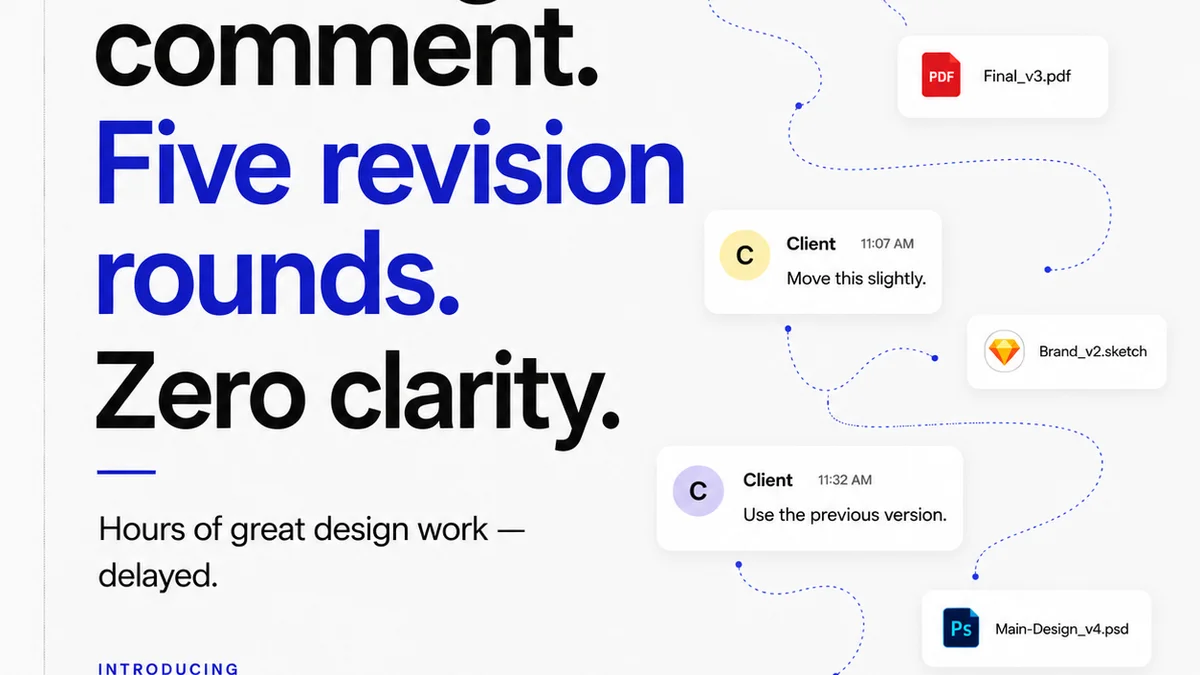
Revision cycles become lengthy and painful. Feedback from compliance is often vague or comes too late to be easily incorporated.
The Cost of Delay
Every extra day spent in review or revision is a day lost on project timelines. For agencies, this hits profitability. For in-house teams, it means missed market opportunities.
The longer the loop, the more likely that context is lost, and the original intent of the creative work gets diluted or compromised by compliance demands.
Where Revue Fits In
This is where a centralized feedback and approval platform like Revue becomes critical. It doesn’t replace legal or brand experts, but it transforms how their input is managed.
Centralized Feedback: Instead of scattered emails and Slack messages, all feedback – including compliance notes – lives in one place, attached to the specific creative asset. This ensures nothing gets missed.
Version Control & Revision Tracking: Every iteration is tracked. Compliance feedback can be directly linked to a specific version, and you can see exactly what changes were made in response. This provides a clear audit trail.
Clear Approval Workflows: You can build specific approval stages for compliance checks. This makes it explicit who needs to review what, when. It turns compliance from a surprise into a scheduled, integrated step.
Visibility for All: The entire team, including compliance stakeholders, can see the project's status, feedback history, and approval status. This transparency reduces miscommunication and builds trust.
Revue helps embed compliance into the workflow, making it proactive rather than reactive. It ensures that brand, legal, and accessibility requirements are considered from the outset, not as an afterthought.
Final Thought
Is creative compliance a burden, or an opportunity to elevate your brand and protect your business?
If you're still treating it as a final hurdle, you're missing the point. The companies that excel at creative compliance build it into their DNA. They make it accessible, integrated, and collaborative. They understand that true compliance isn't just about avoiding problems; it's about building better, more responsible creative work.
Frequently asked questions
What is the biggest mistake companies make with creative compliance?
The biggest mistake is treating creative compliance as a final QA step rather than an integrated part of the entire workflow. This leads to discovering issues late, causing costly rework and delays.
How can creative teams improve compliance without slowing down?
Improve compliance by making guidelines accessible and actionable, integrating review steps early in the process, and using tools that centralize feedback and approvals. This shifts compliance from a bottleneck to a streamlined process.
What are the key areas of creative compliance?
Key areas include brand consistency, legal and regulatory adherence, accessibility standards (like WCAG), technical specifications, and ethical considerations. A comprehensive approach covers all these aspects.
How does a platform like Revue help with creative compliance?
Revue centralizes feedback, tracks revisions, and manages approval workflows, making compliance checks a visible and integrated part of the creative process. It ensures all stakeholders can contribute and track progress, reducing miscommunication.