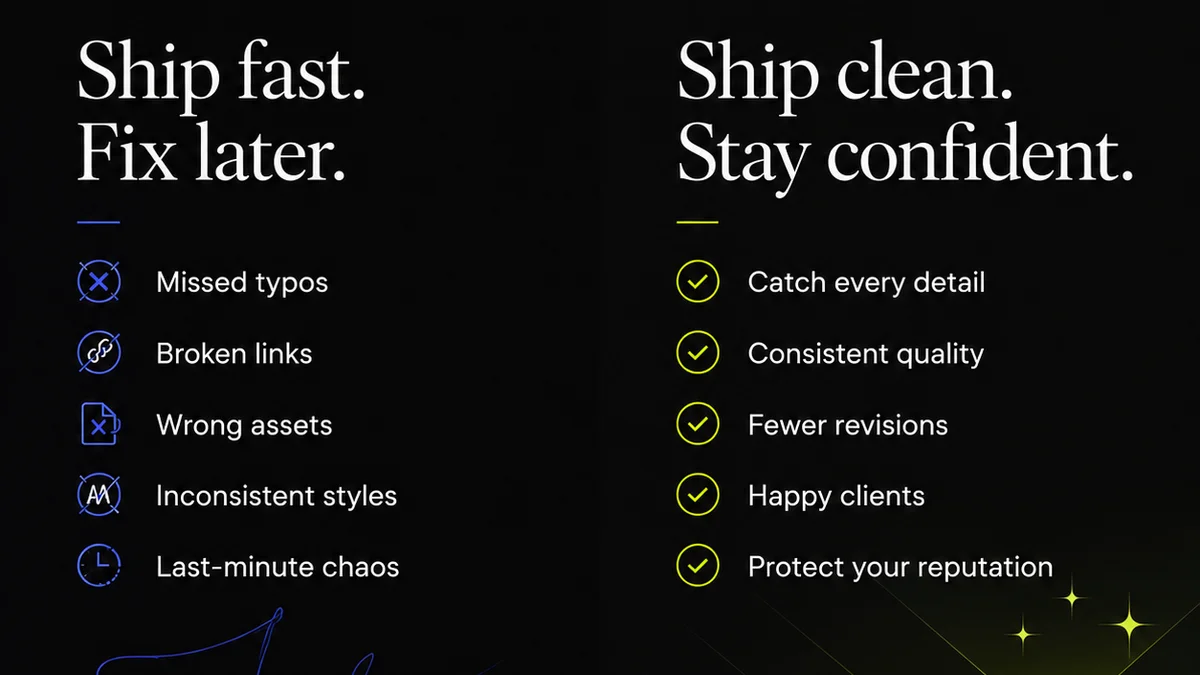
Everyone talks about creative compliance. They tell you to check brand guidelines, ensure legal disclaimers are present, and verify that all assets meet technical specs. None of that is wrong. But it’s incomplete.
The real hard truth? Compliance isn't just a checklist. It's a strategic operational imperative that, when done right, becomes a competitive advantage. When done wrong, it’s a ticking time bomb.
1. The Hidden Costs of Poor Compliance
Most agencies think of compliance failures as isolated incidents: a logo used incorrectly, a typo in a disclaimer, a file delivered in the wrong format. These are symptoms, not the disease.
The real cost is operational drag. It’s the wasted hours tracking down who approved what. It’s the client’s frustration when they spot an error you missed. It’s the legal team’s exasperation when they have to review a campaign for the third time.
These aren’t just minor annoyances. They erode profitability, damage client relationships, and create a culture of reactive firefighting instead of proactive excellence.
1.1. Revenue Leakage
Every hour spent fixing a compliance error is an hour you’re not spending on billable work or new business. Multiply that by your team’s hourly rates, and the numbers add up fast.
Late revisions, scope creep due to errors, and client dissatisfaction that leads to churn are all direct hits to your bottom line.
1.2. Brand Erosion
Inconsistent branding or factual inaccuracies, even small ones, chip away at client trust. Imagine a client’s carefully crafted brand image being undermined by careless mistakes. It’s not just embarrassing; it’s damaging.
1.3. Legal and Reputational Risk
This is the obvious one, but often underestimated. A misplaced disclaimer, an unsubstantiated claim, or a breach of privacy can lead to significant legal penalties and irreparable damage to both your agency’s and your client’s reputation.
2. Building a Proactive Compliance Framework
Moving from reactive checks to a proactive framework requires shifting your mindset. Compliance needs to be embedded into your workflow, not bolted on at the end.
This means establishing clear processes, leveraging the right tools, and fostering a culture where everyone understands their role in maintaining standards.
2.1. Standardize Your Processes
You need documented workflows for every stage of creative production, with specific compliance touchpoints. This isn't about bureaucracy; it's about clarity.
- Briefing: Ensure all necessary compliance requirements (legal, brand, technical) are captured upfront.
- Creative Development: Integrate review stages that specifically check against these requirements.
- Feedback & Revisions: Establish a clear path for feedback that flags potential compliance issues early.
- Final Approval: Implement a mandatory sign-off that confirms all compliance checks have been passed.
- Delivery: Ensure final assets meet all technical and format specifications.
2.2. Define Clear Roles and Responsibilities
Who is accountable for what? Ambiguity here is a breeding ground for errors. Designate specific individuals or roles responsible for:
- Initial compliance requirement gathering.
- Internal creative reviews for compliance.
- Client-side compliance verification.
- Final sign-off on compliance.
This doesn't mean one person does all the work, but rather that ownership is clear at each step.
2.3. Create Accessible Knowledge Bases
Brand guidelines, legal disclaimers, technical specs – these need to be readily available. Think of it as your agency’s single source of truth for all things compliance-related.
This includes:
- Up-to-date brand style guides.
- A library of approved legal boilerplate and disclaimers.
- Technical specifications for various platforms and deliverables.
- Examples of past compliance wins and failures (anonymized, of course).
Make these resources easy to find and navigate. If it’s buried in a shared drive, no one will use it.
3. Leveraging Technology for Smarter Compliance
Manual checks are prone to human error and are incredibly time-consuming. Technology can automate many of these tasks, freeing up your team for higher-value work.
3.1. Centralized Feedback and Approval
Scattered email threads and endless version control issues are the enemy of compliance. When feedback is siloed, crucial details get lost.
A platform that centralizes all client feedback and tracks every revision ensures that all comments are captured, addressed, and approved in one place. This creates an undeniable audit trail.
3.2. Version Control and Audit Trails
You need to know exactly which version of a creative asset was reviewed, by whom, and what feedback was given and actioned. This is critical for dispute resolution and for demonstrating due diligence.
Look for tools that offer robust versioning and a clear, immutable record of all interactions.
3.3. Automated Checks (Where Possible)
While not a silver bullet, certain aspects of compliance can be automated. This might include:
- Checking for the presence of required legal disclaimers in specific areas of a webpage.
- Verifying image resolution or file formats upon upload.
- Ensuring specific color palettes or logo usage against predefined rules.
These automated checks act as an early warning system, catching simple errors before they escalate.
4. The Human Element: Culture and Training
Technology and processes are only as good as the people using them. Cultivating a compliance-aware culture is paramount.
4.1. Continuous Training and Education
Compliance isn't a one-and-done training session. It requires ongoing education, especially as brand guidelines evolve, legal landscapes shift, and new platforms emerge.
Regular workshops, refreshers, and easily accessible documentation keep compliance top-of-mind.
4.2. Empowering Your Team
Your team should feel empowered to raise compliance concerns without fear of reprisal. Encourage a culture where asking clarifying questions is seen as a strength, not a weakness.
When an employee spots a potential issue, they should know the process for flagging it and feel confident that it will be addressed.
4.3. Leadership Buy-In
Compliance initiatives often fail without strong leadership support. Agency leaders must champion the importance of compliance, allocate resources, and hold teams accountable.
This means integrating compliance metrics into performance reviews and celebrating compliance successes.
Where Revue Fits In
Managing creative compliance effectively in an agency environment is a complex dance. You’re balancing client demands, internal workflows, and a myriad of compliance rules.
Revue is built to bring clarity and control to this process. It acts as your central hub for all creative work, from initial concepts to final delivery.
Centralized Feedback: All client comments and stakeholder feedback live in one place, linked directly to the specific version of the creative asset. No more hunting through email chains. This ensures that every compliance-related comment is seen and addressed.
Visible Revision History: Revue provides a clear, sequential record of all changes made. This makes it easy to track how feedback was incorporated and to identify potential deviations from compliance requirements at any stage.
Clear Approval Workflows: Define and manage your approval process within Revue. Stakeholders can approve or request changes directly, with all actions logged. This provides an auditable trail of who signed off on what, and when.
Quality Checks Pre-Delivery: Before a final asset is sent to the client or published, you can use Revue to conduct a final quality assurance check. This includes verifying that all client requests have been met and that all known compliance requirements are satisfied.
By streamlining these critical stages, Revue helps your agency minimize errors, reduce rework, and ensure that every piece of creative work meets the necessary standards, keeping both your team and your clients confident.
Final Thought
Is your agency treating compliance as a burdensome necessity or a strategic asset? The difference isn't just in how you avoid mistakes; it's in how you build a more resilient, profitable, and trusted creative business.
Frequently asked questions
What are the biggest risks of poor creative compliance for agencies?
The biggest risks include revenue leakage from rework and scope creep, damage to client trust and brand reputation due to errors, and significant legal and financial penalties from non-compliance with regulations or contractual obligations.
How can an agency proactively manage creative compliance?
Proactive management involves standardizing processes with clear compliance touchpoints, defining specific roles and responsibilities for compliance checks, creating accessible knowledge bases for guidelines and requirements, and fostering a culture of compliance awareness through continuous training.
Can technology truly help with creative compliance?
Yes, technology can significantly enhance compliance by centralizing feedback and approvals, providing robust version control and audit trails, and automating certain checks. Tools like Revue help track all interactions and ensure a clear record of decisions.
What is the role of leadership in creative compliance?
Leadership must champion compliance initiatives, allocate necessary resources, integrate compliance into performance expectations, and hold teams accountable. Their buy-in is crucial for establishing and maintaining a strong compliance culture.