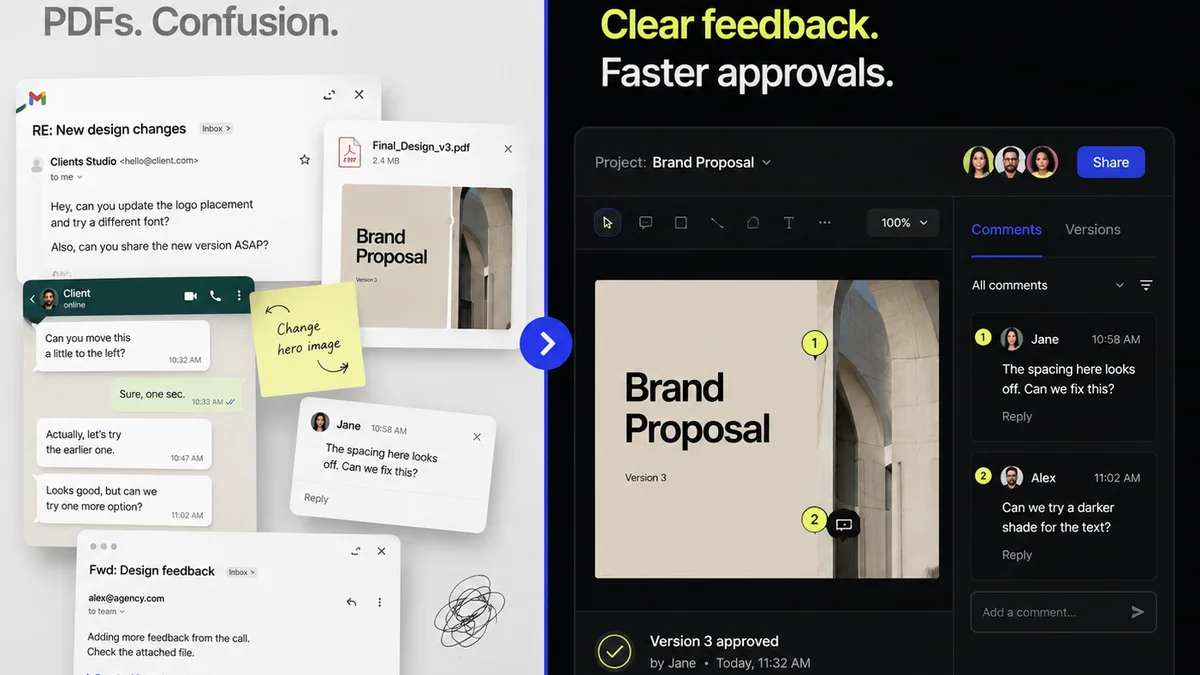
Everyone agrees that clear feedback is key to great creative work. Everyone. You hear it in every meeting, read it in every post-mortem. “If only the client had been clearer!” “We lost time because the feedback was vague.”
None of that is wrong. But it’s incomplete.
The hard truth is that *clear feedback* isn't the real problem. It’s a symptom of a deeper issue: a lack of robust creative governance. Most marketing teams, whether agency or in-house, are flying blind when it comes to managing the creative process from brief to final delivery. They’re treating feedback and approvals like a chaotic, unavoidable part of the job, rather than a core operational process that can, and *must*, be engineered for efficiency and quality.
1. The Myth of the 'Creative' Bottleneck
We love to blame the creatives. They’re too slow, too precious, too… creative. They’re the bottleneck, right?
Wrong. Usually, the *real* bottleneck isn’t the person doing the creative work. It’s the system (or lack thereof) surrounding it. It’s the endless back-and-forth, the missing context, the multiple versions floating around, the unclear decision-makers, and the sheer operational drag of managing it all.
The Real Bottlenecks:
- Ambiguous Briefs: Starting with a fuzzy target guarantees a messy journey.
- Unstructured Feedback: Comments buried in emails, screenshots, or Slack messages.
- Multiple Stakeholders, One Voice: Trying to synthesize feedback from a committee without a clear process.
- Version Control Chaos: Which is the *actual* latest version? Who approved what?
- Lack of Visibility: No clear view of where a piece of creative is in the review cycle.
- Delayed Decisions: Waiting days for a “yes” or “no” that could have been an instant decision.
These aren't creative problems. They're operational failures. They cripple timelines, inflate budgets, and destroy morale. And they all point to a need for better creative governance.
2. What is Creative Governance, Anyway?
Creative governance isn't about stifling creativity. It’s about creating the conditions for creativity to thrive without breaking the business.
It’s the framework of processes, policies, and tools that dictates how creative work is initiated, developed, reviewed, approved, and deployed. Think of it as the operating system for your creative output.
A strong governance model ensures:
- Clarity of Purpose: Every creative project starts with a clear, agreed-upon brief.
- Defined Roles: Everyone knows who is responsible for what – who briefs, who reviews, who approves.
- Standardized Processes: Feedback loops are structured, not spontaneous combustion.
- Centralized Information: All assets, feedback, and decisions live in one accessible place.
- Quality Assurance: Checks and balances are built-in to ensure brand consistency and technical accuracy.
Without this, you’re essentially building a house without blueprints or a project manager. It might eventually stand, but it’ll be a mess, and it’ll cost a fortune.
3. The Cost of Ungoverned Creativity
You might think your current
Frequently asked questions
What is creative governance?
Creative governance is the system of processes, policies, and tools used to manage creative work from inception to completion. It ensures clarity, defines roles, standardizes feedback, and centralizes information to optimize efficiency and quality.
How does poor creative governance impact a marketing team?
Poor governance leads to project delays, budget overruns, unclear feedback, version control issues, team frustration, and ultimately, lower quality creative output. It creates operational bottlenecks that hinder productivity.
Is creative governance just about controlling creatives?
No, quite the opposite. Good creative governance provides the structure and clarity that frees creatives to focus on their work. It removes operational friction, defines expectations, and ensures their efforts align with business goals.
What are the key components of a good creative governance system?
Key components include clear briefing processes, defined stakeholder roles, structured feedback and approval workflows, centralized asset management, and robust version control. Utilizing specialized software can automate and streamline these components.