Everyone talks about creative governance. They say it’s about brand consistency. About keeping things on message. About making sure the logo is the right size and in the right place.
None of that is wrong. But it’s incomplete.
The hard truth? For enterprise teams, creative governance is fundamentally about workflow efficiency and risk mitigation. It’s the operational backbone that prevents chaos, not just a set of brand guidelines.
1. Beyond the Brand Book: Defining True Creative Governance
Brand guidelines are essential, no doubt. They’re the visual dictionary for your brand. But they’re only one piece of the puzzle.
True creative governance is a system. It’s the framework that ensures every piece of creative work, from a global campaign to a single social post, is not only on-brand but also compliant, approved, and delivered efficiently.
What Governance Isn't
- It’s not just a PDF document.
- It’s not a single person’s responsibility.
- It’s not a one-time setup.
What Governance Is
- A defined process for creation and review.
- Clear roles and responsibilities.
- Tools and technology that support the process.
- A mechanism for continuous improvement.
Without this operational layer, your brand guidelines become suggestions, easily overlooked in the rush to get work out the door.
2. The Enterprise Nightmare: Common Governance Breakdowns
In large organizations, the stakes are higher. The volume of creative is immense. The number of stakeholders multiplies.
This complexity breeds specific points of failure.
Siloed Feedback Loops
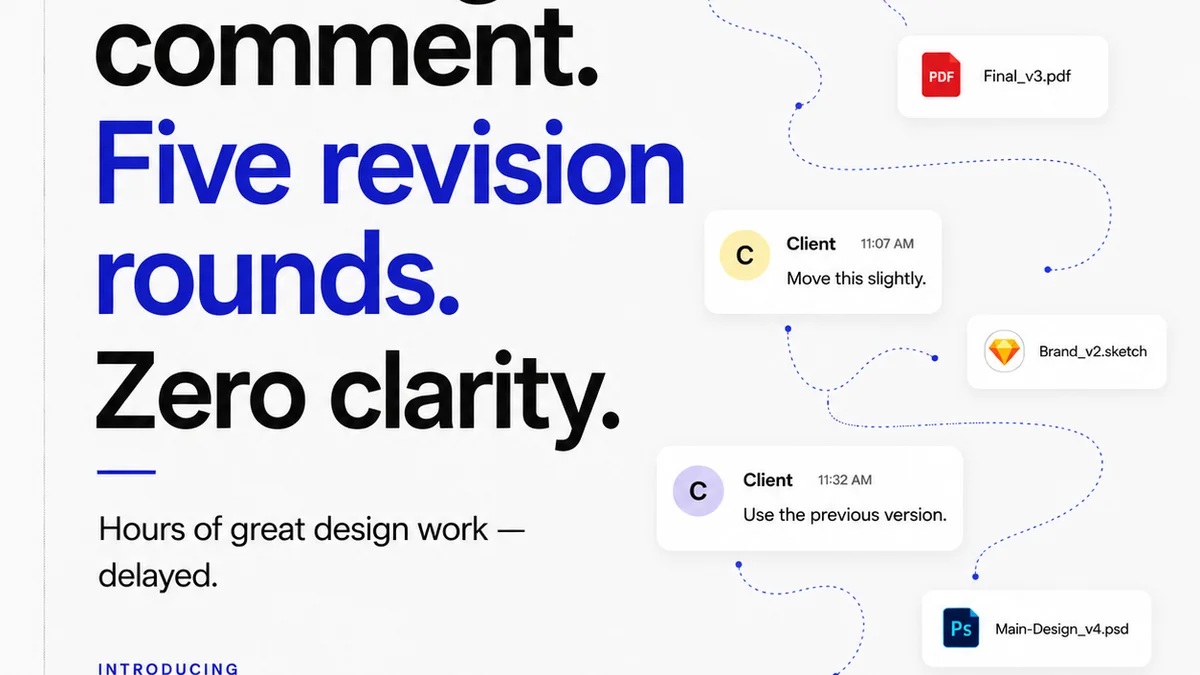
Legal reviews this, marketing signs off, brand says something different, and the regional team wants their own spin. Feedback gets lost, contradicts itself, or arrives too late.
This isn’t collaboration. It’s a bottleneck.
The Approval Black Hole
Where is that design going? Who needs to see it next? Is it even in review?
Lack of visibility means work gets stuck. Projects slip. Opportunities are missed.
Version Control Chaos
“Is this the final final version?” The question haunts creative teams everywhere.
Multiple versions floating around, confusion over which one is approved, and the risk of using outdated assets lead to costly errors and brand inconsistencies.
Compliance Roulette
For regulated industries, this is more than an annoyance; it’s a business risk.
Ensuring legal, privacy, and industry-specific compliance across thousands of creative assets is a Herculean task without a robust system.
Manual, Repetitive Tasks
Chasing down approvals, manually checking assets against a list, compiling feedback from dozens of emails – this drains valuable creative time.
Your team should be creating, not administrating.
3. Building Your Governance Framework: The Operational Blueprint
A strong governance framework is built on clear principles and supported by practical processes.
Establish Clear Roles and Responsibilities
Who owns what? Define:
- Brand guardians: Set and maintain brand standards.
- Legal and compliance reviewers: Ensure regulatory adherence.
- Project managers: Oversee workflow and timelines.
- Creative leads: Ensure quality and on-brand execution.
- Final approvers: Authorize release.
Make these roles explicit and accessible.
Standardize Your Workflow
Map out every stage of your creative process. From brief to final delivery.
Define:
- Intake and briefing procedures.
- Internal review stages.
- External stakeholder review cycles.
- Approval gates.
- Distribution and archiving.
A standardized workflow minimizes ambiguity and ensures consistency.
Centralize Feedback and Approvals
This is non-negotiable for enterprise teams.
Scattered feedback via email, Slack, or even in-person meetings is a recipe for disaster.
You need a single source of truth where all comments, revisions, and approvals are tracked, visible, and auditable.
Implement Version Control Best Practices
Every asset must have a clear version history.
The system should make it obvious which version is the latest, which is approved, and what changes were made at each step.
This prevents the dreaded “final final” confusion.
Automate Where Possible
Look for opportunities to automate:
- Notification systems for review stages.
- Automated checks for basic compliance (e.g., image resolution, file type).
- Templated project setups.
Automation frees up your team for higher-value work.
Regularly Audit and Refine
Governance isn’t static.
Periodically review your processes. Are they still effective? Are there new bottlenecks? Is the team adhering to them?
Gather feedback and make adjustments. Continuous improvement is key.
4. Where Revue Fits In
Managing creative governance across a large enterprise is complex. It requires more than just good intentions; it requires the right tools.
Revue is built to tackle these operational challenges head-on.
Centralized Feedback Hub
Forget endless email chains and scattered Slack messages. Revue provides a single platform for all client and stakeholder feedback.
Stakeholders can comment directly on the creative asset, leaving clear, contextual feedback.
Clear Revision and Approval Tracking
Every version, every comment, every approval is logged and visible.
This transparency eliminates guesswork about project status and provides an auditable trail, crucial for compliance and accountability.
Streamlined Quality Checks
Ensure your team is delivering polished, on-brand work every time.
Revue helps standardize the review process, making it easier to catch errors before they go live.
It’s about bringing order to the creative chaos, ensuring that the final output is not just good, but consistently excellent and compliant.
5. The Governance Mindset: It’s About Trust and Efficiency
Ultimately, effective creative governance isn't about imposing rigid control. It’s about building trust and enabling efficiency.
When your team knows the process is clear, the feedback is consolidated, and approvals are transparent, they can focus on what they do best: creating exceptional work.
When stakeholders know their feedback will be heard and acted upon within a structured system, they feel more confident and less likely to micromanage or circumvent the process.
It’s a win-win that boosts both productivity and the quality of your creative output.
Final Thought
How much time does your enterprise team *really* spend on managing the creative process versus actually creating?
If the answer is more than you’d like, it’s time to re-evaluate your creative governance strategy. It’s not just about protecting the brand; it’s about protecting your team’s most valuable resource: their time and talent.
Frequently asked questions
What is the difference between brand guidelines and creative governance?
Brand guidelines are the rules for how your brand should look and feel. Creative governance is the system and process that ensures those guidelines, along with legal and other requirements, are followed consistently across all creative output, while also ensuring efficient workflow and approvals.
How can enterprise teams improve their creative governance?
Enterprise teams can improve creative governance by establishing clear roles, standardizing workflows, centralizing feedback and approvals in a dedicated platform, implementing robust version control, automating repetitive tasks, and regularly auditing and refining their processes.
Why is version control so important in creative governance?
Version control is critical because it prevents confusion over which creative asset is the latest and most approved. It provides a clear, auditable history of changes, reducing the risk of using outdated or incorrect assets, which can lead to costly errors and brand inconsistencies.
Can creative governance really reduce risk for enterprise companies?
Absolutely. By ensuring all creative assets are reviewed for brand consistency, legal compliance, and regulatory adherence before publication, robust creative governance significantly mitigates the risk of brand damage, legal penalties, and costly rework.