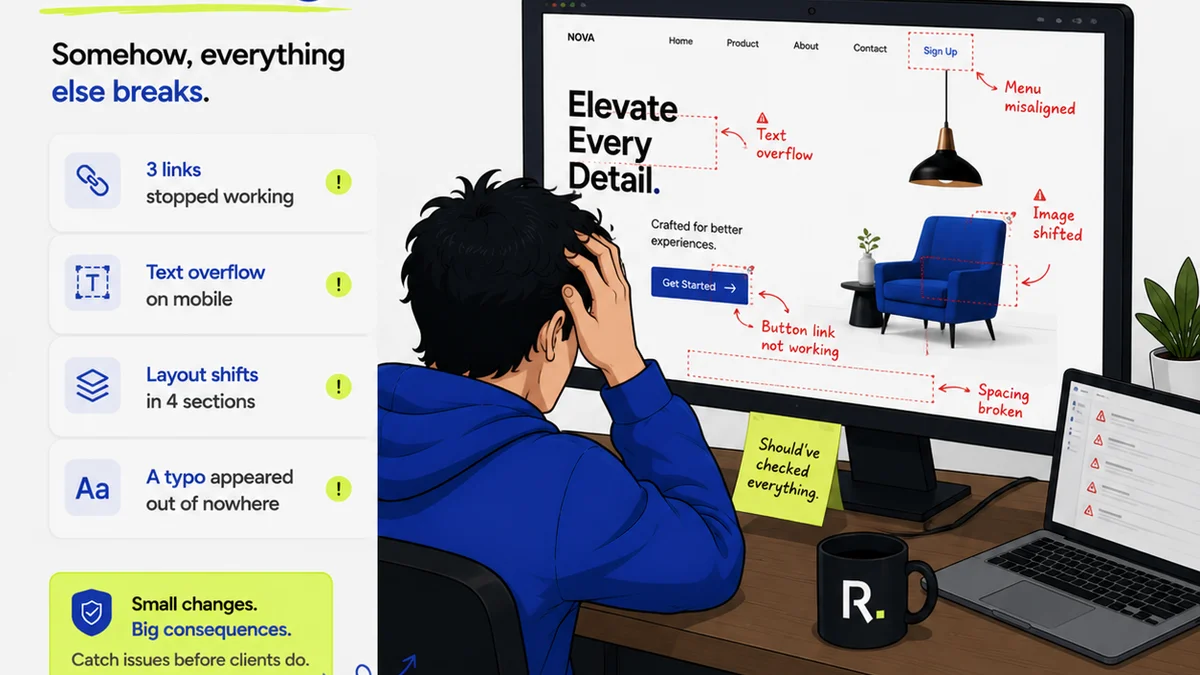
Most agencies think creative governance is about rules. About gatekeepers. About saying ‘no’ to protect the brand.
None of that is wrong. But it’s incomplete.
The hard truth? Creative governance isn’t about rules; it’s about process. It’s about designing workflows that make great creative inevitable, not just possible. And the engine for that process is Standard Operating Procedures (SOPs).
You can’t govern what you can’t define. And you can’t define it with sticky notes and Slack DMs. You need a system. You need SOPs.
1. Why Your Current 'Governance' Isn't Working
You’ve probably got a brand guide. Maybe a style guide. You might even have a senior creative who’s supposed to be the ‘keeper of the flame’.
But look closer. Is feedback getting lost? Are revisions piling up without clear direction? Are projects slipping because no one knows who’s supposed to approve what, and when?
That’s not governance. That’s chaos disguised as process.
The Symptoms of Broken Governance
- Endless revision loops with no clear direction.
- Brand inconsistencies across different deliverables.
- Missed deadlines due to unclear approval chains.
- Team members working in silos, unaware of broader strategic goals.
- Client confusion about the feedback and approval process.
- A constant feeling of firefighting rather than strategic oversight.
These aren't minor annoyances. They're symptoms of a deeper problem: a lack of defined, repeatable processes for how creative work is managed from brief to final delivery.
2. What 'Creative Governance' Really Means
Forget the corporate jargon. Creative governance, at its core, is about ensuring your creative output consistently meets strategic objectives, brand standards, and quality benchmarks, while operating efficiently.
It’s not about stifling creativity. It’s about enabling it by removing friction and ambiguity.
Think of it like a well-oiled machine. Every part has a purpose, and they all work together seamlessly. SOPs are the blueprints for that machine.
Key Pillars of Effective Governance
- Clarity: Everyone knows the goals, the constraints, and the expected outcomes.
- Consistency: Brand and quality standards are applied uniformly.
- Efficiency: Workflows are streamlined, minimizing wasted time and resources.
- Accountability: Roles and responsibilities are clearly defined at every stage.
- Scalability: Processes can adapt as the team or client needs grow.
Without these pillars, your creative output is a gamble. With them, it’s a predictable asset.
3. Designing Your Creative Governance SOPs: The Core Components
Building SOPs isn't an academic exercise. It’s about mapping out your reality and then optimizing it. Start with the lifecycle of a creative project.
What needs to happen at each stage? Who is responsible? What are the inputs and outputs? What are the critical decision points?
3.1. The Briefing Process SOP
This is where it all begins. A weak brief guarantees weak creative. A strong brief sets the stage for success.
- Define the Briefing Template: What information is non-negotiable? (e.g., objective, target audience, key message, deliverables, budget, timeline, mandatory elements, do-not-use list).
- Establish the Briefing Workflow: Who creates the brief? Who reviews it? Who signs off before creative begins?
- Clarify Briefing Inputs: Where does the information come from? Client interviews, strategy docs, market research?
- Define Briefing Outputs: The finalized, signed-off brief document.
This SOP ensures every project starts with a shared understanding and clear objectives.
3.2. The Creative Development & Review SOP
This is the messy middle. It needs structure more than anywhere else.
- Define Creative Stages: Concepting, initial drafts, revisions, final polish.
- Establish Review Cadence: How often will reviews happen? Who participates?
- Standardize Feedback Mechanisms: How should feedback be given? (e.g., specific annotation tools, structured comments, no subjective ‘I don’t like it’).
- Define Revision Cycles: How many rounds of revisions are included? What triggers a new round?
- Outline Escalation Paths: What happens when feedback is conflicting or unclear?
This SOP prevents endless back-and-forth and ensures feedback is constructive and actionable.
3.3. The Approval Process SOP
This is the gate. It needs to be clear, definitive, and documented.
- Identify Approvers: Who has the final say for each type of deliverable? (e.g., Creative Director for concept, Account Manager for client liaison, Client Stakeholder for final sign-off).
- Define Approval Criteria: What constitutes ‘approval’? (e.g., meets brief, adheres to brand guidelines, technically sound).
- Document the Approval Workflow: How is a request for approval submitted? What is the expected turnaround time?
- Establish Rejection Protocols: What happens when work is rejected? What feedback is required?
This SOP removes ambiguity about when a project is truly ‘done’ and ready for deployment.
3.4. The Quality Assurance (QA) SOP
The final check. This catches errors before they go public.
- Define QA Checklists: Specific items to verify for each deliverable type (e.g., spelling, grammar, links, image resolution, legal disclaimers, correct versioning).
- Assign QA Responsibilities: Who performs the QA? When in the process?
- Detail the QA Process: How are issues logged and resolved?
- Establish Final Sign-off: The last human check before release.
This SOP protects your agency’s reputation and your client’s investment.
3.5. The Brand & Asset Management SOP
Governance extends beyond individual projects to the management of your creative assets and brand integrity.
- Centralized Asset Library: Where are final assets stored? How are they organized?
- Version Control: How are different versions of assets managed? How is the ‘master’ version identified?
- Brand Guideline Enforcement: How are brand standards communicated and reinforced? Who audits for compliance?
- Access Control: Who can access, edit, or download assets?
This SOP ensures brand consistency and efficient access to approved materials.
4. Implementing Your SOPs: Beyond the Document
Writing SOPs is only half the battle. The real work is in making them live and breathe within your agency.
Assumption: People will just follow the SOPs because they’re written down.
Hard Truth: People follow processes that are easy, reinforced, and clearly beneficial to them and the business.
Making SOPs Stick
- Training is Non-Negotiable: Don’t just share the documents. Train your team on why they exist and how to use them. Role-play scenarios.
- Integrate into Tools: Your SOPs should inform how you use your project management software, feedback tools, and asset managers. Don’t make people switch between systems unnecessarily.
- Leadership Buy-in & Enforcement: Managers must champion the SOPs. They need to model the behavior and hold people accountable when they deviate.
- Regular Audits & Updates: Processes evolve. Schedule regular reviews (quarterly or bi-annually) to audit adherence and update SOPs based on real-world feedback and changing needs.
- Feedback Loop for SOPs: Create a channel for your team to suggest improvements to the SOPs themselves. They are the ones using them daily.
SOPs are not static rules. They are living documents that guide your agency’s operational excellence.
5. Where Revue Fits In
Building robust SOPs for creative governance requires tools that support clear communication, centralized feedback, and visible workflows. That’s where Revue comes in.
Imagine:
- Centralized Feedback Hub: Instead of scattered emails and chat messages, all client and internal feedback lives in one place, tied directly to the creative asset. Your feedback SOP can dictate that all comments must be logged here.
- Visible Revision History: Track every change, every version, and every comment. This provides an audit trail and clarity on the evolution of the creative, supporting your revision cycle SOP.
- Clear Approval Status: Easily see which assets are pending review, approved, or rejected. This streamlines your approval SOP and reduces the guesswork for your team and clients.
- Standardized Review Workflows: Configure custom workflows that guide assets through predetermined stages, ensuring that required reviews and approvals happen in the correct order, aligning perfectly with your governance SOPs.
- Reduced Ambiguity: By having a single source of truth for feedback and approvals, you eliminate the common points of confusion that derail creative projects and undermine governance.
Revue acts as the digital backbone for your creative governance SOPs, making them practical, enforceable, and efficient.
6. Final Thought
Creative governance isn't a bureaucratic hurdle; it's a strategic advantage. It’s the difference between a creatively stagnant agency and one that consistently delivers exceptional, on-brand work, on time and on budget.
The question isn’t whether you need SOPs for creative governance. The question is, are you ready to build processes that empower your team and delight your clients, or will you continue to manage creative feedback like a chaotic guessing game?
Frequently asked questions
What are the essential components of a creative governance SOP?
Essential components include SOPs for the briefing process, creative development and review, client and internal approvals, quality assurance (QA), and brand/asset management. Each should clearly define roles, steps, inputs, outputs, and decision points.
How do I get my team to actually follow SOPs?
Effective implementation requires comprehensive training, integrating SOPs into existing tools, strong leadership buy-in and enforcement, regular audits, and establishing a feedback loop for continuous improvement. Make them easy to follow and clearly beneficial.
Can SOPs stifle creativity?
No, well-designed SOPs should enable creativity by removing ambiguity and friction. They provide a clear framework, allowing creatives to focus on the creative problem-solving rather than administrative hurdles or unclear feedback loops.
How often should I update my creative governance SOPs?
It's recommended to review and update your SOPs at least quarterly or bi-annually. This ensures they remain relevant, reflect current workflows, and incorporate lessons learned from real-world project execution.