Everyone agrees that creative governance is crucial for agencies. It’s the bedrock of quality, consistency, and client satisfaction. But the common wisdom stops there. It tells you *why* you need it, but not *how* to build it effectively.
The hard truth? Your tools dictate the success of your governance. Without the right ones, you’re building a castle on sand. You’ll get bogged down in manual processes, communication breakdowns, and missed deadlines.
1. Defining Creative Governance for Your Agency
Creative governance isn't just about having rules. It's about having a framework that ensures your creative output consistently meets strategic goals and brand standards. It’s the operating system for your creative department.
Think of it as the bridge between your agency’s vision and the actual work delivered. It’s the system that keeps the train on the tracks, even when the landscape gets bumpy.
What Creative Governance Really Means
At its core, creative governance involves:
- Establishing clear brand guidelines and creative briefs.
- Defining roles and responsibilities for approvals and feedback.
- Implementing consistent quality assurance processes.
- Ensuring all creative work aligns with client objectives.
- Managing revisions efficiently and transparently.
It’s the invisible infrastructure that supports visible excellence.
The Cost of Poor Governance
When governance is weak, the cracks appear quickly:
- Inconsistent brand messaging across projects.
- Delayed project timelines due to endless revision cycles.
- Client dissatisfaction stemming from misaligned expectations.
- Team burnout from chaotic feedback loops.
- Wasted resources on rework that could have been avoided.
This isn't just an annoyance; it's a drain on profitability and reputation.
2. The Myth of the All-in-One Solution
Many agencies assume they need one magical tool to solve all their governance problems. They look for a platform that promises to manage briefs, feedback, approvals, asset storage, and team collaboration.
This is a common, and often costly, mistake.
Why One Tool Rarely Works
The reality is that creative work is complex and multifaceted. Different stages of the creative process benefit from specialized tools. Trying to force everything into a single, generic platform leads to compromises.
- You end up with a tool that does many things poorly, rather than a few things exceptionally well.
- Workarounds become the norm, defeating the purpose of a streamlined system.
- Your team spends more time fighting the tools than using them effectively.
It’s like trying to build a house with only a hammer. You might get it done, but it won’t be pretty or efficient.
The Power of Integrated Specialization
A more effective approach is to build a stack of specialized tools that integrate. Each tool serves a specific purpose, doing it exceptionally well. When these tools can talk to each other, they create a powerful, flexible governance system.
This allows you to choose the best-in-class solution for each part of your workflow.
3. Essential Tool Categories for Creative Governance
To build a robust governance system, you need to cover several key areas. Each area requires specific functionality that a single tool can rarely provide.
Briefing and Project Setup
This is where it all begins. Clear, comprehensive briefs are non-negotiable.
- Tools: Project management software (e.g., Asana, Monday.com), dedicated brief-building tools, shared document platforms (e.g., Google Docs, Notion).
- Functionality: Standardized templates, clear fields for objectives, target audience, deliverables, KPIs, and budget. Version control for brief iterations.
A well-defined brief is the first line of defense against scope creep and misalignment.
Creative Development and Collaboration
This is the heart of the creative process.
- Tools: Design software (Adobe Creative Suite, Figma), prototyping tools (Figma, InVision), collaborative whiteboarding (Miro, FigJam).
- Functionality: Real-time collaboration, version history, asset management within the design environment, clear comment threads tied to specific elements.
The tools here should facilitate, not hinder, the creative flow.
Feedback and Annotation
This is often the most chaotic part of the process. Clear, actionable feedback is vital.
- Tools: Dedicated visual feedback platforms, annotation tools within design software, project management integrations.
- Functionality: Contextual comments directly on creative assets (images, videos, PDFs, websites), ability to resolve comments, clear distinction between stakeholder feedback and internal reviews, timestamped feedback for video.
This is where many governance systems break down. The right tools are critical.
Revision and Approval Management
Tracking changes and getting sign-off needs to be airtight.
- Tools: Digital asset management (DAM) systems, specialized proofing and approval platforms, project management tools with robust status tracking.
- Functionality: Clear version control for revisions, audit trails of who approved what and when, defined approval workflows, automated notifications for pending approvals.
Transparency here builds trust with clients and internal teams.
Quality Assurance and Compliance
Ensuring the final output meets standards.
- Tools: Brand compliance checkers, accessibility testing tools (e.g., WAVE, Axe), content management systems (CMS) with validation rules.
- Functionality: Automated checks for brand guideline adherence, accessibility compliance (WCAG standards), technical specifications (e.g., file formats, dimensions).
This stage prevents costly errors before launch.
4. Key Considerations When Selecting Tools
Choosing tools isn't just about features; it's about how they fit into your agency’s unique ecosystem.
Integration Capabilities
This is paramount. Your tools need to work together seamlessly. Look for platforms with robust APIs or pre-built integrations.
A disconnected toolset creates more work, not less. It leads to data silos and manual data transfer.
User Experience and Adoption
No matter how powerful a tool is, it’s useless if your team won’t use it. Prioritize intuitive interfaces and ease of learning.
Involve your team in the selection process. Their buy-in is essential for successful adoption.
Scalability and Flexibility
Your agency will grow and evolve. Your tools need to grow with you. Can the platform handle more users, more projects, and more complex workflows?
Avoid tools that lock you into rigid structures. Flexibility is key in a dynamic agency environment.
Security and Compliance
You’re handling client data and proprietary creative work. Security must be a top priority. Ensure the tools meet industry-standard security protocols.
For regulated industries, specific compliance features might be necessary.
Cost vs. Value
Don't just look at the price tag. Consider the total cost of ownership, including implementation, training, and ongoing maintenance. More importantly, assess the ROI.
Will the tool save time, reduce errors, and improve client satisfaction? That’s where the real value lies.
5. Where Revue Fits In
Building a strong creative governance framework requires visibility and control over the entire feedback and approval lifecycle. This is precisely where Revue excels.
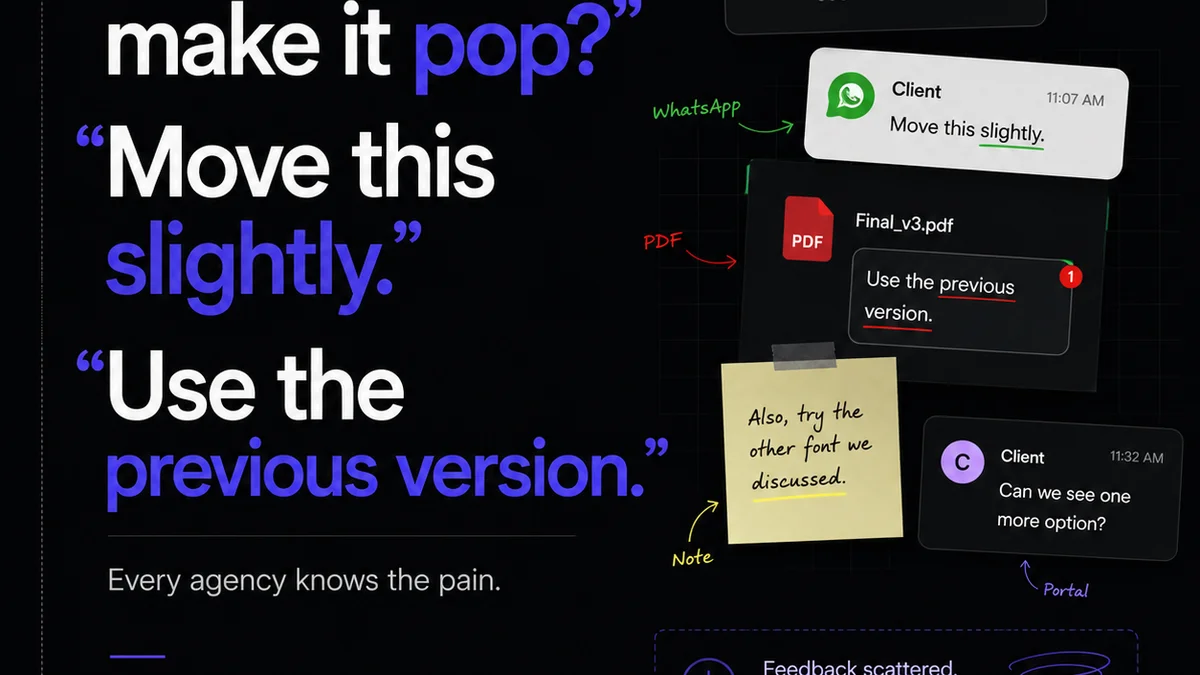
Revue provides a centralized hub for all client feedback and revision tracking. It cuts through the noise of scattered emails and chat messages.
Centralized Feedback and Revisions
Instead of feedback living in inboxes or random documents, Revue brings it all into one place, directly linked to the creative asset. This eliminates confusion about which version is the latest and what feedback applies.
You get a clear, chronological record of all comments and decisions.
Streamlined Approval Workflows
Revue enables you to set up clear, multi-step approval workflows. Stakeholders can review and approve or reject assets directly within the platform, with clear audit trails.
This ensures accountability and speeds up the sign-off process.
Enhanced Visibility and Quality Checks
With all feedback and approvals logged, your team has unprecedented visibility into the project's status and history. This makes quality checks more robust and informed.
You can easily identify bottlenecks, track team performance, and ensure final deliverables meet all requirements before they go to the client.
Revue acts as the central nervous system for your creative approvals, ensuring your governance policies are actually followed.
6. Final Thought
Choosing the right tools for creative governance isn't a one-time decision; it's an ongoing strategy. It’s about building a flexible, integrated system that supports your team and delights your clients.
Are your current tools enabling your governance strategy, or are they an obstacle?
Frequently asked questions
What is creative governance?
Creative governance is a framework of processes, standards, and tools designed to ensure that all creative output consistently aligns with strategic objectives, brand guidelines, and quality standards.
Why is a single, all-in-one tool often not ideal for creative governance?
Creative work is complex and benefits from specialized tools. An all-in-one solution often leads to compromises, doing many things poorly rather than a few things exceptionally well. An integrated stack of specialized tools is typically more effective.
What are the key categories of tools needed for creative governance?
Essential categories include tools for briefing and project setup, creative development and collaboration, feedback and annotation, revision and approval management, and quality assurance/compliance.
How important is tool integration for creative governance?
Integration is paramount. Tools need to work together seamlessly to avoid data silos, manual work, and communication breakdowns. Look for platforms with robust APIs or pre-built integrations.
How does Revue help with creative governance?
Revue centralizes client feedback and revision tracking, provides clear approval workflows with audit trails, and enhances visibility into the project lifecycle, acting as a core component for effective creative governance.