Everyone talks about the creative handoff as the finish line. The final check. The moment you toss the files over the wall to development, marketing, or whoever takes it from there. That’s the common wisdom. It’s the end of the creative journey for that asset.
None of that is wrong. But it’s incomplete. Dangerously incomplete.
The real hard truth? Your creative handoff isn't a finish line; it’s the starting pistol for the next phase of your business. It’s the engine. It dictates speed, accuracy, and ultimately, the success of everything that follows. A sloppy handoff doesn't just cause a bad build; it costs you time, money, client trust, and future opportunities. In 2026, a streamlined, transparent, and intelligent creative handoff workflow isn’t a nice-to-have. It’s the bedrock of a profitable agency or in-house team.
1. The Myth of the 'Done' Creative Asset
We often define 'done' based on client approval. The client signs off, so the creative team is finished. They move on to the next brief. But 'done' for the client is rarely 'ready' for the next stage. There’s a critical gap.
This gap is where friction builds. It’s where misunderstandings fester. It’s where projects go sideways.
The Hidden Costs of 'Done'
- Missed nuances in client feedback that weren't fully documented.
- Assets not optimized for the specific channel they’re going into.
- Inconsistent branding elements that require rework downstream.
- Development teams guessing at intended interactions or animations.
- Quality assurance teams hunting for missing assets or incorrect versions.
These aren't minor inconveniences. They are project delays. They are budget overruns. They are client dissatisfaction.
By 2026, we need to redefine 'done' not as client approval, but as 'ready for seamless integration and execution.' This shifts the focus upstream, to the process itself.
2. Deconstructing the Modern Creative Handoff
A robust creative handoff workflow anticipates the needs of every stakeholder downstream. It’s not just about delivering files; it’s about delivering context, clarity, and confidence.
Key Components of an Intelligent Handoff
Think beyond just the final image or video file. What else is needed?
- Comprehensive Asset Library: Not just final versions, but all approved iterations, style guides, brand assets, and supporting collateral.
- Detailed Specifications: Dimensions, color profiles, file formats, resolution, bleed, safe zones, animation timing, interaction states.
- Contextual Feedback & Rationale: Why were certain decisions made? What client feedback influenced the final design? What alternatives were considered?
- Clear Version Control: An irrefutable record of what was approved, when, and by whom.
- Cross-Functional Alignment: Input from development, QA, and marketing teams *before* the handoff is finalized.
This isn't a massive undertaking if you have the right systems in place. It’s about embedding these steps into your existing creative process.
The Role of Communication in Handoff
Email chains get lost. Slack messages are ephemeral. Version control can become a chaotic mess of dated folders. A centralized system is non-negotiable.
Imagine a developer needing to understand a specific animation. Instead of digging through emails or asking the designer (who’s already on another project), they can access a clear specification, linked directly to the approved design and the client’s rationale for that specific interaction. This is the future of efficient creative handoff.
3. Future-Proofing Your Workflow for 2026
The tools and expectations are evolving. What worked yesterday will be a bottleneck tomorrow. Agencies and internal teams need to adapt proactively.
Embracing Automation and AI
AI is already assisting in asset optimization, generating code snippets for animations, and even flagging potential brand inconsistencies. By 2026, expect these tools to be standard.
Automated checks for:
- Brand guideline adherence (color, typography, logo usage).
- Accessibility standards compliance (contrast ratios, font sizes).
- File format and naming convention consistency.
- Completeness of required metadata.
These aren't about replacing human oversight, but about augmenting it. Freeing up your team from tedious checks to focus on strategic creative work and complex problem-solving.
Platform Integration is Key
Your creative tools, project management software, and development environments need to talk to each other. Siloed systems kill efficiency.
Think about a seamless flow:
- Design in Figma, with annotations and specs automatically captured.
- Feedback and approvals logged directly against design versions.
- Handoff to development with a direct link to all necessary assets and documentation.
- QA testing informed by the original creative intent and client feedback.
This interconnectedness reduces manual data entry, minimizes errors, and ensures everyone is working from the same, up-to-date information. It’s about creating a single source of truth for the entire project lifecycle.
4. Where Revue Fits In
A robust creative handoff workflow hinges on clarity, accountability, and centralized information. This is precisely where Revue excels.
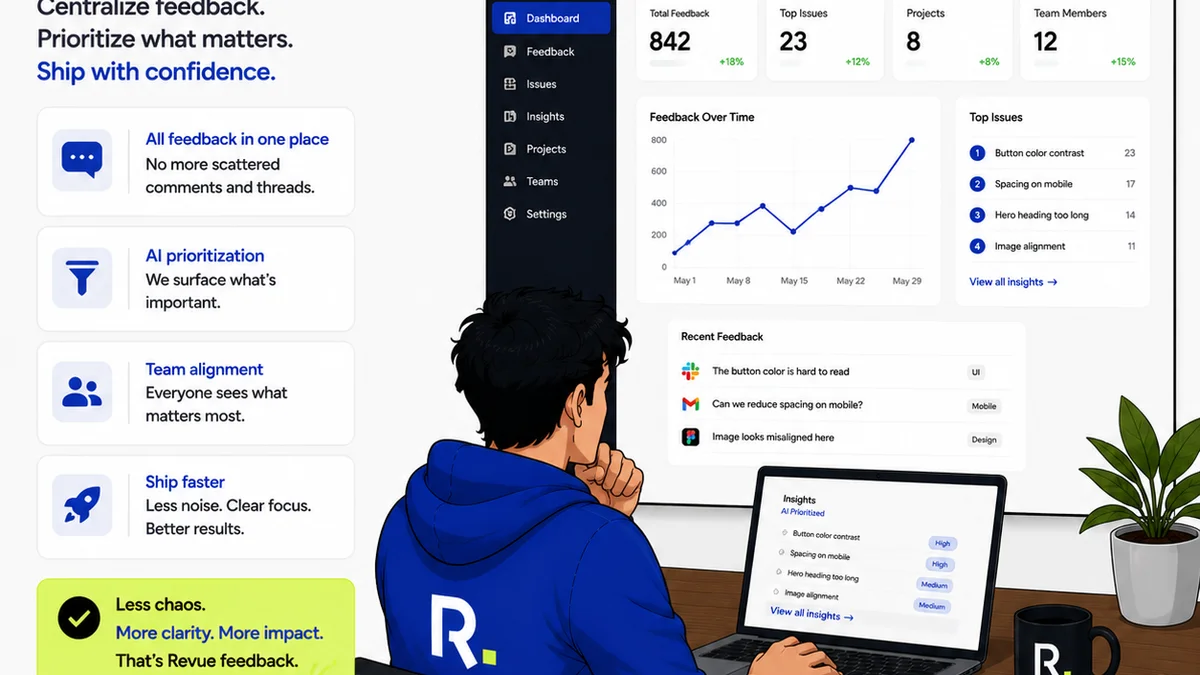
Revue provides a single source of truth for client feedback and approvals. Instead of scattered emails or endless Slack threads, all comments, revisions, and sign-offs are logged directly against the creative asset itself.
This means:
- Centralized Feedback: All client input, from initial concepts to final tweaks, is captured in one place, linked to specific versions.
- Version Visibility: Easily track the evolution of an asset, see which version was approved, and understand the client’s rationale at each stage. No more 'which version is the latest?' debates.
- Streamlined Approvals: Clear, irrefutable records of sign-offs ensure everyone knows exactly what has been agreed upon, reducing ambiguity during handoff.
- Quality Assurance Confidence: Developers and QA teams can access all approved assets and contextual notes directly, ensuring they build and test against the correct specifications.
By centralizing and clarifying the feedback and approval process, Revue directly addresses the common pain points that plague traditional creative handoffs. It transforms what is often a chaotic final step into a well-documented, transparent transition.
5. Final Thought
Your creative handoff isn't just about delivering files. It's about delivering confidence. Confidence to the client that their vision is realized. Confidence to the development team that they have everything they need. Confidence to your own team that the project was executed flawlessly.
Are you treating your creative handoff as a final step, or as the crucial catalyst for your next success?
Frequently asked questions
What is the most common mistake in creative handoffs?
The most common mistake is treating the creative handoff as a final step rather than a crucial transition. This often leads to a lack of context, incomplete documentation, and subsequent issues for development or marketing teams.
How can agencies improve their creative handoff process?
Agencies can improve by centralizing all feedback and approvals, ensuring clear version control, providing detailed specifications beyond just the final asset, and fostering cross-functional communication before the handoff is finalized.
What role does technology play in modern creative handoffs?
Technology plays a crucial role by automating checks, integrating different project tools, providing a single source of truth for assets and feedback, and using AI to assist with optimization and consistency. Tools like Revue help centralize feedback and approvals.
How does a good handoff benefit clients?
A good handoff benefits clients by ensuring their vision is accurately translated into the final product, reducing the need for costly revisions post-launch, and providing a smoother, more efficient overall project experience. It builds trust and confidence.