Everyone agrees that a smooth creative handoff is crucial for enterprise teams. You’ve probably heard it’s about clear communication, organized files, and detailed briefs. None of that is wrong. But it’s incomplete.
The hard truth for enterprise creative handoff is that it's not just a step in the process; it's a critical operational bottleneck or accelerator. If it’s broken, everything downstream suffers – development delays, brand inconsistencies, wasted resources. Get it right, and you unlock speed, scale, and reliability.
1. Beyond the Brief: Defining Enterprise Handoff Requirements
A brief is the starting point, not the finish line. For enterprise-level creative handoff, the requirements go much deeper than the initial project scope.
Think about what truly needs to be communicated for successful execution, especially when multiple teams, departments, or even external vendors are involved. This isn't about a single designer handing off to a single developer.
Consider the sheer volume and complexity:
- Brand guidelines and their nuances
- Technical specifications for various platforms (web, app, print, social)
- Accessibility standards (WCAG compliance, for example)
- Localization requirements
- Performance considerations
- Legal and compliance checks
- Asset management and version control needs
Each of these demands explicit documentation and a clear point of accountability. A generic brief simply won’t cut it when stakes are high and the potential for error multiplies.
Defining the Handoff Scope
What exactly constitutes a 'handoff' in your enterprise context? Is it the final design files? Or does it include finalized copy, approved imagery, and all the necessary metadata?
Be granular. Document every deliverable and its associated requirements. This clarity prevents assumptions and reduces the need for back-and-forth clarification later.
2. The Technology Stack for Enterprise Handoff
Relying on email chains, shared folders with cryptic naming conventions, and ad-hoc Slack messages is a recipe for disaster at the enterprise scale. Your technology stack needs to support complexity, not hinder it.
The right tools provide a single source of truth and automate many of the tedious, error-prone aspects of handoff.
Essential Tool Categories
- Project Management Platforms: Tools like Asana, Jira, or Monday.com can track tasks, deadlines, and dependencies, but they often lack specialized creative features.
- Digital Asset Management (DAM): A robust DAM is crucial for organizing, storing, and retrieving approved creative assets, ensuring everyone uses the correct versions.
- Design Collaboration Tools: Platforms like Figma or Adobe XD facilitate design creation and prototyping, but their handoff capabilities can be limited for complex enterprise needs.
- Dedicated Handoff Software: Solutions designed specifically for creative handoff streamline the process, centralizing feedback, versioning, and approval tracking.
The key is integration. How do these tools talk to each other? Can your DAM push approved assets into your project management tool? Can design files link directly to their approved versions in a handoff platform?
A fragmented toolset creates silos. Silos create confusion. Confusion leads to mistakes.
3. Building a Scalable Handoff Process
Scalability in enterprise creative handoff means building a process that can handle increased volume, complexity, and team size without breaking.
This requires standardization and automation wherever possible. Think of it like a manufacturing assembly line, but for creative assets.
Standardization is Your Friend
What elements of your handoff process can be standardized?
- File Naming Conventions: Consistent, logical naming prevents confusion and makes searching efficient.
- File Structure: A predictable folder hierarchy ensures assets are easy to find.
- Annotation and Commenting Protocols: How should stakeholders provide feedback? What information is mandatory (e.g., specific element, suggested change, rationale)?
- Approval Workflows: Define clear stages of approval and the criteria for moving between them.
- Technical Specifications Templates: Pre-defined templates for common platforms reduce manual input and ensure consistency.
Standardization reduces cognitive load for everyone involved. They don’t have to guess where to find something or how to label it.
Automation for Efficiency
Where can you automate?
- Automated Asset Export: Plugins and tools can automate the export of various asset sizes and formats directly from design files.
- Version Control: Systems that automatically track and log every revision.
- Notification Triggers: Automated alerts for new feedback, status changes, or approvals.
- Checklist Generation: Automatically generate required QA or compliance checklists based on project type.
Automation frees up valuable human time for more strategic tasks, like creative problem-solving, rather than administrative busywork.
4. The Human Element: Roles, Responsibilities, and Training
Even the best technology and processes fail without the right people and clear understanding of their roles.
In an enterprise, handoff often involves a diverse set of stakeholders: designers, copywriters, project managers, developers, QA testers, legal teams, marketing managers, and sometimes even external agencies.
Clarifying Roles
Who owns what during the handoff phase?
- The Creator: Responsible for producing the creative asset to spec and preparing it for handoff.
- The Handoff Manager/Coordinator: Often a project manager, responsible for ensuring the process is followed, assets are correctly packaged, and communication flows.
- The Reviewer/Approver: Stakeholders who provide feedback and sign off on the creative.
- The Implementer: Developers, printers, or other teams who use the handed-off assets.
- The QA Specialist: Responsible for final checks against requirements and brand standards.
Ambiguity here is deadly. Define these roles clearly and communicate them widely.
Training and Onboarding
Don’t assume everyone knows how to use the tools or follow the process. Invest in training.
Onboarding new team members and training existing ones on the established handoff workflow is non-negotiable. This includes understanding the purpose of each tool, the steps in the process, and the expected behavior at each stage.
A well-trained team is an efficient team.
5. Where Revue Fits In
Managing the complexities of enterprise creative handoff requires a centralized platform that bridges the gaps between design, feedback, and final delivery. This is where Revue excels.
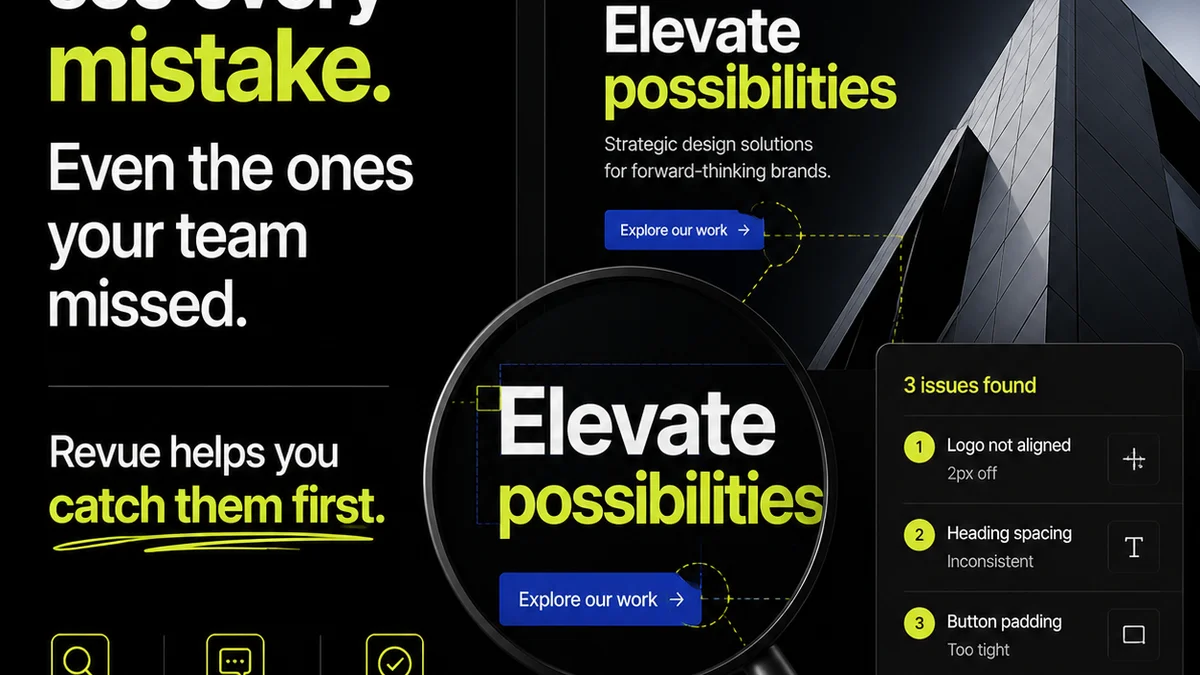
Revue provides a single source of truth for creative feedback and approvals, drastically reducing the chaos associated with traditional handoff methods.
- Centralized Feedback: Consolidate all client and stakeholder feedback directly on the creative assets within Revue. No more hunting through emails, chat logs, or disparate documents.
- Revision and Approval Visibility: Track every version of a creative asset and the status of its approvals. Everyone sees the same, up-to-date information, preventing costly misunderstandings about what’s been approved and what’s next.
- Quality Assurance Checks: Define and implement custom checklists for QA, ensuring that all necessary checks (brand compliance, technical specs, accessibility) are performed before final delivery. This builds quality directly into your handoff workflow.
By streamlining these critical steps, Revue helps enterprise teams ensure that creative assets are not only delivered on time but also meet all requirements, reducing rework and accelerating time-to-market.
6. Measuring and Optimizing Your Handoff
You can’t improve what you don’t measure. For enterprise creative handoff, this means tracking key metrics to identify bottlenecks and areas for improvement.
Key Metrics to Track
- Handoff Time: The duration from when a creative asset is ready for handoff to when it's fully approved and delivered.
- Rework Rate: The percentage of assets that require significant revisions post-handoff due to unclear instructions or missed requirements.
- Number of Clarification Requests: How often do implementers (e.g., developers) need to ask questions after receiving assets?
- Stakeholder Satisfaction: Gather feedback from both creative teams and those receiving assets.
- Time Spent on Handoff Administration: How much manual effort is involved in packaging and distributing assets?
Use these metrics to pinpoint where your workflow is faltering. Is it the initial brief? The feedback loop? The final QA?
Regularly review your handoff process. Solicit feedback from all involved parties. Be prepared to adapt and refine your workflow based on data and experience.
Final Thought
Enterprise creative handoff is a sophisticated operational challenge. It’s easy to view it as a simple file transfer, but the reality is far more complex. It’s a linchpin in the entire creative production cycle. When handled with strategic intention, robust processes, and the right technology, it transforms from a potential point of failure into a powerful engine for efficiency and quality. How are you treating your creative handoff – as an afterthought, or as the critical operational function it truly is?
Frequently asked questions
What are the key components of an enterprise creative handoff?
An enterprise creative handoff involves more than just files. Key components include detailed briefs, clearly defined technical specifications, brand guideline adherence, accessibility standards, version control, a defined approval process, and robust communication protocols between creative and implementation teams.
How can technology improve enterprise creative handoff?
Technology improves handoff by centralizing assets and communication. Tools like Digital Asset Management (DAM) systems, specialized creative collaboration platforms, and dedicated handoff software reduce errors, ensure version consistency, automate tasks, and provide a single source of truth for all stakeholders.
What is the role of standardization in creative handoff?
Standardization in creative handoff ensures consistency and reduces errors. This applies to file naming conventions, folder structures, feedback protocols, and technical specification templates. Standardized processes make it easier for everyone to understand requirements and locate assets, improving efficiency.
How do you measure the success of a creative handoff process?
Success is measured by tracking metrics like handoff time, rework rates, the number of clarification requests from implementers, stakeholder satisfaction, and the administrative time spent on handoff tasks. Analyzing these metrics helps identify bottlenecks and areas for process optimization.