You probably think print is a solved problem. Or maybe you think it’s a dead problem. “Just ship the digital files, right?”
None of that is wrong. But it’s incomplete.
The operational reality of print and publishing projects in 2024 is miles away from the simple handoff of yesterday. It’s a complex ecosystem demanding rigorous process, tight communication, and a sharp eye for detail that digital often lets slide.
The hard truth? Managing print and publishing projects effectively today requires a level of oversight and control that most agencies and creative teams simply aren't equipped for. They’re still treating it like a side hustle, a relic from a slower time. That’s a mistake.
1. The Myth of the Simple File Handoff
The assumption is that you create the design, export the PDF, and send it off. Easy.
But what about bleed? What about color profiles? What about the specific requirements of the printer, the paper stock, the binding method? These aren't minor details. They are project-killers.
A single missed spec can mean:
- Weeks of delay waiting for new proofs.
- Significant costs for reprints.
- A damaged client relationship.
- A final product that looks nothing like what you intended.
Print demands precision in ways digital rarely does. A pixel out of place online is often invisible. A millimeter out of place on a press sheet is glaring.
The Real Workflow: Beyond Design
Your job as a creative leader isn’t just about the creative vision. It’s about the operational scaffolding that supports that vision through to the physical world.
This means:
- Deep dives into printer capabilities and limitations.
- Understanding the nuances of different paper weights and finishes.
- Navigating the complexities of pre-press checks.
- Managing multiple rounds of physical proofs, each with its own turnaround time.
This isn't just about sending files. It's about managing a physical production process.
2. Color Management: The Devil is in the CMYK
RGB vs. CMYK. Everyone in creative knows the difference. But do you truly understand the implications for print?
Digital screens display color vibrantly, using light. Print uses ink on paper. The gamut is different. The way colors are mixed and reproduced is fundamentally different.
Your vibrant screen design might look muddy or dull when converted to CMYK if not managed properly.
The Operational Challenge
This isn’t a one-time conversion. It’s a continuous process:
- Ensuring all source files (images, logos) are in the correct color space.
- Understanding the specific CMYK profile your printer uses.
- Calibrating your own monitors to approximate print output.
- Managing client expectations about color reproduction. What you see on screen is a *representation*, not a guarantee.
This requires specialized knowledge and tools, or at the very least, a very disciplined workflow and a trusted print partner who can guide you.
3. Proofing: The Slow, Painful Reality
Digital proofs (PDFs) are quick. Physical proofs (FPO, press proofs, soft proofs) are not.
Each physical proof adds days, sometimes weeks, to your timeline. Each requires careful review not just for design accuracy, but for color, trapping, imposition, and overall print quality.
The temptation is to rush this. To say, “Looks good enough.”
That’s how you end up with misaligned pages, incorrect bleeds, or color shifts that ruin the project.
Managing the Proofing Cycle
Effective proofing management involves:
- Setting clear expectations with clients about the number and type of proofs.
- Defining who is responsible for reviewing each proof.
- Establishing clear sign-off procedures.
- Building in buffer time for each proofing round.
- Having a system to track feedback and revisions across multiple proofing stages.
This is where version control becomes critical. How do you ensure the client is approving the *latest* version, and that the printer is working from that *exact* approved file?
4. Printer Relationships: More Than Just a Vendor
Your printer is not just a supplier; they are a critical partner in the success of your print project.
A good printer can:
- Advise on cost-effective material choices.
- Suggest production efficiencies.
- Help troubleshoot technical issues before they become expensive mistakes.
- Guide you on their specific pre-press requirements.
A bad or poorly understood relationship can lead to:
- Unexpected cost overruns.
- Production delays.
- Compromised quality.
- Blame-shifting when things go wrong.
Building a Strategic Partnership
Treat your printer like an extension of your team:
- Communicate early and often.
- Provide clear, complete specifications.
- Visit their facility if possible to understand their process.
- Build a relationship based on mutual respect and clear communication.
- Understand their lead times for different processes.
This isn't just about getting a quote. It's about collaborative problem-solving.
5. Beyond the Brochure: The Publishing Ecosystem
Print isn't just brochures and flyers. Publishing projects—books, magazines, reports—add layers of complexity.
Think about:
- Imposition: How pages are arranged on a press sheet for efficient printing and binding.
- Binding methods: Saddle-stitch, perfect bound, case bound – each has implications for design and layout.
- Editorial workflows: Managing copyediting, proofreading, and content approvals alongside design.
- Pagination and flow: Ensuring a logical reader experience across many pages.
- Metadata and distribution: For books and magazines, this is crucial for discoverability.
These are not design problems; they are project management and production problems that require a different kind of oversight.
Where Revue Fits In
Navigating the complexities of print and publishing requires clarity and control. It requires a system that keeps everyone aligned, from initial concept to final print run.
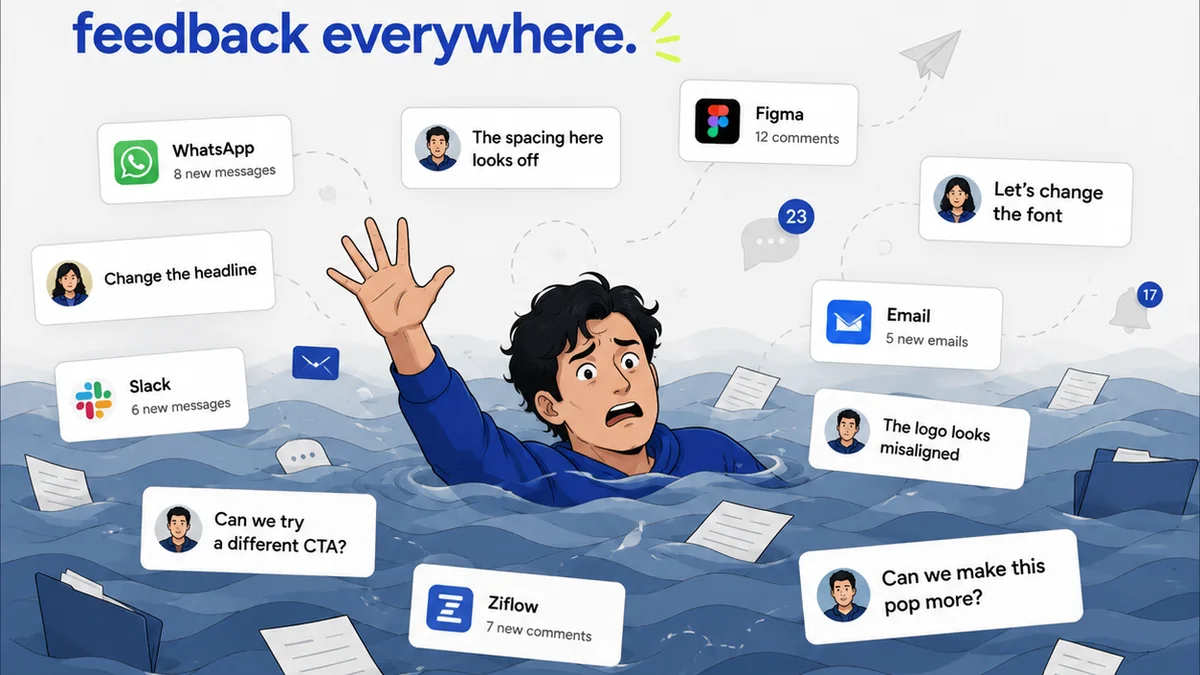
This is where Revue can make a tangible difference. Instead of scattered email chains, confusing spreadsheets, and lost feedback, Revue centralizes the entire process.
Imagine:
- All client feedback, annotations, and approvals for print assets living in one place.
- Clear visibility into each revision stage, with a complete audit trail.
- Easy identification of the final, approved artwork for print.
- Streamlined quality checks before files go to the printer.
Revue helps you manage the chaos, ensuring that the precision required for print is supported by precise project management. It bridges the gap between creative vision and physical execution, reducing errors and saving valuable time.
Final Thought
Print and publishing are not fading into obscurity. They are evolving. And the agencies and creative teams that thrive will be the ones who evolve with them, embracing the operational rigor required to bring brilliant physical work to life. Are you ready to move beyond the assumed simplicity and manage the real complexity?
Frequently asked questions
How do I ensure accurate color reproduction in print?
Accurate color reproduction involves understanding CMYK profiles, using the correct color space for all assets, and working closely with your printer. Calibrating your monitor and managing client expectations about screen-to-print color shifts are also crucial steps.
What's the difference between a digital proof and a physical proof?
A digital proof (like a PDF) is a quick, on-screen representation. A physical proof (like an FPO or press proof) is printed on actual paper using the intended inks and press. Physical proofs are essential for catching issues with color, trapping, and overall print quality that digital proofs can miss, but they take longer and cost more.
How can I prevent costly errors in print production?
Preventing errors requires a meticulous workflow: double-check all specifications (bleed, trim, color profiles), conduct thorough pre-press checks, manage proofing rounds diligently with clear sign-offs, and maintain open communication with your printer. Using a centralized platform for feedback and approvals can also significantly reduce mistakes.
Is print still relevant for creative agencies?
Yes, print remains highly relevant, especially for branding, high-impact marketing, and premium customer experiences. The key is to approach print projects with the same operational rigor and strategic planning as any digital initiative, understanding its unique production demands.