Everyone thinks creative leadership is about having the 'big idea.' It’s about inspiring your team with a grand vision. It’s about nurturing talent and fostering a culture of innovation.
None of that is wrong. But it’s incomplete.
The hard truth is, creative leadership is also about the relentless, unglamorous work of managing the messy middle. It’s about the systems, the processes, and the tough decisions that turn inspiration into tangible results. It's about making sure the trains run on time, even when the track is being laid as they move.
1. Beyond the Vision Board: The Operational Core
A brilliant concept is worthless if it can’t be executed. Your role as a creative leader isn't just to dream it up; it's to build the engine that makes it real.
Defining the 'How'
Vision is the 'what.' Strategy is the 'how.' Too many leaders focus solely on the 'what,' leaving the 'how' to chance. This is a recipe for missed deadlines and frustrated teams.
Your job is to define the operational pathway. This means understanding the resources required, the timeline, the potential roadblocks, and the dependencies.
The Unsexy Backbone: Process
Great creative output doesn't happen by accident. It's the result of well-defined, repeatable processes. This isn't about stifling creativity; it's about creating the guardrails that allow it to flourish safely.
- Clear briefing protocols
- Structured feedback loops
- Defined revision stages
- Robust QA checklists
- Streamlined approval workflows
These aren't bureaucratic hurdles; they are the scaffolding that supports your team's best work.
2. The Art of Resource Alchemy
You’ve got talent. You’ve got deadlines. The gap between them is where most creative leaders struggle.
Capacity vs. Capability
It's easy to confuse having people with having the right people for the job, at the right time. Understanding your team's true capacity – not just their hours, but their skills, their bandwidth, and their current workload – is critical.
Don't just assign tasks. Assign the *right* tasks to the *right* people. This requires deep knowledge of your team’s strengths and weaknesses.
The Cost of 'Rush'
Constant fire-fighting and last-minute scrambles are hallmarks of poor planning, not heroic effort. Rushing creative work doesn't just burn out your team; it degrades quality and increases errors.
Proactive resource allocation and realistic timeline setting are your best defense against the chaos of the eleventh hour.
Visibility is Key
You can't manage what you can't see. Without clear visibility into who is working on what, their progress, and their availability, you're flying blind.
This is where tools that provide a central overview become indispensable. Knowing where every project stands prevents bottlenecks before they form.
3. Feedback That Fuels, Not Frustrates
Client feedback. The bane of many a creative’s existence. It’s often vague, contradictory, or just plain wrong.
The Briefing is Everything
Garbage in, garbage out. If the initial brief is weak, the feedback will be too. Invest time upfront in defining objectives, target audience, and key messages.
A strong brief acts as a filter for irrelevant feedback later.
Structured Input
Unstructured feedback is a swamp. Provide clear channels for feedback, define who is authorized to give it, and set expectations for its format and timing.
Use annotation tools, version control, and clear comment threads. Avoid email chains that fragment communication.
The Leader as Translator
Your role is often to be the buffer and the translator. You need to understand the client's underlying needs, even when they can't articulate them clearly. Then, you need to translate those needs back into actionable direction for your team.
This requires empathy, active listening, and the ability to ask clarifying questions.
4. The Quality Control Gauntlet
You’ve delivered the work. The client is happy. But is it *good* work? Truly excellent work?
Beyond 'Client Approved'
Client approval is a milestone, not the finish line. Their approval means the work meets *their* objectives. Your job is to ensure it also meets *your* standards of quality, craft, and strategic effectiveness.
This requires a critical eye, even on projects you've poured your heart into.
The Checklist Habit
For repetitive tasks or common deliverables, checklists are your best friend. They ensure consistency and catch common errors.
- Brand guidelines adherence?
- Technical specs met?
- Accessibility standards followed?
- Spelling and grammar checked?
- All requested revisions implemented?
These aren't optional extras; they are fundamental to professional output.
The Post-Mortem’s Real Value
Don’t just do a post-mortem when things go wrong. Do them when things go right, too. What worked? What didn’t? How can we do it even better next time?
This continuous improvement loop is essential for elevating the work over time.
5. Where Revue Fits In
Managing creative projects is a balancing act. You need to foster creativity while maintaining order. You need to be agile while ensuring quality.
Revue is built to support this complex reality. It’s not just another project management tool; it’s a dedicated platform for creative workflows.
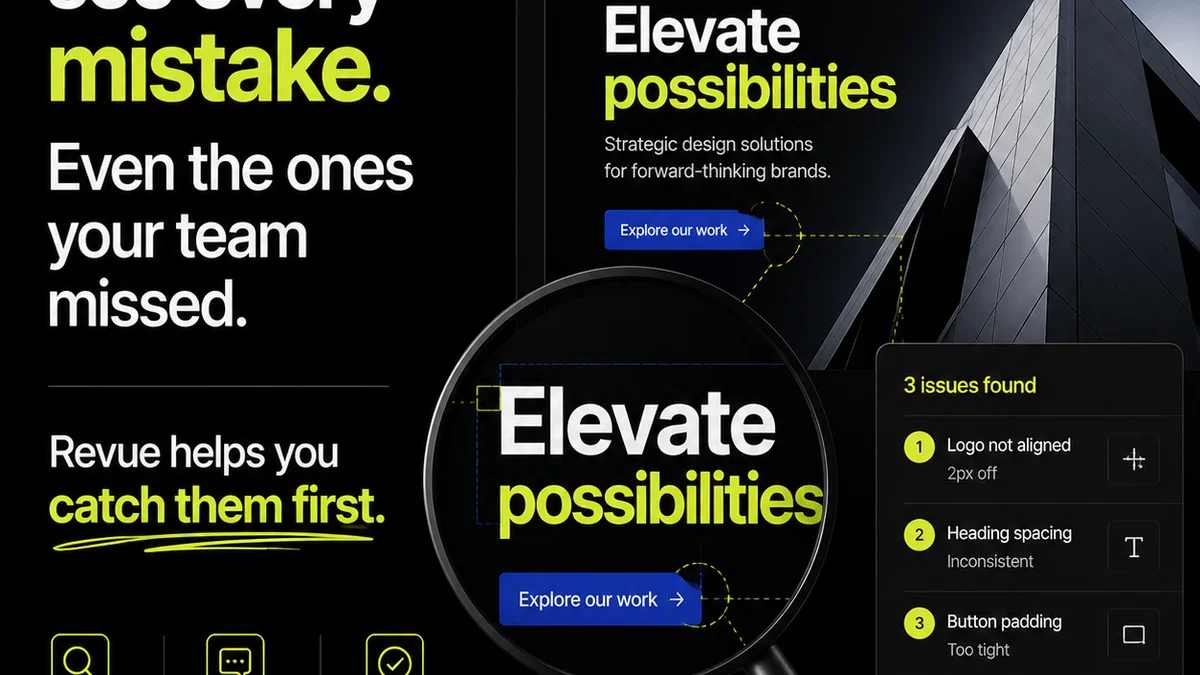
Centralizing feedback means no more hunting through emails or Slack channels. Every comment, every annotation, lives with the asset it pertains to. Revision history is clear, so you always know what changed, when, and why.
Approval workflows are streamlined, reducing ambiguity and speeding up the process. And built-in quality checks ensure that every deliverable meets your agency's high standards before it ever goes to the client.
Revue helps you manage the operational realities so your team can focus on what they do best: creating brilliant work.
Final Thought
Creative leadership is a craft. It demands vision, yes, but it also demands discipline, structure, and a deep understanding of the operational gears that turn ideas into reality. Are you leading with just a vision, or are you building the engine to achieve it?
Frequently asked questions
What's the biggest misconception about creative leadership?
The biggest misconception is that it's solely about having a grand vision or being the most creative person in the room. While vision is important, effective creative leadership is equally, if not more, about the operational aspects: managing processes, resources, and feedback to ensure that vision can be executed flawlessly.
How can I improve feedback quality from clients?
Start with a strong, clear brief that outlines objectives and scope. Then, establish structured feedback channels, define who is authorized to provide feedback, and specify the format and timing. Using tools that allow for direct annotation on creative assets also helps clarify feedback and reduce ambiguity.
Is process a threat to creativity?
No, process is not a threat to creativity; it's a facilitator. Well-defined processes provide the necessary structure and guardrails that allow creative teams to work efficiently, reduce errors, and focus their energy on the creative problem-solving, rather than getting bogged down in administrative chaos or rework.
How does technology like Revue help creative leaders?
Tools like Revue centralize client feedback, making it organized and actionable. They streamline revision and approval workflows, reducing confusion and delays. By providing visibility into the entire creative process and enabling robust quality checks, they help leaders manage operational complexities more effectively, allowing more time for strategic creative direction.