Everyone thinks creative leadership is about being the most talented person in the room. The one with the killer instinct, the visionary who can conjure brilliance out of thin air. The one who *gets* it.
And sure, talent matters. Vision matters. But that’s not the hard truth of leading a creative team. That’s the myth that keeps too many good leaders stuck.
The real job of a creative leader is to build a machine that consistently produces great work. Not just once, not by accident, but every single time. It's about process, not just personality.
1. The Myth of the Lone Genius
We love the stories. Steve Jobs, Walt Disney, etc. The singular genius who bent the world to their will. It’s a compelling narrative, but it’s also dangerous.
It leads new leaders to believe their primary role is to be the 'idea guy' or 'idea gal.' They hoard ideas, they micromanage creative output, and they think their personal taste is the ultimate arbiter of quality.
This approach has a ceiling. A low one.
Why the Lone Genius Model Fails
- It stifles junior talent.
- It creates bottlenecks.
- It burns out the leader.
- It makes the team dependent, not empowered.
- It prioritizes *your* brilliance over the team's collective output.
Your job isn’t to *be* the best creative. Your job is to *enable* the team to be the best creative.
2. The Hard Truth: Leadership is a System
Great creative output doesn't happen in a vacuum. It's the result of a robust, well-oiled system. As a leader, you are the architect and maintainer of that system.
This system covers everything from how briefs are written, how feedback is given, how revisions are managed, and how final approvals happen. It’s the scaffolding that supports creative execution.
Think of it like a factory. The raw materials (client needs, strategic goals) come in, and finished creative assets come out. The leader’s job is to ensure the factory runs smoothly, efficiently, and produces high-quality goods.
Key Components of a Creative System
- Clear project intake and briefing processes.
- Defined roles and responsibilities for every team member.
- A structured feedback and revision loop.
- A rigorous quality assurance gate.
- Effective communication channels.
- A culture that supports iteration and learning.
Without these, you're relying on luck. And luck is not a strategy.
3. Building Your Creative Machine: The Core Pillars
So, how do you build this machine? It starts with defining and refining the core processes that govern your team’s work.
Pillar 1: Crystal-Clear Briefs
Garbage in, garbage out. This is non-negotiable. A weak brief guarantees a weak outcome.
Your role here is to ensure the brief is not just a document, but a shared understanding. It needs to cover:
- The core objective.
- The target audience.
- Key messages.
- Deliverables and formats.
- Mandatories and constraints.
- Tone of voice.
- Success metrics.
Teach your team to question briefs. Teach them to push back respectfully for clarity. Make it a team sport to get the brief right.
Pillar 2: Structured Feedback Loops
This is where most creative teams fall apart. Feedback is often vague, emotional, or contradictory. It’s a breeding ground for frustration and rework.
Your system needs defined stages for feedback:
- Internal review: Team members review each other’s work for clarity, strategy alignment, and technical execution before client review.
- Client review: Structured, time-bound feedback sessions.
- Consolidated feedback: All client comments are gathered, organized, and prioritized.
Establish rules of engagement for feedback:
- Feedback must be constructive and actionable.
- Focus on the brief and objectives, not personal preference.
- Differentiate between 'must-haves' and 'nice-to-haves.'
- Assign ownership for incorporating feedback.
This isn't about stifling creativity; it's about channeling it productively.
Pillar 3: Visible Revision Management
Revisions are inevitable. How you manage them determines your project's health.
A lack of visibility leads to:
- Endless back-and-forth.
- Scope creep.
- Demoralized teams.
- Missed deadlines.
Your system should make it easy to:
- Track all changes made.
- See the history of revisions.
- Understand the rationale behind each change.
- Get clear sign-off on each revision stage.
This transparency builds trust and accountability, both internally and with the client.
Pillar 4: The Quality Gate
Before anything goes to a client, or even before it’s considered 'done,' it needs a quality check.
This isn't just a final spell-check. It's a strategic and technical audit.
Your quality gate should ensure:
- The work meets the brief's objectives.
- All technical specifications are met (file formats, resolution, etc.).
- Brand guidelines are adhered to.
- There are no errors (typos, visual glitches).
- The work is strategically sound and on-brand.
This gate is your last line of defense against shipping mediocre work. It’s where the 'lone genius' idea gets systematically dismantled and replaced with reliable excellence.
4. Leading People, Not Just Projects
A system is only as good as the people operating it. Creative leadership is also about fostering an environment where talent can flourish.
Empowerment Over Authority
True leaders don't dictate; they empower. Give your team ownership. Trust them to execute.
This means:
- Delegating effectively.
- Providing the necessary resources and support.
- Encouraging initiative and problem-solving.
- Creating psychological safety for experimentation.
When people feel trusted, they deliver.
Feedback as a Development Tool
Shift your mindset about feedback. It’s not just about fixing a project; it’s about growing your people.
As a leader, you must:
- Provide specific, actionable feedback.
- Focus on behavior and outcomes, not personality.
- Offer constructive criticism wrapped in support.
- Recognize and celebrate good work and good process.
Your team should leave feedback sessions feeling clearer, more motivated, and better equipped, not defensive or discouraged.
Fostering Collaboration
Creative breakthroughs often happen at the intersection of different perspectives. Your system should encourage cross-pollination.
Promote:
- Brainstorming sessions with clear facilitation.
- Peer reviews and critiques.
- Knowledge sharing about new tools or techniques.
- Opportunities for junior team members to contribute to strategic discussions.
A collaborative environment is a fertile ground for innovation.
Where Revue Fits In
Managing all this can feel overwhelming. You're trying to lead, create, and manage complex workflows simultaneously.
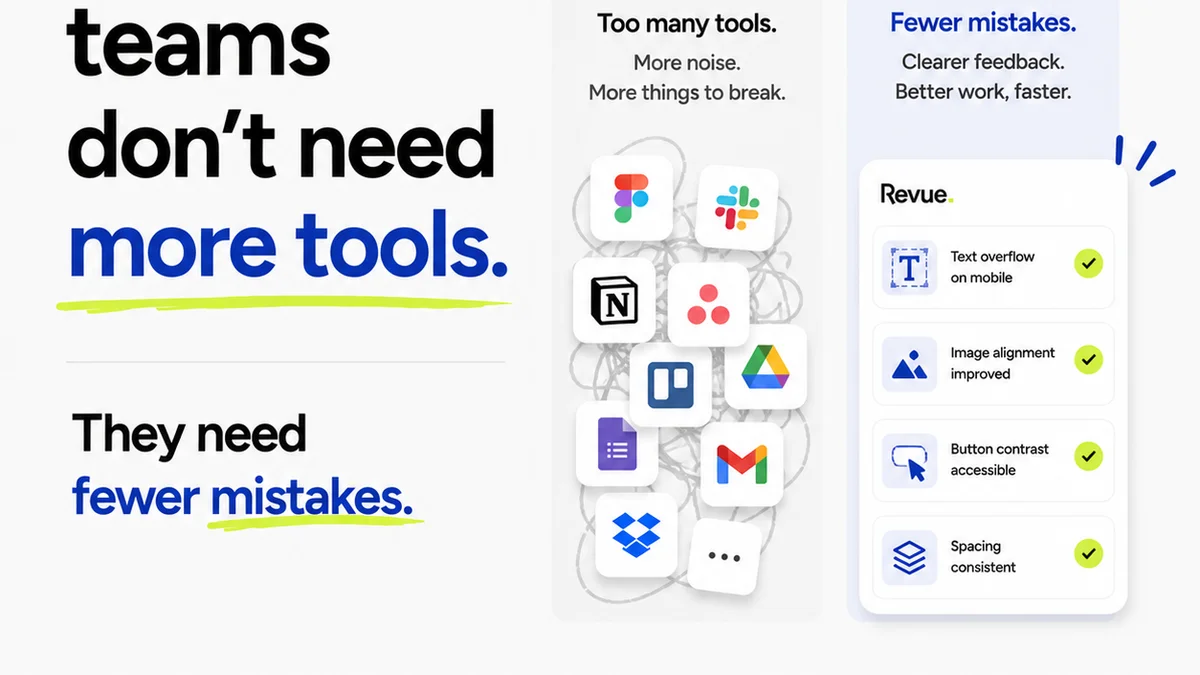
This is where a centralized platform like Revue becomes your operational backbone.
Revue helps you:
- Centralize Client Feedback: No more digging through endless email chains or Slack messages. All feedback lives in one place, linked directly to the creative asset. This ensures clarity and reduces misinterpretation.
- Manage Revisions and Approvals: Track every version, every comment, and every sign-off. This provides a clear audit trail and prevents scope creep by making the revision history transparent to everyone involved.
- Run Quality Checks: Integrate your final QA process into the workflow. Ensure that every piece of creative passes your defined quality gates before it’s delivered.
Revue isn't magic. It’s a tool that helps you implement and enforce the systems we've discussed. It turns abstract principles into concrete, manageable processes.
It frees you up from the minutiae of tracking feedback to focus on the higher-level strategic leadership your team needs.
Final Thought
Creative leadership is a craft that demands both vision and rigor. It’s about nurturing talent while building robust systems that ensure consistent excellence.
Are you building a machine that reliably produces great work, or are you just hoping for lightning to strike?
Frequently asked questions
What's the biggest mistake new creative leaders make?
The biggest mistake is believing their primary role is to be the most talented individual. This leads to hoarding ideas, micromanaging, and stifling team growth. Effective leaders focus on building systems that empower the entire team.
How can I improve feedback quality on my creative team?
Implement structured feedback loops. This means clear internal reviews, defined client feedback stages, and consolidating comments before action. Establish rules for constructive, actionable feedback focused on the brief, not personal preference.
What is a 'quality gate' in creative production?
A quality gate is a mandatory checkpoint before a creative asset is finalized or delivered. It's a systematic review to ensure the work meets the brief's objectives, adheres to brand guidelines, and is free of technical errors or strategic flaws.
How does a tool like Revue help with creative leadership?
Revue helps operationalize good creative leadership by centralizing feedback, managing revisions and approvals with clear visibility, and facilitating quality checks. It turns abstract processes into manageable workflows, freeing leaders to focus on strategy and team development.