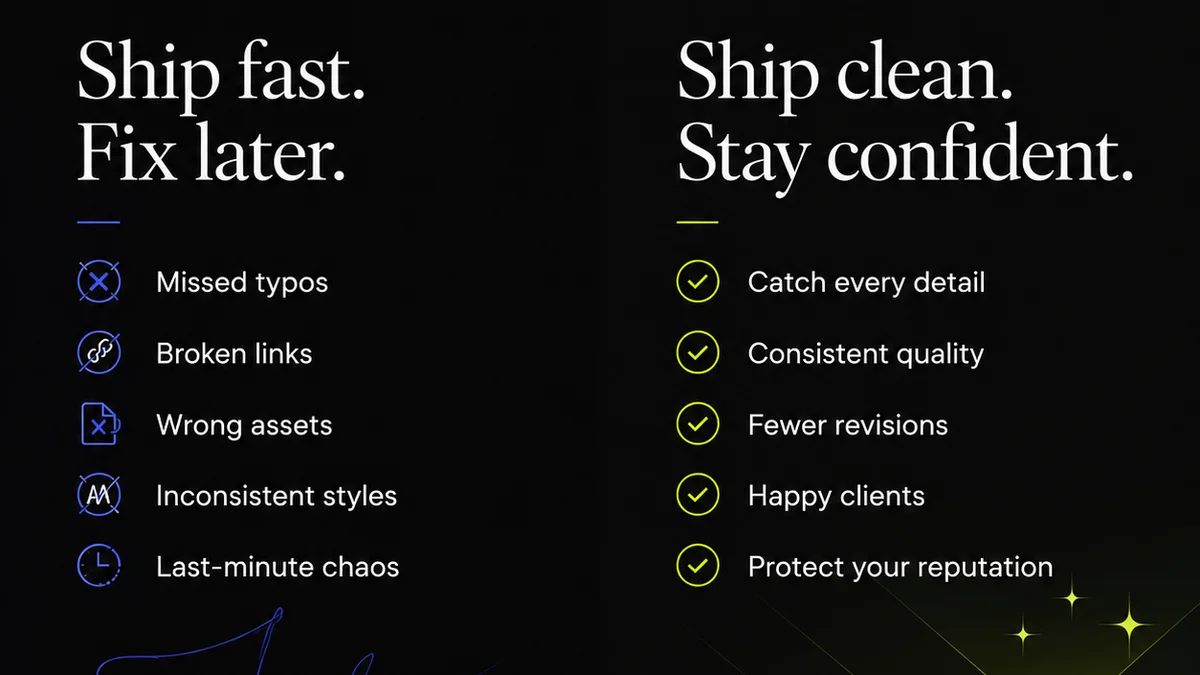
Everyone agrees that great creative leadership is about vision. It’s about nurturing talent. It’s about inspiring teams to do their best work. None of that is wrong. But it’s incomplete.
The hard truth is that the day-to-day operational grind often trips up even the most visionary leaders. The real test of leadership isn't just in the big ideas, but in how you manage the relentless flow of feedback, revisions, and approvals that actually get those ideas to market.
1. The Illusion of 'Just a Quick Chat'
Many leaders fall into the trap of thinking feedback is a casual conversation. A quick Slack message. A brief hallway chat. This approach feels efficient, but it’s a breeding ground for miscommunication and missed details.
When feedback isn't documented, it's easily forgotten, misinterpreted, or lost. What seemed like a minor tweak in a conversation can snowball into a major rework later when the client insists on something they *thought* they communicated.
The Symptoms:
- Endless rounds of revisions that seem to come out of nowhere.
- Team members pulling their hair out, unsure of what changed.
- Clients feeling like their feedback isn't being heard or implemented.
- A general sense of chaos around project scope and direction.
This isn't about being rigid. It's about clarity and accountability.
2. Treating Revisions as a Necessary Evil, Not a Process
Revisions aren't a sign of failure; they're an integral part of the creative process. But many leaders treat them as an annoying interruption, something to be rushed through or avoided.
This leads to rushed revisions, where quality suffers. Or worse, it creates a culture where the team is afraid to ask for clarification, leading to more significant problems down the line.
The real work of creative leadership here is building a robust, transparent revision process. One that welcomes feedback, manages expectations, and ensures every iteration moves the project forward constructively.
The Fix: Standardize Your Revision Workflow
- Establish clear kick-off meetings to define project scope and success metrics.
- Set expectations for the number and type of revision rounds allowed per phase.
- Use a centralized system for all feedback – no more scattered emails or Slack threads.
- Ensure every piece of feedback is acknowledged, discussed, and actioned (or intentionally deferred with client agreement).
- Build in time for internal reviews before client-facing revisions.
A well-defined revision process saves time, reduces frustration, and ultimately leads to a better final product.
3. The Approval Black Hole
This is where projects go to die. The client says,
Frequently asked questions
What's the biggest mistake new creative leaders make?
Often, it's underestimating the operational side of creative work. They focus heavily on the 'big idea' and the creative output, but neglect the crucial processes for managing feedback, revisions, and approvals. This operational gap leads to chaos, missed deadlines, and client frustration.
How can I get better client feedback?
The key is to be proactive and structured. Define what 'good' looks like upfront. Use a centralized platform for all feedback to ensure nothing gets lost. Ask clarifying questions immediately. And importantly, establish clear boundaries for the number and type of revision rounds included in the project scope.
Is it possible to eliminate client revisions?
No, revisions are a natural part of the creative process. The goal isn't to eliminate them, but to manage them effectively. This means having a clear process, setting expectations, and ensuring feedback is constructive and actionable, rather than arbitrary changes.
How does centralized feedback help creative teams?
Centralized feedback eliminates the 'he said, she said' confusion. Everyone on the team sees the same feedback, in context, all in one place. This dramatically reduces misinterpretations, speeds up the revision process, and ensures accountability for every change requested and made.