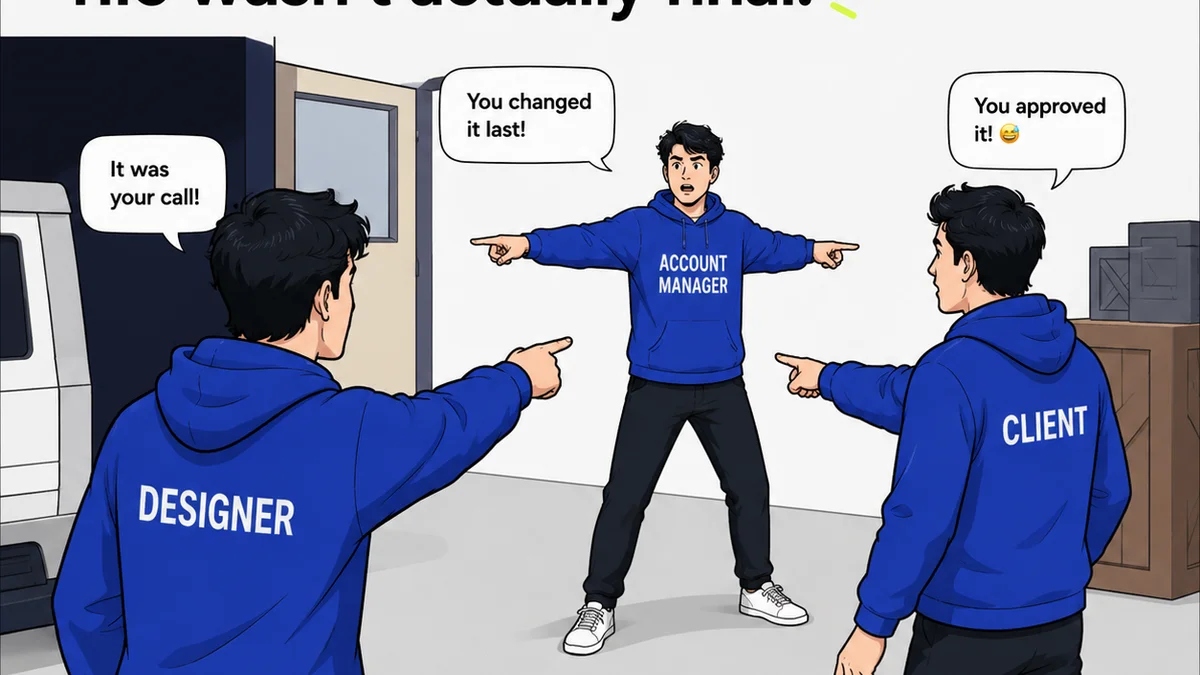
Everyone talks about creative leadership as if it’s all about having a big idea. That you need a unique vision, the ability to inspire your team, and a knack for spotting trends before they hit.
None of that is wrong. But it’s incomplete.
The real, often-unseen engine of great creative leadership is operational discipline. It’s the unglamorous stuff that makes the vision possible, day in and day out.
1. The Illusion of 'Creative Freedom'
Many leaders equate creative freedom with a lack of structure. They believe that the less process, the more creativity will flourish. This often manifests as a free-for-all when it comes to feedback and revisions.
The hard truth? Unfettered freedom leads to chaos. It leads to scope creep, missed deadlines, and frustrated clients. It’s not freedom; it’s just a lack of direction.
The Symptoms:
- Endless revision cycles with no clear endpoint.
- Team members working on multiple, conflicting priorities.
- Lack of clear project briefs or scope definitions.
- Client feedback that is vague, contradictory, or constantly changing.
- A general feeling of being adrift, even on seemingly simple projects.
The Fix: Structured Creativity
Creativity thrives within defined boundaries. It’s about setting clear goals, establishing a feedback framework, and defining what 'done' looks like.
This doesn't mean stifling innovation. It means channeling that energy productively.
- Implement a clear project brief template.
- Define specific stages for feedback and approval.
- Establish a maximum number of revision rounds per phase.
- Empower project managers to enforce these boundaries.
2. The 'Gut Feeling' Fallacy
Creative directors often trust their gut. They feel they can intuit what a client wants or what will resonate with an audience. This instinct is valuable, but relying on it solely is a leadership mistake.
Your gut is informed by experience, but it’s not a substitute for data or process. When decisions are based purely on feeling, you risk alienating stakeholders and missing critical insights.
The Symptoms:
- Decisions that feel arbitrary to the team or client.
- Projects that consistently miss the mark on strategic objectives.
- A lack of clear rationale behind creative choices.
- Difficulty in explaining creative direction to non-creative stakeholders.
- Over-reliance on personal taste rather than client goals.
The Fix: Data-Informed Intuition
Combine your experience with objective information. Use data to validate your instincts and provide a solid foundation for your decisions.
- Incorporate client business goals into every creative decision.
- Use client personas and target audience research to guide creative.
- Track project performance and client satisfaction to learn what works.
- Develop a clear, documented rationale for all creative concepts.
3. Neglecting the Feedback Loop
The client feedback process is often treated as a necessary evil. It’s seen as a hurdle to jump over, rather than an integral part of the creative development process. Leaders might delegate it, ignore it, or accept it without scrutiny.
This is a critical operational failure. The feedback loop is where the creative vision meets client reality. Mishandling it dooms projects.
The Symptoms:
- Clients feeling unheard or misunderstood.
- Feedback being inconsistently applied across the team.
- Internal arguments about interpreting client comments.
- The same feedback issues recurring project after project.
- A lack of clarity on who is responsible for final approval.
The Fix: Centralized, Actionable Feedback
You need a system to capture, organize, and act on feedback effectively. This ensures everyone is on the same page and that client input is constructive, not destructive.
- Use a centralized platform for all client comments and approvals.
- Assign clear ownership for reviewing and actioning feedback.
- Develop a process for clarifying ambiguous comments with clients.
- Ensure all feedback is documented and linked to specific project assets.
4. The Myth of the Solo Genius
Creative leadership is too often seen as the domain of a single, brilliant individual. The leader is expected to have all the answers, make all the final calls, and carry the creative weight.
This is unsustainable and limits the team's potential. True leadership empowers others and fosters a collaborative environment.
The Symptoms:
- Burnout in the lead creative.
- Junior team members not developing their decision-making skills.
- Lack of diverse perspectives in creative problem-solving.
- Bottlenecks forming around the leader's availability.
- A team that waits for direction rather than taking initiative.
The Fix: Distributed Ownership and Collaboration
Build a team where talent is recognized and leveraged. Encourage collaboration and empower individuals to take ownership.
- Delegate creative responsibilities based on strengths.
- Foster an environment where team members feel safe to contribute ideas and challenge assumptions.
- Implement cross-functional team reviews for broader perspectives.
- Invest in training and mentorship to develop emerging leaders.
5. Ignoring the Quality Assurance Bottleneck
After the creative is 'approved,' many agencies breathe a sigh of relief and move on. The final checks are rushed, or worse, skipped entirely. The assumption is that client approval means perfection.
This is a dangerous assumption. Client approval often means 'good enough for now,' not 'flawless.' Skipping QA is a shortcut that leads to costly mistakes and damaged reputation.
The Symptoms:
- Typos and grammatical errors in final deliverables.
- Technical glitches in digital assets.
- Inconsistent branding or messaging.
- Deliverables that don't meet the original brief's technical specifications.
- Client complaints about errors discovered post-launch.
The Fix: Rigorous Quality Control
Implement a formal QA process before any deliverable goes live. This is not optional; it’s a critical part of delivering professional work.
- Create a detailed QA checklist tailored to different project types.
- Assign a dedicated person or team to conduct QA.
- Ensure QA checks for accuracy, consistency, technical performance, and adherence to the brief.
- Build QA time into project timelines from the outset.
Where Revue Fits In
Managing creative projects requires more than just good ideas; it demands robust workflows. The operational pitfalls we've discussed—unclear feedback, endless revisions, inconsistent QA—are precisely what tools like Revue are built to solve.
Revue centralizes client feedback, making it visible and actionable. It provides a clear audit trail for revisions and approvals, eliminating ambiguity and reducing scope creep. This allows creative leaders to enforce structured processes without sacrificing collaboration.
By bringing clarity to the feedback and approval stages, Revue helps teams deliver higher quality work, faster. It frees up leadership to focus on strategy and creative direction, rather than getting bogged down in process management.
Final Thought
Is your leadership style focused on the spark of the idea, or the engine that makes it real? The most effective creative leaders understand that true innovation requires both.
Frequently asked questions
What is the biggest mistake creative leaders make?
Many creative leaders focus too much on the 'big idea' and neglect the operational discipline required to execute it. This often leads to chaotic feedback processes, scope creep, and missed deadlines, rather than efficient, high-quality output.
How can I improve client feedback loops?
Implement a structured feedback process. Centralize all comments and approvals in one place, define clear stages for feedback, and establish a system for clarifying ambiguous input. This ensures feedback is actionable and reduces misunderstandings.
What's the role of 'gut feeling' in creative decision-making?
A creative leader's intuition is valuable, but it shouldn't be the sole basis for decisions. Combine your gut feelings with data, client objectives, and team input. Use your intuition to explore possibilities, but validate decisions with objective information.
Why is quality assurance (QA) crucial in creative projects?
Client approval often means 'acceptable,' not 'perfect.' Skipping QA can lead to costly errors, typos, technical glitches, and damage to your agency's reputation. A rigorous QA process ensures deliverables are polished and meet all specifications before launch.