You’ve heard it a million times: “What gets measured gets managed.” And for creative agencies and in-house teams, that often translates into a flurry of metrics. Project completion times, client satisfaction scores, billable hours, even the number of revisions. None of that is wrong. But it’s incomplete.
The hard truth is that many teams chase the wrong creative metrics, or worse, they chase metrics without understanding the underlying workflow that produces them. This leads to a distorted view of performance, wasted effort, and ultimately, missed opportunities for real improvement.
Let’s cut through the noise and talk about the *real* challenges in creative metrics and how to solve them.
1. The Illusion of Speed: Chasing Completion Times
The assumption: Faster is always better. Completing projects ahead of schedule feels like a win. It looks good on paper.
The hard truth: Speed without quality or client alignment is just rushing. It often masks underlying issues like scope creep, poor communication, or a lack of clear initial briefs. The real cost isn't just the time saved; it's the potential for errors, unhappy clients, and rework down the line.
Symptoms of a Speed-Obsessed Trap:
- High error rates discovered post-launch.
- Frequent, last-minute client requests for significant changes.
- Team burnout due to constant pressure to rush.
- Client satisfaction scores that don't match the perceived
Frequently asked questions
What are the most common mistakes agencies make when tracking creative metrics?
Many agencies focus on vanity metrics like raw completion time without considering quality or client alignment. They might also track too many metrics, leading to analysis paralysis, or fail to connect metrics back to specific workflow bottlenecks. Over-reliance on subjective client satisfaction scores without objective measures is another common pitfall.
How can agencies measure the *quality* of creative work, not just the speed?
Quality can be measured through a combination of objective and subjective indicators. Objective measures include error rates, adherence to brand guidelines, and rework required due to fundamental issues. Subjective measures, when carefully collected, can include client feedback on specific deliverables (not just overall satisfaction) and internal team assessments of creative impact and effectiveness.
What's the difference between tracking metrics and driving improvement?
Tracking metrics is about observation; driving improvement is about action. Simply noting that projects are taking longer doesn't help. Improvement comes from analyzing *why* they are taking longer (e.g., poor brief, slow feedback loops, excessive revisions) and implementing changes to address those root causes. Metrics should inform strategic adjustments to processes.
How can technology help with creative metrics?
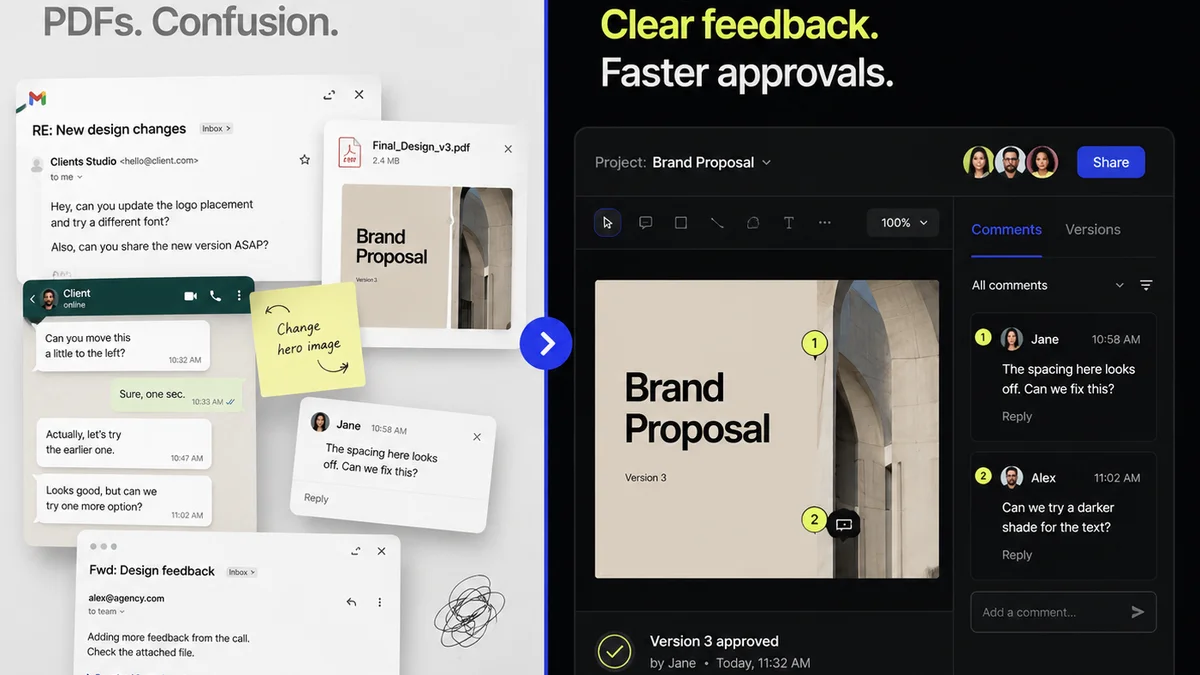
Technology, like Revue, can automate the collection of crucial data points related to feedback, revisions, and approvals. This provides a clearer, more objective view of project timelines, client engagement, and the revision process. Centralizing this data allows for easier analysis and identification of workflow inefficiencies that impact metrics.