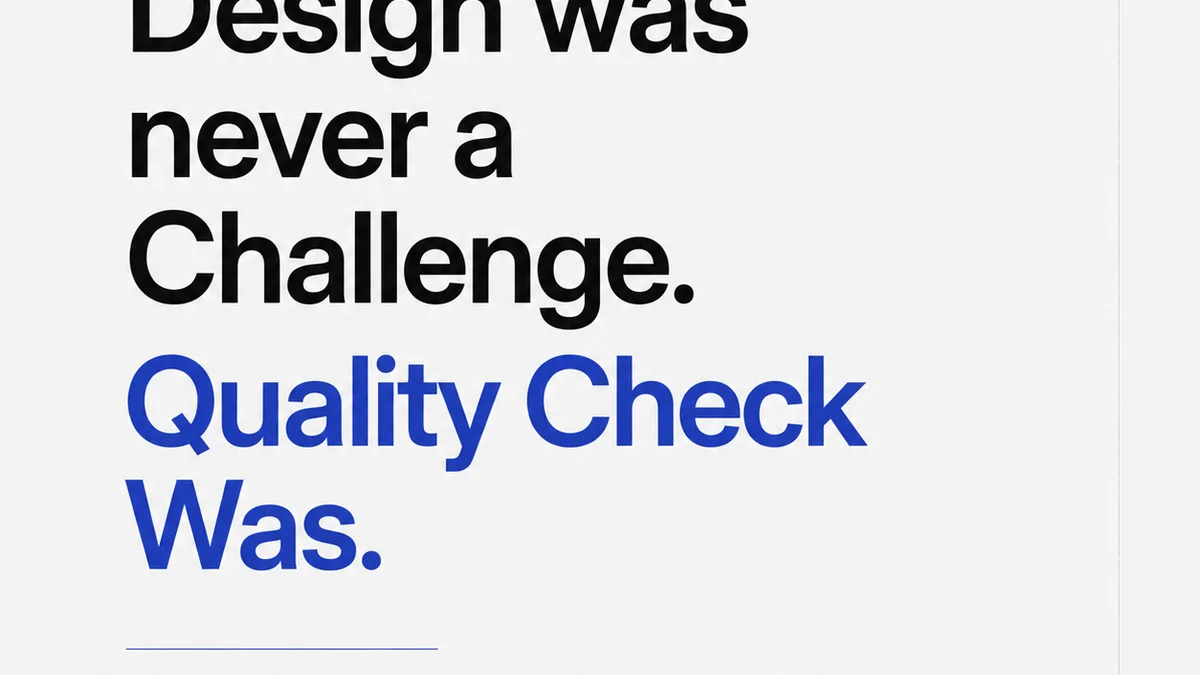
Everyone talks about creative operations. They preach efficiency, streamlined workflows, and faster turnarounds. And none of that is wrong. But it’s incomplete.
The real hard truth? You can have the slickest process in the world, but if you’re not measuring the *output* – the actual creative quality and its impact – you’re flying blind.
1. The Illusion of Control
Most creative ops leaders focus on what they can see: task completion, hours logged, budget adherence. These are important, no doubt.
But they’re lagging indicators. They tell you if you *finished* something, not if you finished the *right* thing, or if it was even any good.
This focus creates an illusion of control. You feel like you’re managing the machine, but you might be optimizing for the wrong outcomes.
The Symptoms of Metric Blindness
- Projects are always “on time” and “on budget,” but clients are never truly delighted.
- Team morale is shaky, despite clear project management tools.
- There’s a constant feeling of “busy work” without a clear sense of creative accomplishment.
- Revision cycles drag on endlessly, not because of delays, but because the core creative isn’t hitting the mark.
2. What “Good Creative” Actually Means
This is where it gets tough. “Creative” is subjective, right? That’s the common excuse for not measuring it.
But subjectivity doesn’t mean unmeasurable. It just means you need smarter metrics.
Think about it. We measure marketing campaign performance. We measure sales figures. We measure website traffic. These are all proxies for business impact.
Creative metrics are just a more direct measure of the creative’s effectiveness in achieving its goals. What are those goals?
- Does it stop the scroll?
- Does it communicate the intended message clearly?
- Does it evoke the desired emotion?
- Does it drive the desired action?
- Does it align with brand strategy and standards?
3. Beyond the “Looks Good” Feedback
Client feedback is notoriously vague. “Make it pop.” “I’m not feeling it.” “Can we try something else?”
Without a framework for measuring creative output, this vague feedback becomes gospel. You iterate endlessly on aesthetics without understanding the underlying strategic or communication issues.
This is a massive drain on resources. Time spent chasing subjective whims is time not spent on strategically sound creative development.
Quantifying Qualitative Wins
How do you quantify “stopping the scroll”? That’s where A/B testing comes in. Test headlines, visuals, calls to action.
How do you measure clarity? User testing, message recall surveys.
How do you ensure brand alignment? Develop clear brand guideline checklists and scorecards.
These aren’t just post-production checks; they should inform the creative process itself.
4. The Operational Impact of Creative Metrics
When you start measuring creative output, your operations change. Suddenly, the focus shifts from just *delivery* to *effective delivery*.
This impacts:
- Briefing: Briefs become sharper, with clearer objectives and measurable success criteria.
- Ideation: Teams are pushed to generate ideas that aren’t just pretty, but strategically sound and testable.
- Feedback: Feedback becomes more specific and actionable, tied to the defined creative goals.
- Approvals: Approvals are based on meeting objective criteria, not just personal taste.
- Resource Allocation: Time and budget are better spent on iterations that demonstrably improve creative performance.
This isn't about stifling creativity. It's about giving creativity a clear target and a way to prove its worth.
5. Where Revue Fits In
Creative operations tools should support this shift. You need a platform that doesn’t just track tasks, but facilitates the measurement of creative quality.
Revue helps you centralize feedback, making it easier to capture specific, measurable comments tied to project goals.
Our revision and approval tracking provides a clear audit trail, showing how creative decisions were made and whether they aligned with initial objectives.
Most importantly, Revue helps enforce quality checks by providing a structured environment for reviewing creative work against predefined criteria, ensuring that the *right* metrics are being considered before final sign-off.
6. Building Your Creative Metrics Framework
Start small. Don’t try to measure everything at once.
Identify 1-2 key objectives for your most important creative outputs. For example, for social media posts, maybe the key metric is engagement rate. For website landing pages, it might be conversion rate or time on page.
Develop simple checklists or scorecards based on these objectives.
Train your teams and clients on how these metrics will be used.
Iterate and expand your framework as you get comfortable.
Final Thought
Are you managing a creative factory, churning out deliverables on time and budget? Or are you cultivating a creative engine that consistently produces work that achieves business goals and delights audiences?
The difference lies in measuring what truly matters: the creative itself.
Frequently asked questions
What are creative metrics?
Creative metrics are quantifiable measures used to assess the effectiveness and quality of creative work, beyond just tracking timelines and budgets. They focus on how well the creative achieves its intended goals, such as engagement, clarity, or conversion.
Why is measuring creative output important for operations?
Measuring creative output ensures that operational efficiency is directed towards producing high-quality, impactful work. It helps identify what's truly working, refine briefs, improve feedback, and justify creative decisions, ultimately leading to better business outcomes and client satisfaction.
How can I start measuring creative quality?
Begin by identifying 1-2 key objectives for your most critical creative assets (e.g., engagement for social posts, conversion for landing pages). Develop simple scorecards or checklists based on these objectives and integrate them into your review process. Gradually expand your framework as you gain experience.
Is measuring creativity subjective?
While creativity has subjective elements, its *impact* and *effectiveness* can be measured. By setting clear goals and using objective criteria (like A/B test results, user feedback, or alignment with brand strategy), you can quantify qualitative wins and move beyond vague feedback.