Everyone talks about creative metrics. You hear about engagement rates, conversion numbers, project profitability. It’s easy to assume that if you’re tracking these things, you’ve got a handle on your creative output. You’re measuring what matters.
None of that is wrong. But it’s incomplete.
The hard truth is that most agencies and creative teams are measuring the wrong things, or they’re measuring the right things in the wrong way. They focus on vanity metrics or lagging indicators, missing the crucial signals that predict future success (or failure).
1. Beyond Vanity: What Metrics Actually Move the Needle
Vanity metrics are easy to track and look good on a dashboard. Likes, shares, raw website traffic. They feel like progress. But do they actually impact your bottom line or client satisfaction?
Usually, no.
The Real Drivers of Agency Success
True creative metrics connect directly to business objectives and operational efficiency. They tell you not just what happened, but why it happened, and what to do next.
- Client Satisfaction Scores (CSAT) & Net Promoter Score (NPS): Direct feedback on your work and service. Essential for retention.
- Project Profitability: Not just revenue, but profit margin. Are you making money on the work you do?
- On-Time Delivery Rate: A proxy for workflow efficiency and client trust.
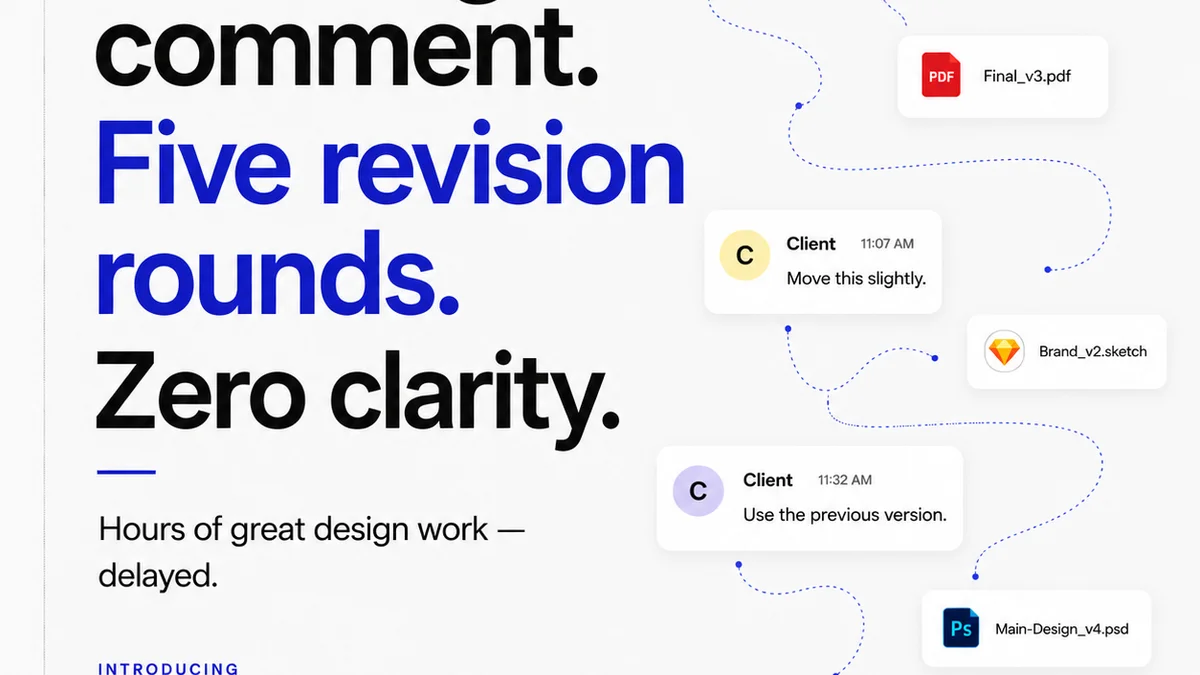
- Revision Cycles: The number of rounds needed for approval. Too many indicates scope creep or miscommunication.
- Client Feedback Response Time: How quickly can you get crucial input from your clients?
- Team Utilization Rate: Are your people busy, or are they busy *productively*?
These are the numbers that tell the real story.
2. The Myth of the 'Creative Genius' Metric
There’s a pervasive myth that creativity is unquantifiable. That it’s all about inspiration and gut feeling. That you can’t (or shouldn’t) measure the impact of a brilliant idea.
This is a convenient excuse for poor process.
Quantifying Creative Impact
While you can’t put a precise dollar value on a single spark of genius, you absolutely *can* measure the outcomes of that genius when it’s applied effectively within a structured workflow.
- Campaign Performance Metrics: Did the creative *work*? Did it achieve the client’s goals (conversions, leads, brand awareness lift)?
- Asset Performance: How did specific creative assets (e.g., a video, a banner ad, a landing page) perform against their objectives?
- User Engagement with Creative: Time on page, scroll depth, interaction rates with specific creative elements.
- Brand Perception Shifts: Measured through sentiment analysis or brand tracking studies.
The idea isn't to measure the *act* of creation, but the *impact* of the creation.
3. Lagging vs. Leading Indicators: Predicting Success
Most agencies are obsessed with lagging indicators. These are metrics that tell you what happened after the fact. Revenue, profit, completed project numbers.
They’re important, but they offer no predictive power.
The Power of Leading Indicators
Leading indicators are the early warning signs. They predict future outcomes. If you track these, you can course-correct before a project goes off the rails or a client relationship sours.
- Number of Open Action Items on a Project: Indicates potential bottlenecks.
- Average Time to Receive Client Feedback: Slow feedback = delayed projects = unhappy clients.
- Frequency of Scope Creep Requests: A sign of unclear initial briefs or poor expectation management.
- Team Member Overtime Hours: Signals potential burnout and process inefficiencies.
- Client Check-in Frequency: Proactive communication can prevent major issues.
Focusing on leading indicators allows you to be proactive, not reactive. You manage the present to secure the future.
4. The Feedback Loop: Your Most Valuable Metric
Client feedback is the lifeblood of any creative project. Yet, it’s often the most chaotic part of the process.
Are you treating it like a treasure trove of insights, or a necessary evil?
Optimizing Feedback for Better Creative
The speed, clarity, and actionability of client feedback directly impact project timelines, budget, and final quality. Measuring this loop is critical.
- Time to First Feedback: How long does it take for a client to review and comment?
- Time to Final Approval: How long from initial delivery to final sign-off?
- Clarity of Feedback: Can you easily understand what the client wants? (This is harder to quantify but can be assessed via post-project surveys).
- Number of Clarification Requests Needed: How often do you have to go back to the client to understand their feedback?
- Feedback Sentiment: Is the feedback constructive or purely subjective?
A well-oiled feedback loop means faster approvals, fewer revisions, and ultimately, better creative work.
5. Where Revue Fits In
Managing creative projects means managing a constant flow of information, feedback, and approvals. Trying to do this via email chains and scattered documents is a recipe for disaster.
You need a centralized system.
Streamlining Your Metrics with Revue
Revue is built to bring order to creative chaos. It’s not just about storing files; it’s about managing the entire review and approval process.
- Centralized Feedback: All client comments live on the asset itself, eliminating endless email threads and version control nightmares. This makes feedback clearer and faster to process.
- Revision Visibility: Track every change, every version, and every approval. This provides a clear audit trail and helps identify bottlenecks in the revision process.
- Streamlined Approvals: Formalize the sign-off process. Know exactly when a client has approved a piece, and when they haven’t. This directly impacts your on-time delivery metrics.
- Quality Control: Ensure that all necessary checks and balances are in place before final delivery.
By centralizing these critical touchpoints, Revue helps you gather the data needed to track your most important creative metrics accurately. You can finally see the patterns in your workflow, identify inefficiencies, and make data-driven decisions.
Final Thought
Are you measuring the health of your creative output, or just its pulse? The difference lies in understanding what truly drives success and building processes to track those leading indicators. Stop collecting data for data’s sake. Start measuring what matters, and transform your agency’s performance.
Frequently asked questions
What are the most important creative metrics for an agency?
Focus on metrics that directly impact business outcomes and operational efficiency. Key examples include Client Satisfaction Scores (CSAT), Project Profitability, On-Time Delivery Rate, Revision Cycles, and Client Feedback Response Time. These provide a clearer picture than vanity metrics like social media likes.
How can I measure the success of creative work?
Measure the *outcomes* and *impact* of the creative work against client objectives. This includes campaign performance (conversions, leads), asset performance, user engagement with specific creative elements, and shifts in brand perception. It's about whether the creative achieved its goals, not just how aesthetically pleasing it is.
What's the difference between leading and lagging indicators in creative projects?
Lagging indicators tell you what happened in the past (e.g., final profit, completed projects). Leading indicators predict future outcomes and allow for proactive adjustments (e.g., time to receive client feedback, number of open action items, client check-in frequency). Focusing on leading indicators helps prevent problems before they arise.
How does client feedback relate to creative metrics?
The feedback process is critical. Metrics like 'Time to First Feedback,' 'Time to Final Approval,' and 'Clarity of Feedback' directly impact project timelines, budget, and final quality. Optimizing this loop through clear communication and efficient tools leads to better metrics across the board.