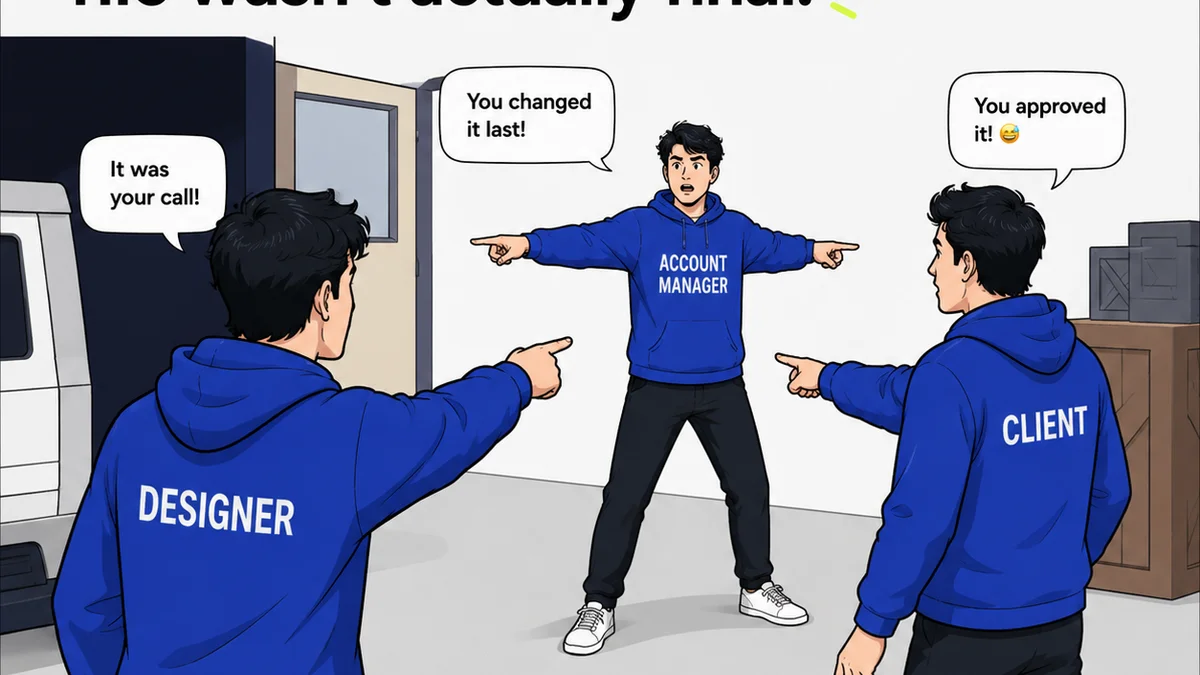
Everyone agrees that creative operations is becoming more important. You see it in job titles, hear it in conference keynotes, and read it in industry reports. It’s the buzzword of the moment, promising streamlined workflows and happier creatives.
None of that is wrong. But it’s incomplete.
The real story of creative operations isn't just about checking boxes or implementing new software. It's about fundamentally reshaping how agencies and creative teams function to unlock true potential. It's about building a resilient, adaptable engine for creative output that can handle the relentless pace and complexity of modern client demands.
1. Beyond the Buzzword: The Strategic Imperative
Many view creative operations as a support function. A necessary evil, perhaps, to wrangle chaotic projects and keep budgets in line. This perspective misses the strategic imperative.
In 2026, creative operations will be the strategic backbone of successful agencies. It's the discipline that bridges the gap between creative vision and business reality.
The Shifting Landscape
Client expectations are higher than ever. They want faster turnarounds, more personalized content, and seamless integration across channels. At the same time, technology is evolving at breakneck speed, demanding constant adaptation.
Agencies that treat creative operations as merely an administrative task will find themselves outmaneuvered.
What It Really Means
Creative operations, in its mature form, is about:
- Defining and standardizing processes that support creativity, not stifle it.
- Building systems that enable collaboration and knowledge sharing.
- Leveraging technology strategically to augment human capabilities.
- Fostering a culture of continuous improvement and adaptation.
- Ensuring quality and consistency without sacrificing innovation.
It’s about creating an environment where great work can happen consistently, predictably, and profitably.
2. The Myth of the 'Creative Genius' Silo
A common assumption is that creativity is an innate gift possessed by a select few, operating in a world apart from the operational grind. The 'star creative' who needs protection from the 'suits'.
This romanticized view is a dangerous liability in today's agency environment.
The Collaborative Reality
Exceptional creative work in 2026 rarely emerges from a vacuum. It's the product of highly collaborative, integrated teams. This includes creatives, strategists, account managers, technologists, and crucially, operations specialists.
Creative operations breaks down these artificial silos. It creates clear lines of communication and accountability, ensuring everyone is aligned towards a common goal.
Empowering Creatives Through Structure
Contrary to popular belief, good operations doesn't kill creativity; it liberates it. When creatives spend less time on administrative tasks, chasing feedback, or navigating internal politics, they have more time and mental bandwidth for ideation and execution.
Think about it:
- Reduced time spent searching for assets.
- Clearer briefs and feedback loops.
- Streamlined approval processes.
- Predictable project timelines.
- Less context-switching.
This structured environment allows creative talent to focus on what they do best: creating groundbreaking work.
3. Operationalizing Feedback and Approvals
Client feedback is the lifeblood of creative projects. But unmanaged feedback is a project killer. It's a frequent source of miscommunication, scope creep, and team burnout.
The traditional email-and-spreadsheet approach to feedback is no longer sustainable.
The Chaos of Disconnected Channels
Feedback arrives via email, Slack, impromptu calls, annotated PDFs, and even carrier pigeon. Compiling, organizing, and acting on this disparate information is a monumental, error-prone task.
This lack of a single source of truth leads to:
- Missed comments.
- Conflicting instructions.
- Endless revision cycles.
- Frustrated clients and teams.
- Wasted time and resources.
By 2026, agencies will demand a centralized, transparent system for all creative feedback and approvals.
Visibility and Accountability
A robust creative operations framework provides clear visibility into the feedback and approval process. Everyone involved can see the status, the comments, and the decisions made.
This transparency fosters accountability. It means clients know exactly where their project stands, and teams can track progress without constant check-ins. It moves feedback from a subjective 'feeling' to an objective, actionable item.
4. The Quality Control Imperative
Quality control (QC) is often treated as an afterthought, a final check before delivery. But true quality is built into the process, not bolted on at the end.
Creative operations ensures that quality is a non-negotiable component of every stage.
From Reactive to Proactive QC
Many agencies are still in reactive QC mode. They find errors at the last minute, leading to stressful rushes, client dissatisfaction, and damage to the agency's reputation. This is inefficient and costly.
Proactive QC, driven by operations, involves:
- Establishing clear quality standards and checklists.
- Integrating checks into the workflow at key milestones.
- Utilizing technology for automated checks where possible (e.g., file format, resolution).
- Training teams on best practices and common pitfalls.
This systematic approach minimizes errors and ensures that work consistently meets client and internal standards.
Brand Consistency and Compliance
Beyond technical errors, quality control also encompasses brand consistency and compliance. Is the work on-brand? Does it adhere to legal or regulatory requirements?
Creative operations ensures that these critical aspects are not overlooked. It builds checks and balances into the system, safeguarding the client's brand and the agency's integrity.
5. Where Revue Fits In
Building a sophisticated creative operations function requires the right tools. Tools that facilitate, rather than hinder, the creative process.
Revue is designed to address the core challenges of creative operations head-on.
Centralized Feedback and Revisions
Revue acts as a single source of truth for client feedback. All comments, annotations, and discussions happen within the platform, directly on the creative assets. This eliminates the chaos of fragmented communication channels.
Teams can manage revisions with clear visibility, ensuring no feedback gets lost and every iteration is tracked.
Streamlined Approvals
The platform provides clear workflows for client approvals. Stakeholders can easily review work and provide their sign-off, moving projects forward efficiently. This dramatically reduces the time spent chasing approvals and managing version control.
Integrated Quality Assurance
While not a replacement for dedicated QC specialists, Revue supports quality assurance by providing a structured environment for review. Clear annotation and version history make it easier to spot discrepancies and ensure that feedback is implemented correctly. It helps create a more robust, transparent, and auditable process from start to finish.
6. Final Thought
Creative operations is not a trend; it's a fundamental shift in how successful agencies operate. It's the disciplined pursuit of excellence, enabling creativity to flourish within a framework of efficiency and strategic alignment.
By 2026, agencies that have mastered their creative operations will not just be more profitable; they'll be more innovative, more resilient, and more desirable places to work.
Are you building an operational foundation that supports your creative ambition, or are you leaving your agency's future to chance?
Frequently asked questions
What is the primary benefit of strong creative operations?
The primary benefit is enabling creative teams to produce higher quality work more consistently and efficiently. It removes administrative friction, clarifies communication, and ensures everyone is aligned, allowing creatives to focus on their core tasks.
How does creative operations impact client relationships?
Strong creative operations lead to better client relationships through increased transparency, faster turnaround times, fewer errors, and more predictable project outcomes. Clients experience a more professional and reliable service.
Is creative operations only for large agencies?
No, creative operations is crucial for agencies of all sizes. Smaller agencies can benefit immensely from implementing even basic operational principles to avoid common pitfalls like scope creep and missed deadlines, while larger agencies need robust systems to manage complexity.
How can I start improving my agency's creative operations?
Start by identifying your biggest workflow bottlenecks. Map out your current processes for feedback, revisions, and approvals. Look for areas where miscommunication or delays frequently occur. Then, explore tools and methodologies that can centralize information and streamline these specific areas.