Everyone’s talking about AI, automation, and the metaverse transforming creative operations by 2026. It’s exciting stuff, and it’s not entirely wrong.
But focusing solely on the shiny new tech misses the point.
The real game-changer for creative agencies and in-house teams isn’t a new algorithm. It’s a brutal, unvarnished commitment to operational excellence. The kind that makes the tech work, rather than relying on the tech to fix broken foundations.
The hard truth is, if your core processes are a mess, throwing more automation at them just makes you efficiently chaotic.
By 2026, the agencies that thrive won’t be the ones with the most futuristic stack. They’ll be the ones with the most robust, streamlined, and human-centric operations.
1. Process is King (Even When It’s Boring)
Let’s get this out of the way: process isn’t glamorous. It’s the unsexy backbone of every successful creative operation. And in 2026, with margins tightening and client demands escalating, it’s more critical than ever.
Too many agencies operate on a “wing it and hope for the best” model. They rely on the brilliance of their creatives to overcome systemic inefficiencies. That’s a losing strategy.
Defining Your Core Workflows
What are your non-negotiables? Every agency needs crystal-clear processes for:
- Onboarding new clients and projects
- Briefing creative teams
- Internal reviews and feedback loops
- Client feedback and approvals
- Asset delivery and archiving
- Billing and project closure
This isn’t just about creating a flowchart. It’s about documenting, standardizing, and consistently enforcing these steps. Even the small ones.
The Cost of Ambiguity
Ambiguity kills efficiency. When steps are unclear, people guess. When people guess, mistakes happen. Mistakes lead to revisions. Revisions cost time and money. Time and money lost are profit margins eroded.
By 2026, margins will be tighter. You can’t afford ambiguity.
2. Feedback Loops: From Chaos to Clarity
Client feedback is the lifeblood of creative work. It’s also the most frequent source of operational friction. The assumption is that more feedback is better. The reality is, *better* feedback is better.
Poorly managed feedback is a project killer. It leads to endless revisions, scope creep, and frustrated teams and clients.
The Feedback Avalanche
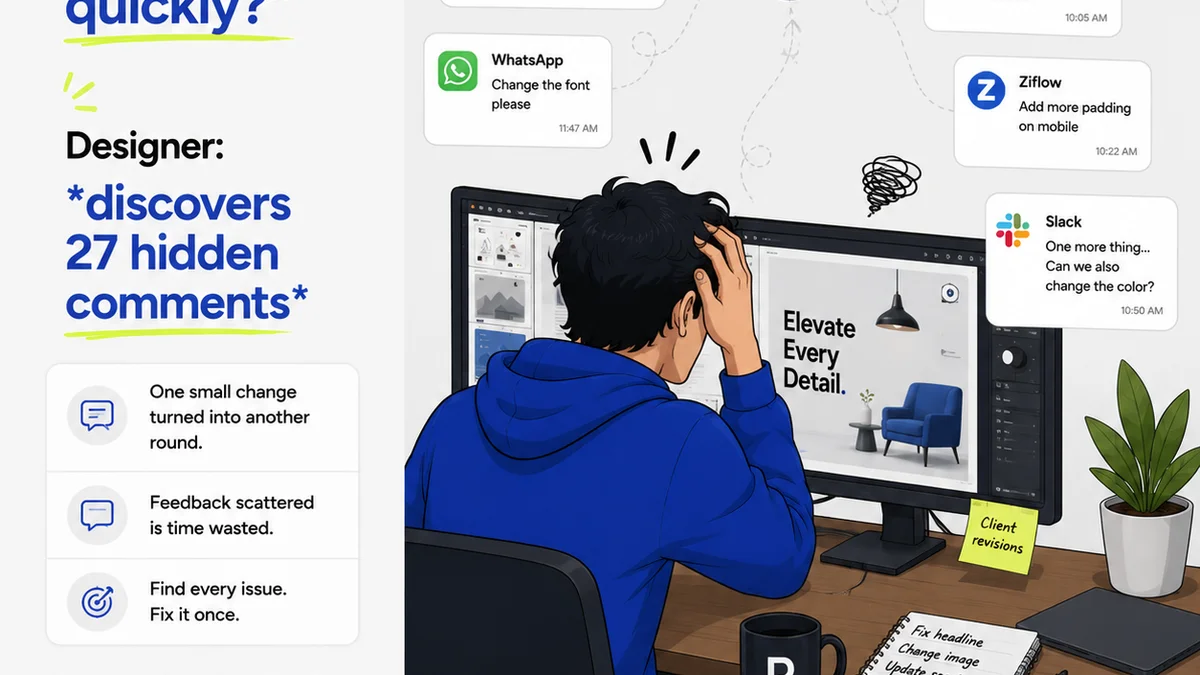
Think about your current process. Is feedback scattered across emails, Slack messages, random documents, and verbal conversations? Is it clear who gave what feedback, when, and why?
If not, you’re drowning in an avalanche of unstructured data.
Implementing Structured Feedback
By 2026, the agencies that win will have systems for structured, actionable feedback. This means:
- Centralizing all feedback in one place.
- Timestamping and attributing every comment.
- Distinguishing between subjective opinions and objective requirements.
- Having a clear process for resolving conflicting feedback.
- Ensuring feedback is specific and constructive, not just a vague “I don’t like it.”
This isn’t about stifling creativity. It’s about channeling it effectively, guided by clear direction.
3. Revision Management: The Art of the Controlled Iteration
Revisions are inevitable. They are not, however, a license for infinite scope creep. The assumption is that clients have the final say, always. The operational truth is that scope must be managed.
Uncontrolled revisions are a direct hit to your profitability and team morale.
The Endless Revision Cycle
How often do projects get stuck in a cycle of minor tweaks that never seem to end? This usually stems from:
- Lack of a clearly defined scope of work.
- No agreed-upon limit for revision rounds.
- Poor documentation of what’s been revised and why.
- Client confusion about what constitutes a “revision” versus a “new request.”
Setting Boundaries and Visibility
By 2026, effective revision management is non-negotiable. This requires:
- Explicitly defining the number of revision rounds included in the project scope.
- Establishing a clear process for requesting and tracking revisions.
- Using tools that provide visibility into the revision history for both the team and the client.
- Having a protocol for addressing requests outside the agreed scope (e.g., change orders).
This protects your team’s time and your agency’s bottom line.
4. Quality Assurance: Beyond the Final Pixel
Many agencies think QA is just about catching typos or broken links before launch. That’s a superficial view. True quality assurance in 2026 is about systemic integrity.
It’s about ensuring that the final output not only meets aesthetic and functional requirements but also aligns perfectly with the original brief and client objectives.
The Hidden Costs of Poor QA
What happens when quality slips?
- Client dissatisfaction and loss of trust.
- Reputational damage.
- Costly post-launch fixes.
- Wasted internal time backtracking.
- Missed opportunities to impress and retain clients.
Building a Robust QA Framework
A strong QA process by 2026 involves:
- Checklists tailored to project types.
- Multi-stage reviews (internal creative, internal technical, client).
- Verification against the original brief and client KPIs.
- Automated checks where possible (e.g., code validation, link checking).
- A final sign-off process that confirms all requirements are met.
This isn’t about bureaucracy; it’s about professional diligence.
5. Team Collaboration and Communication: The Human Element
Amidst all the talk of tech and process, we can’t forget the people. The assumption is that technology will solve communication problems. The reality is, technology is only as good as the human collaboration it supports.
Burnout is real. Miscommunication is rampant. And these issues cripple creative output and operational efficiency.
The Communication Black Hole
Are your teams constantly chasing information? Do they know who’s responsible for what? Are internal silos preventing efficient work?
This is where many agencies stumble, even with the best intentions.
Fostering Seamless Collaboration
By 2026, successful operations will prioritize:
- Clear roles and responsibilities.
- Centralized communication channels for projects.
- Regular, concise team syncs (not endless meetings).
- Tools that facilitate asynchronous collaboration.
- A culture that encourages open, honest feedback among team members.
Technology should enhance, not replace, human connection and clarity.
Where Revue Fits In
Managing these operational pillars requires visibility and control. This is where a platform like Revue becomes essential.
Revue provides a centralized hub for your creative workflow. It’s designed to bring clarity to the chaos of client feedback, revisions, and approvals.
Imagine:
- All client comments and stakeholder feedback consolidated in one place, tied directly to the creative assets.
- Clear, auditable trails of every revision round, showing what changed, who approved it, and when.
- Streamlined approval processes that eliminate ambiguity and speed up sign-offs.
- The ability to run quality checks against defined criteria before delivery.
This isn’t about adding another tool. It’s about integrating the critical elements of feedback, revision, and quality control into a single, manageable workflow. It’s about making the unglamorous essentials work, so your team can focus on the brilliant creative work.
Final Thought
The future of creative operations in 2026 isn’t just about adopting new technology. It’s about mastering the fundamentals of process, communication, and quality control. It’s about building an operational engine that is robust, efficient, and deeply human.
Are you building for the future, or just layering new tech onto old problems?
Frequently asked questions
What is the biggest mistake agencies make with creative operations?
The biggest mistake is focusing on flashy new technology (like AI) without first establishing robust, clear, and efficient core processes. Technology amplifies existing workflows; if your processes are broken, automation will just make you efficiently chaotic.
How can agencies improve client feedback management by 2026?
By implementing structured feedback systems. This means centralizing all comments, attributing them, distinguishing between subjective and objective input, and having a clear process for resolving conflicting feedback. Avoid scattered communication across multiple channels.
What’s the key to managing revisions effectively?
Define the scope clearly upfront, including the number of revision rounds. Use tools that provide visibility into the revision history for both your team and the client, and have a protocol for addressing out-of-scope requests via change orders.
How does Revue help with creative operations?
Revue centralizes client feedback, revision tracking, and approval processes. This provides visibility, creates auditable trails, streamlines sign-offs, and helps ensure quality checks are performed, all within a single workflow.