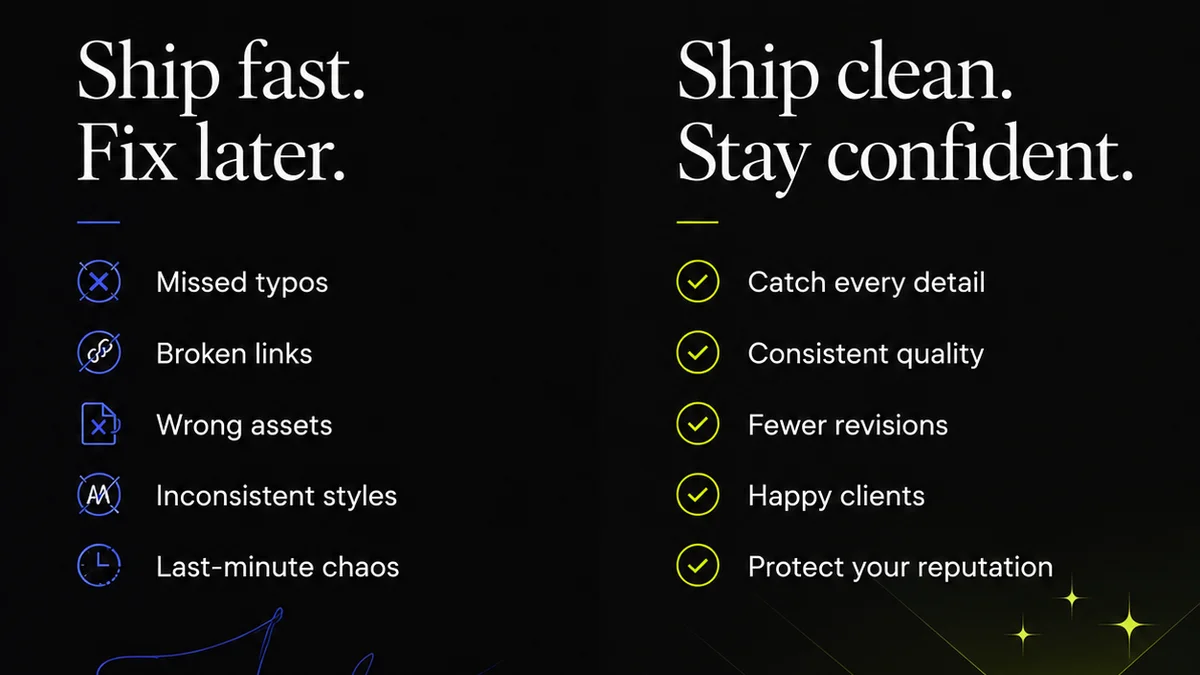
Everyone talks about brand governance. They picture the style guide, the color palettes, the typography rules. They think it’s about keeping things pretty and consistent.
And that’s not wrong.
But it’s incomplete. Dangerously so.
The real truth? Brand governance isn't about the rules on paper. It's about the relentless, messy, everyday execution of those rules. It’s about making sure every single piece of content, every campaign, every touchpoint actually *looks* and *feels* like the brand, no matter who’s working on it or where.
This isn't a design problem. It’s an operations problem.
1. Beyond the Brand Book: The Operational Reality
A brand guide is a snapshot. Brand governance is the movie. And movies are made in the trenches, with real people, real deadlines, and real compromises.
Think about it.
- Your brand guidelines live in a PDF.
- Your creatives live in Figma, Adobe Suite, or even PowerPoint.
- Your clients live in email inboxes and Slack channels.
- Your feedback loops are a tangled mess of spreadsheets and screenshots.
How do you ensure consistency when the tools, the people, and the processes are all disconnected?
You can’t just hand out a style guide and expect magic. That’s like handing a chef a recipe book and expecting a Michelin-star meal without a kitchen.
Brand governance needs a functional operating system.
2. The Cost of Inconsistency: Lost Revenue, Lost Trust
What happens when brand governance fails?
It’s not just a slight aesthetic wobble.
It’s a slow erosion of trust and value.
- Diluted Brand Equity: When your brand looks different on the website than it does on social media, or in a client presentation, it starts to feel less “real.” Less authoritative.
- Wasted Time and Money: Inconsistent assets mean endless revisions. Redoing work. Chasing down approvals. This burns billable hours and client budgets.
- Missed Opportunities: A disjointed brand experience confuses potential customers. It makes it harder for them to connect with what you offer.
- Internal Friction: Teams blame each other. Designers fight with marketers. Account managers get caught in the crossfire. It creates a toxic work environment.
This isn’t a hypothetical. This is the daily grind for many agencies and in-house teams.
The assumption is that a strong brand strategy is enough. The hard truth is that without robust creative operations, that strategy crumbles under the weight of execution.
3. Building the Engine: What Creative Ops Does for Governance
Creative operations is the plumbing, the wiring, the actual construction crew that brings the architectural plans of brand governance to life.
It’s the system that ensures the brand guidelines aren't just read, but *lived*.
3.1. Centralizing Assets and Knowledge
Where are your brand assets? Your logos? Your templates? Your approved imagery?
If the answer isn't a single, accessible, searchable location, you have an operations problem.
Creative ops establishes a single source of truth.
- Digital Asset Management (DAM) systems.
- Centralized project folders.
- Living style guides that integrate with design tools.
This isn’t just about tidiness. It’s about speed and accuracy. When your team can find what they need, when they need it, they can focus on creating great work, not hunting for files.
3.2. Streamlining Workflows and Approvals
Brand governance is enforced through process. And processes are the domain of creative operations.
How do you ensure a piece of content adheres to brand standards before it goes live?
- Defined review stages.
- Clear roles and responsibilities for approvals.
- Automated checklists for common governance points.
This isn’t about adding bureaucracy. It’s about building guardrails that protect the brand and empower the team.
It means less guesswork for designers and less anxiety for brand managers.
3.3. Managing Revisions with Clarity
Revisions are inevitable. But chaotic revisions kill brands.
When feedback is scattered, contradictory, or untraceable, consistency is the first casualty.
Good creative ops ensures:
- All feedback is captured in one place.
- Feedback is contextual and actionable.
- Revision history is transparent.
This prevents the “telephone game” of feedback, where the original intent gets warped with each relay.
3.4. Ensuring Quality Control
The final check. This is where brand governance is truly tested.
Creative ops implements quality control measures that go beyond a simple spell-check.
- Automated checks for logo usage, color compliance, and typography.
- Standardized QC checklists for different asset types.
- Post-launch audits to catch any stray inconsistencies.
This is the safety net. It’s the last line of defense before something that doesn’t quite fit the brand gets out into the world.
4. Where Revue Fits In
You can have the best brand strategy and the most talented team, but if your feedback and approval process is a black hole, your brand governance will suffer.
Revue was built to address this exact operational bottleneck.
It provides a centralized platform for all client feedback, ensuring nothing gets lost in email chains or Slack messages.
You get clear visibility into every revision round, every stakeholder comment, and every final approval. This transparency is crucial for maintaining brand consistency across multiple projects and clients.
When feedback is structured, contextual, and auditable, your team can execute on brand with confidence, knowing they’re working from a single, clear source of truth. It helps transform the chaotic reality of creative review into a streamlined, governed process.
5. Final Thought
Brand governance isn't a static document; it's a dynamic, ongoing practice.
It requires more than just good intentions and a beautifully designed style guide.
It demands a robust operational framework that supports consistent execution, day in and day out.
Are your creative operations actively strengthening your brand governance, or are they unintentionally undermining it?
Frequently asked questions
What is brand governance?
Brand governance is the system of rules, processes, and standards that ensure a brand is represented consistently across all touchpoints. It goes beyond visual guidelines to include messaging, tone of voice, and overall brand experience.
How does creative operations help with brand governance?
Creative operations provides the practical framework and tools to implement brand governance. This includes centralizing assets, streamlining workflows, managing feedback and revisions, and ensuring quality control, all of which are essential for consistent brand execution.
Why is brand inconsistency a problem?
Inconsistent branding dilutes brand equity, erodes customer trust, wastes time and money on revisions, and can lead to internal friction. It makes a brand appear less professional and authoritative.
What are the key components of effective creative operations for brand governance?
Key components include a centralized digital asset management system, defined and efficient workflows for asset creation and approval, clear communication channels for feedback, and robust quality control processes.