You probably think creative operations is about project management software. Or maybe it’s just a fancy term for keeping the trains running on time. You’re not entirely wrong.
But it’s incomplete. Dramatically so.
The hard truth? Creative operations is the bedrock of your agency’s profitability, scalability, and even your team’s well-being. It’s not a department; it’s a discipline. And if you’re not actively shaping it, you’re letting chaos shape you.
1. The Myth of the 'Creative Genius' as a Business Model
The Assumption
Many agency leaders believe their success hinges on a few star creatives who can do no wrong. They assume that as long as the talent is there, the business will sort itself out. This is a dangerous assumption.
The Reality
Talent is essential, but it’s not a business model. Without robust operations, even the most brilliant creatives will be bogged down by:
- Endless revision cycles born from unclear feedback.
- Wasted time chasing down approvals.
- Scope creep disguised as 'creative exploration'.
- Internal friction over process, not creative output.
- Inability to scale without burning out your best people.
This isn't about stifling creativity. It's about creating the conditions for it to thrive, consistently and profitably.
2. Operations as a Cost Center vs. Profit Driver
The Old View
Historically, operations has been seen as a necessary evil. A cost center to be managed, not an engine for growth. This thinking leads to underinvestment and frustration.
The Strategic Shift
Smart leaders understand that well-oiled operations are a direct profit driver. How? By:
- Reducing wasted time: Every hour saved on admin is an hour that can be billed or used for higher-value creative work.
- Improving client satisfaction: Clear processes, timely delivery, and visible progress lead to happier clients and repeat business.
- Increasing project margins: Efficient workflows minimize scope creep and prevent costly overruns.
- Boosting team morale: When creatives aren't fighting the process, they're focused on great work, leading to better retention.
Think of operations as your agency's operating system. A slow, buggy OS cripples everything. A streamlined one unlocks peak performance.
3. The Three Pillars of Creative Operations
Effective creative operations aren't built on a single tool or a single process. They’re built on three interconnected pillars.
Pillar 1: Clarity – Defining the 'What' and 'Why'
Briefing and Scoping
This is where projects live or die. A vague brief guarantees a vague outcome. Clear, detailed briefs that outline:
- Project goals and KPIs.
- Target audience insights.
- Deliverables and scope.
- Budget and timeline constraints.
- Mandatories and brand guidelines.
...are non-negotiable.
Feedback Protocols
Ambiguous feedback is the bane of creative teams. Establish clear guidelines for how feedback is given, received, and actioned. This means:
- Designating who can give final approval.
- Structuring feedback sessions.
- Using annotation tools for precise comments.
- Defining what constitutes a 'revision' versus a 'new request'.
Pillar 2: Cadence – Establishing the 'How' and 'When'
Workflow Management
This is about mapping out the journey of a creative asset from concept to delivery. It involves:
- Standardizing common workflows.
- Visualizing project stages (e.g., using Kanban boards).
- Defining handoffs between roles and teams.
- Implementing quality assurance checkpoints.
A well-defined cadence prevents bottlenecks and ensures predictable output.
Resource Allocation
Knowing who is working on what, and when they'll be available, is critical. This involves:
- Accurate capacity planning.
- Smart task assignment based on skills and availability.
- Forecasting future resource needs.
Over-allocating is a fast track to burnout. Under-allocating means missed opportunities.
Pillar 3: Control – Ensuring Visibility and Accountability
Revision and Approval Tracking
This is more than just logging changes. It’s about understanding the history, the decision-makers, and the rationale behind each iteration. It builds accountability and prevents 'feedback drift'.
Asset Management
Where are the latest files? Who has access? A centralized, organized system for storing and retrieving creative assets is crucial for efficiency and brand consistency.
Performance Metrics
You can’t improve what you don’t measure. Track key operational metrics like:
- Project cycle time.
- Number of revisions per project.
- On-time delivery rates.
- Resource utilization.
These aren't just numbers; they're indicators of operational health.
4. The Technology Trap: Tools Aren't Operations
The Temptation
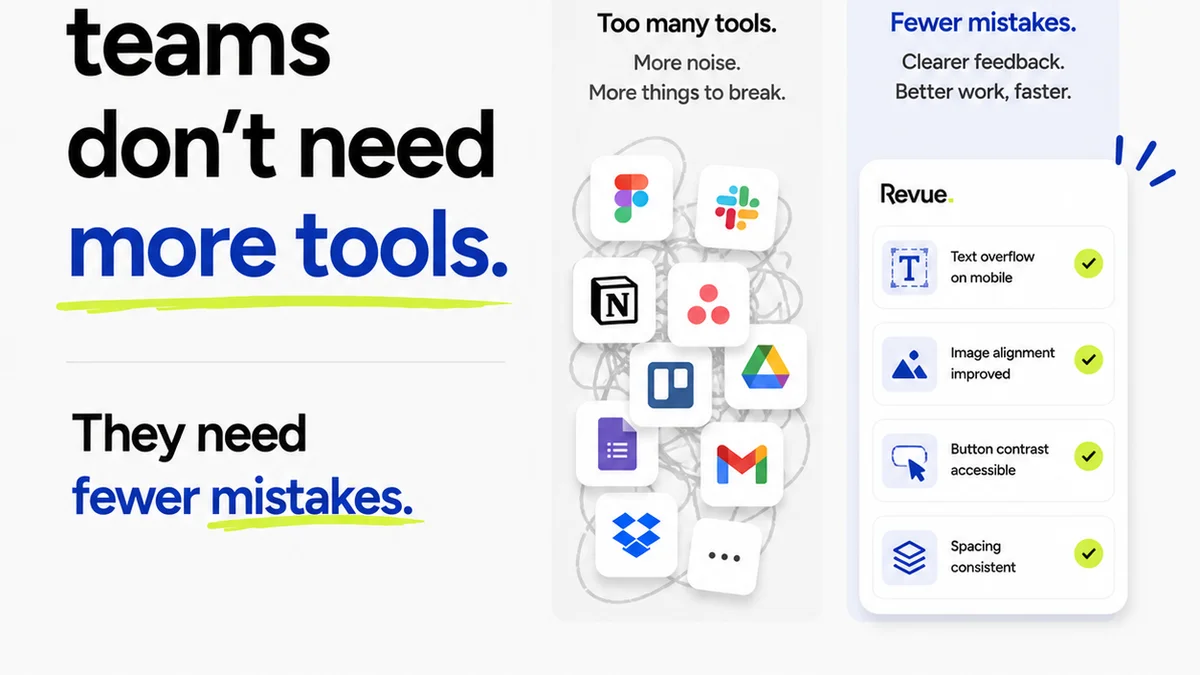
It’s easy to fall into the trap of thinking that buying the latest software will magically fix your operational woes. You buy a PM tool, an annotation tool, a DAM. Suddenly, you have a collection of expensive, underutilized subscriptions.
The Truth
Technology is an enabler, not a solution. The best tools are useless if the underlying processes are broken. You need to define your processes *first*, then find the technology that supports them. Otherwise, you're just automating chaos.
Focus on the workflow, the roles, and the communication. Then, layer in technology that enhances those elements.
5. Where Revue Fits In
Creative operations demand clarity, cadence, and control. Revue is built to deliver precisely that for creative teams.
Imagine this:
- Centralized Feedback: No more sifting through endless email threads or Slack messages. All client feedback lives directly on the asset, with clear annotations and context.
- Visible Revision & Approval Cycles: See exactly who has reviewed what, who needs to approve next, and the history of every change. This eliminates confusion and speeds up decision-making.
- Built-in Quality Checks: By having a clear, documented process for feedback and approvals, you naturally build in quality checks at every stage. This reduces errors and ensures final deliverables meet client expectations.
Revue helps bridge the gap between your creative vision and its flawless execution, by bringing order to the often-messy world of client collaboration.
Final Thought
Are you managing your creative operations, or is it managing you? The difference isn't just about efficiency; it's about the sustainable growth and long-term success of your agency. Take a hard look at your processes. What’s working? What’s broken? And what are you doing to fix it?
Frequently asked questions
What is the primary goal of creative operations?
The primary goal of creative operations is to streamline the creative process, from brief to final delivery, ensuring efficiency, quality, and profitability. It's about creating the optimal environment for creative work to happen smoothly and predictably.
How does creative operations impact profitability?
By reducing wasted time, minimizing scope creep, improving client satisfaction, and increasing team efficiency, creative operations directly enhances project margins and frees up billable hours, thereby boosting overall profitability.
Is creative operations just about using project management software?
No, software is only a small part of creative operations. The core lies in defining clear processes, establishing communication protocols, managing workflows, and ensuring accountability. Technology should support these defined operations, not dictate them.
How can I improve feedback loops with clients?
Establish clear feedback protocols: designate approvers, structure feedback sessions, use annotation tools for precise comments, and define what constitutes a revision versus a new request. Centralizing feedback on the asset itself, as Revue does, is also highly effective.
What are the key components of effective creative operations?
Effective creative operations are built on three pillars: Clarity (defining briefs, scope, and feedback), Cadence (managing workflows, timelines, and resources), and Control (ensuring visibility, accountability, and quality assurance).