You think growing a design agency means more creatives, bigger clients, and bolder ideas. That’s the shiny stuff everyone talks about.
None of that is wrong. But it’s incomplete.
The real engine of growth? It’s not your creative talent alone. It’s your operations. Specifically, how well you manage the *flow* of creative work.
Many agencies see operations as a necessary evil. An overhead. A team that just keeps the lights on.
The hard truth is this: For a growing agency, operations isn’t a cost center. It’s your primary growth driver. It’s the difference between scaling smoothly and drowning in chaos.
1. The Myth of the Freelance Army
As demand surges, the go-to move is hiring more freelancers. It seems flexible, cost-effective. You only pay for what you use, right?
Wrong. Or at least, not entirely.
A purely freelance model, especially at scale, introduces massive friction:
- Onboarding new talent takes time and resources.
- Quality can be inconsistent.
- Communication becomes a labyrinth.
- Project management gets exponentially harder.
- Intellectual property and NDAs become a constant headache.
- Budget tracking for variable rates is a nightmare.
This isn't about ditching freelancers. It's about recognizing that a sprawling, unmanaged freelance network is a drag on growth. It’s a bottleneck disguised as flexibility.
The Operational Bottleneck
Every new freelancer means a new set of variables. New tools. New communication channels. New potential points of failure.
Your internal team gets bogged down managing them, instead of focusing on client strategy or creative direction.
This is where robust creative operations become non-negotiable. It’s about building systems that can absorb and integrate external talent efficiently, without sacrificing quality or speed.
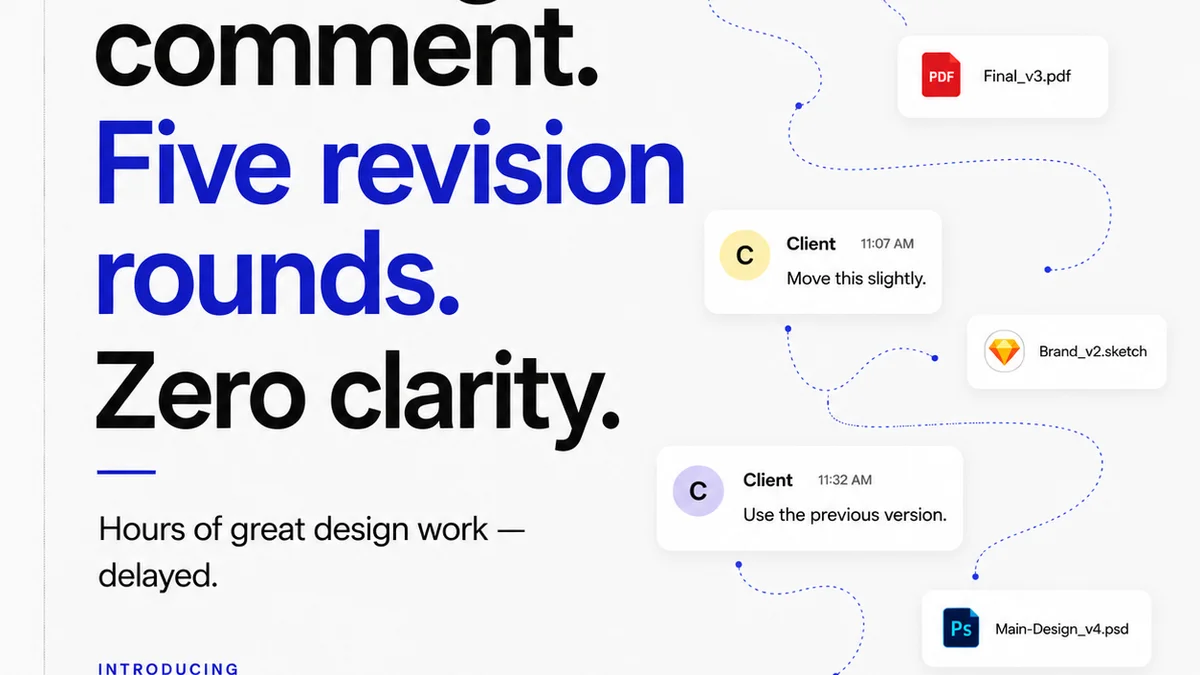
2. Revision Hell Isn’t a Feature, It’s a Bug
Client feedback. It’s the lifeblood of agency work. And it’s often the biggest source of frustration, delays, and scope creep.
Many agencies accept endless revision rounds as a cost of doing business. They operate on a wing and a prayer, hoping feedback lands clearly and approvals happen quickly.
This isn’t a negotiation tactic. It’s a symptom of broken processes.
When you lack clear systems for:
- Centralizing feedback.
- Tracking revision history.
- Defining approval workflows.
- Communicating scope changes.
You invite chaos. You spend more time chasing emails and deciphering ambiguous comments than actually designing.
The Cost of Ambiguity
Every hour spent clarifying vague feedback or hunting for the latest approved version is an hour lost on billable work. It’s an hour that eats into profit margins.
This ambiguity also kills morale. Creatives feel like they’re on a hamster wheel, constantly redoing work based on unclear or shifting demands.
Good operations means creating a single source of truth for all feedback and approvals. It means making the feedback loop transparent and efficient, for both your team and your clients.
3. Quality Control: From Art to Science
You hire great talent. They produce great work. But is every single deliverable hitting the mark?
For a growing agency, consistency is king. You can’t afford for your brand reputation to hinge on whether a junior designer had a good day.
Many agencies rely on gut instinct and the senior creative’s final glance to catch errors. This is not a scalable quality control process.
The Risk of Inconsistency
What happens when the senior creative is overloaded? Or on vacation?
Errors slip through. Brand guidelines are missed. File formats are wrong. The client experience suffers, even if the core creative concept was strong.
This isn't about micromanaging. It's about building a systematic approach to quality assurance.
This involves:
- Standardized checklists for different deliverable types.
- Clear file naming conventions and organizational structures.
- Defined handoff procedures between teams or freelancers.
- Automated checks where possible (e.g., for code or accessibility).
Operations brings the discipline to ensure that *every* piece of work meets a high standard, not just the highlights.
4. Scalability Isn’t Just About Headcount
Agencies often think scaling means hiring more people. More designers, more account managers, more strategists.
But adding people without improving your underlying processes is like pouring water into a leaky bucket. You just end up with more mess.
True scalability comes from systems that can handle increased volume without a proportional increase in human effort or error.
The Systemic Advantage
Consider your project intake process. Is it manual emails and spreadsheets? Or is it a streamlined system that automatically assigns tasks, sets deadlines, and tracks progress?
Think about your financial tracking. Is it reactive, with late invoices and surprise costs? Or is it integrated, giving you real-time visibility into project profitability?
These are operational challenges. And solving them unlocks real growth.
When your operations are efficient, you can:
- Take on more clients without burning out your team.
- Increase project throughput.
- Improve profitability per project.
- Offer more predictable timelines and budgets to clients.
This is how you build a business that *can* grow, not just one that *is* growing.
Where Revue Fits In
Managing creative workflows is complex. You’re juggling client expectations, creative execution, and team coordination.
Revue was built to tackle these operational challenges head-on.
Instead of relying on scattered emails, endless spreadsheets, and manual tracking, Revue provides a centralized hub for your creative projects.
It streamlines client feedback, making it clear, actionable, and auditable. You get visibility into every revision, every approval, reducing ambiguity and speeding up the process.
This isn’t just about organization. It’s about creating the operational backbone that allows your agency to scale confidently. It’s about turning potential chaos into predictable, profitable growth.
Final Thought
Is your agency’s growth bottleneck its creative talent, or its operational capacity?
Frequently asked questions
What exactly are creative operations?
Creative operations (often called 'creatives ops') refers to the systems, processes, and technologies that help creative teams work more efficiently and effectively. It's about optimizing the workflow from project initiation to final delivery, ensuring quality, managing resources, and improving collaboration.
Why is creative operations important for a growing agency?
As agencies grow, they face increased complexity. Good creative ops provides the structure needed to handle more projects, manage more clients, and coordinate larger teams without sacrificing quality or speed. It prevents chaos and ensures scalability.
How can creative operations help with client feedback?
Effective creative ops centralizes feedback, making it clear, actionable, and easy to track. This reduces miscommunication, minimizes endless revision cycles, and ensures everyone is working from the same, up-to-date information, leading to faster approvals and happier clients.
Is it better to hire more creatives or invest in creative operations?
While talent is crucial, investing in creative operations allows you to leverage your existing talent more effectively and scale without just adding headcount. It's about building systems that make your entire team, including new hires, more productive and efficient.