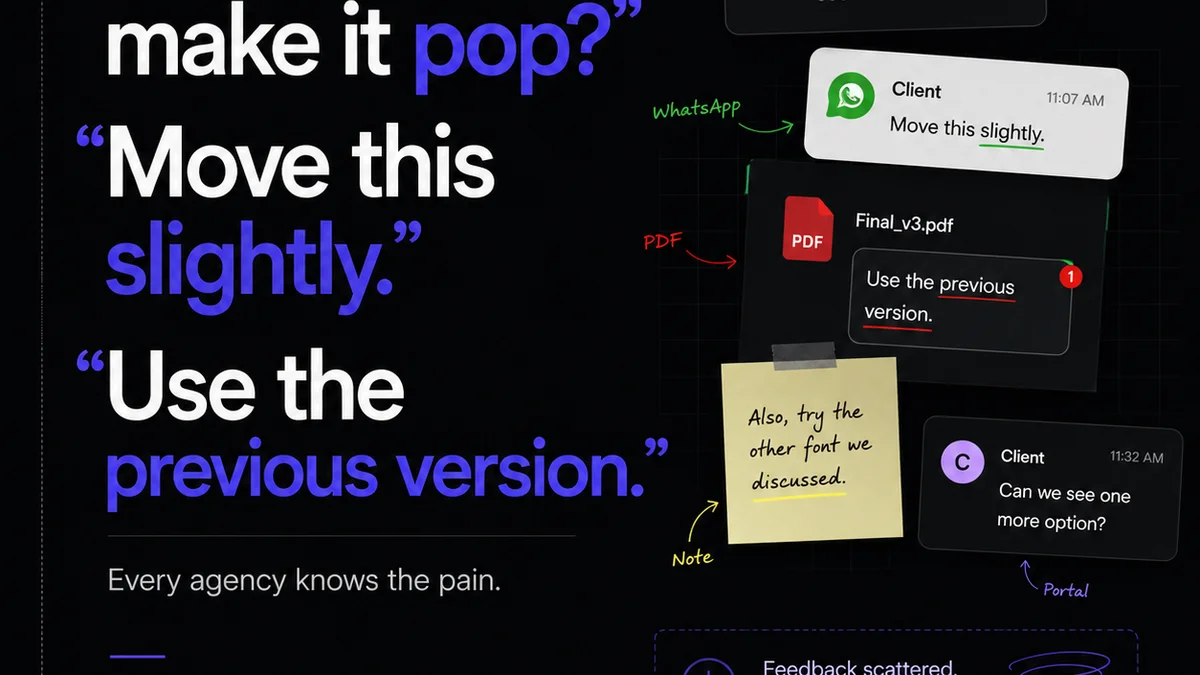
Everyone’s talking about Creative Operations. You hear it in meetings, you see it in job titles. It sounds like the secret sauce to making your agency or in-house team run smoother, faster, and more profitably.
And none of that is wrong. But it’s incomplete.
The real truth about Creative Operations is that it’s not a magic wand. It’s not a single piece of software you can buy. It’s the deliberate, often unglamorous, systemization of how creative work gets done. It’s about process, people, and tools working in concert to deliver exceptional creative, consistently.
1. What Creative Operations *Really* Is (and Isn't)
Let’s clear the air. Creative Operations isn't just about project management. It’s not just about assigning tasks. It’s not just about chasing deadlines.
It's the strategic framework that ensures your creative team can focus on what they do best: creating. Everything else – the processes, the workflows, the tools, the communication – is in service of that goal.
Think of it as the invisible architecture of your creative output. Without it, even the most brilliant ideas can crumble under the weight of disorganization, miscommunication, and inefficiency.
The Common Misconception: Ops is Just PM
Many assume Creative Ops is just a fancier name for project management. Project managers are crucial, no doubt. They keep things moving. But Creative Ops goes deeper.
It's about the entire lifecycle of creative work, from brief to final delivery and beyond. It’s about the systems that enable creativity, not just the tracking of tasks.
The Hard Truth: Ops is About Systemizing Creativity
The core of Creative Operations is building repeatable, scalable systems that empower creativity. It’s about removing friction points so your team can operate at peak performance.
This means looking at:
- How briefs are written and received.
- How feedback is gathered and actioned.
- How assets are managed and versioned.
- How approvals are secured.
- How performance is measured and optimized.
It's the operational engine that drives your creative output, ensuring quality and consistency.
2. The Pillars of Effective Creative Operations
Building a strong Creative Ops function isn't a single project; it's an ongoing commitment built on several key pillars. Neglect one, and the whole structure weakens.
a. Process & Workflow Design
This is the bedrock. What are your standard operating procedures for common tasks? How does a project flow from intake to final asset?
- Intake: How do clients or internal stakeholders submit requests? Is the brief clear?
- Briefing: Is there a standardized, comprehensive brief template?
- Ideation & Concepting: How are initial ideas generated and presented?
- Design & Production: What are the steps for creating the actual work?
- Review & Feedback: How is feedback collected? Is it consolidated and actionable?
- Revisions: How are changes managed and tracked?
- Approvals: What is the formal sign-off process?
- Delivery: How are final assets handed off?
- Archiving: Where is completed work stored for future reference?
A well-defined workflow eliminates ambiguity and ensures everyone knows their role and the expected steps.
b. Tooling & Technology
The right tools amplify your processes. But the wrong tools, or too many disconnected tools, create chaos.
Consider your tech stack:
- Project Management: Tools like Asana, Monday.com, Jira.
- Communication: Slack, Microsoft Teams.
- Asset Management: DAM systems, cloud storage.
- Creative Collaboration: Figma, Adobe Creative Cloud, Miro.
- Feedback & Approvals: Dedicated platforms.
The key is integration. Tools should talk to each other where possible, reducing manual data entry and context switching.
c. Resource Management & Allocation
Who is doing what, and when? Effective Ops ensures the right people are on the right projects, with realistic workloads.
This involves:
- Capacity Planning: Understanding team availability.
- Skills Matching: Assigning tasks based on expertise.
- Workload Balancing: Preventing burnout and ensuring fair distribution.
- Forecasting: Predicting future resource needs.
When resources are managed effectively, projects get done on time and to a high standard.
d. Communication & Collaboration
This is the connective tissue. How does information flow? How do teams collaborate effectively?
Clear communication channels and protocols are vital. This means:
- Establishing expectations for response times.
- Defining channels for different types of communication (e.g., urgent vs. informational).
- Promoting a culture of transparency and open feedback.
Poor communication is a primary driver of project delays and errors.
e. Performance Measurement & Optimization
You can't improve what you don't measure. Creative Ops involves tracking key metrics to identify bottlenecks and areas for improvement.
What to track:
- Project timelines vs. actuals.
- Number of revision rounds per project.
- Client satisfaction scores.
- Team utilization rates.
- Cost per project.
Data-driven insights allow you to refine processes and continuously enhance efficiency.
3. Common Bottlenecks and How to Solve Them
Most creative teams, even the best ones, hit snags. Recognizing these common bottlenecks is the first step to fixing them.
The
Frequently asked questions
What is the main goal of Creative Operations?
The main goal of Creative Operations is to create efficient, repeatable systems that enable creative teams to produce high-quality work consistently, while minimizing friction and maximizing focus on creative output.
Is Creative Operations the same as Project Management?
While related, Creative Operations is broader than Project Management. Project Management focuses on the execution of specific projects, whereas Creative Ops encompasses the entire strategic framework, processes, technology, and people management that support all creative work.
What are the key components of a Creative Operations strategy?
Key components include process and workflow design, appropriate tooling and technology, effective resource management, clear communication protocols, and ongoing performance measurement and optimization.
How can Creative Operations help my agency become more profitable?
By streamlining workflows, reducing wasted time on administrative tasks, minimizing costly revisions, and improving resource allocation, Creative Operations directly contributes to increased efficiency and profitability.
What's the first step to implementing Creative Operations?
The first step is to assess your current workflows, identify key pain points and bottlenecks, and then begin to document and standardize your most critical processes. Start small and iterate.