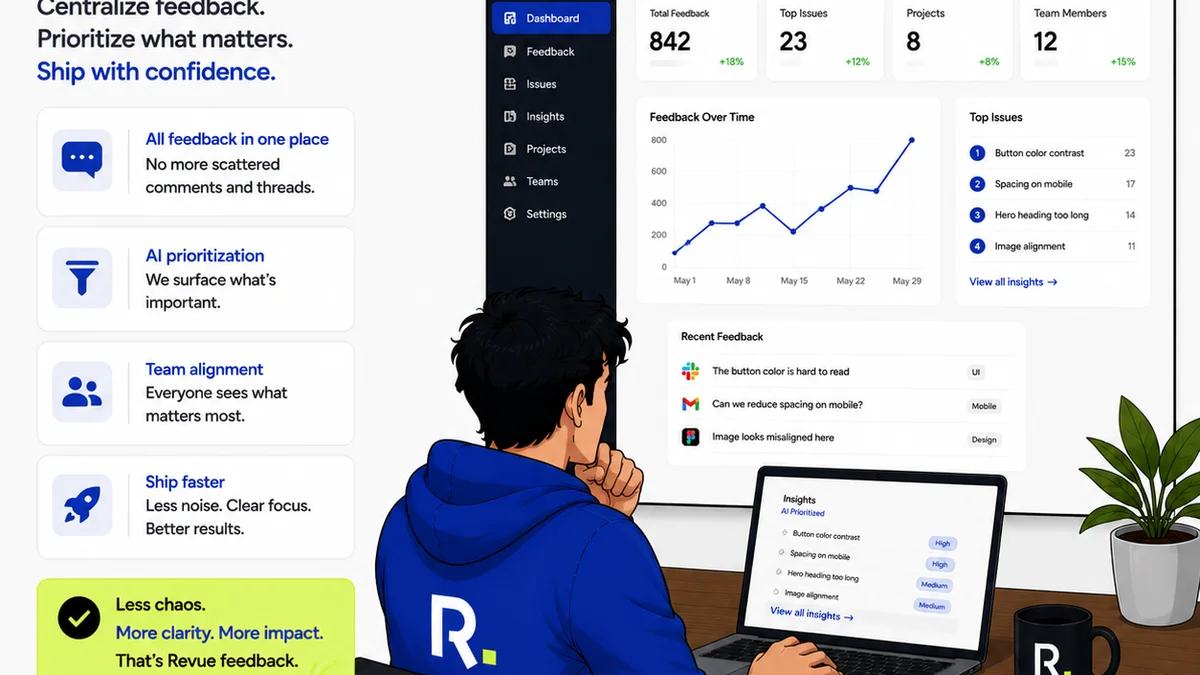
Everyone assumes creative operations are all about the tools. You need the right software, the right integrations, the right dashboards. Get those right, and your creative workflow will hum like a finely tuned machine.
None of that is wrong. But it’s incomplete.
The hard truth? Your biggest operational headaches aren't caused by a lack of technology. They're caused by broken processes, unclear communication, and a failure to integrate tools into a cohesive system. Your team is drowning in feedback, revisions are slipping, and quality checks feel like an afterthought. Sound familiar?
That's not a tech problem. That's a workflow problem.
1. The 'Feedback Firehose' Fallacy
Agencies and in-house teams alike suffer from this. The assumption: more feedback channels mean better collaboration. Email, Slack, carrier pigeon, a shared Google Doc – the more ways clients can
Frequently asked questions
What is the biggest mistake in creative operations?
The biggest mistake is assuming technology alone solves workflow issues. Often, the problem lies in broken processes and poor communication, not the lack of software.
How can I improve client feedback management?
Centralize all feedback in one platform. Avoid scattering comments across emails, chats, and documents. Use a tool that allows for clear annotation and version control.
What are the signs of inefficient creative operations?
Common signs include missed deadlines, endless revision cycles, unclear feedback, scope creep, and team burnout. These often point to underlying process or communication breakdowns.
How does a centralized platform help with revisions?
A centralized platform provides a single source of truth for all creative assets and their associated feedback. This visibility streamlines the revision process, reduces confusion, and ensures everyone is working from the latest version.