Everyone’s talking about Creative Operations. It’s the hot new thing in agency land. You hear it everywhere: workshops, conferences, LinkedIn posts. The assumption is that Creative Ops is all about fancy software, slick dashboards, and a dedicated team running point on workflows.
None of that is wrong. But it’s incomplete.
The real story of Creative Operations is much deeper. It’s the hard truth about what it actually takes to deliver great creative work, consistently, profitably, and at scale.
1. The Myth of the Lone Genius
For decades, the agency model relied on a romanticized notion: the brilliant creative who churns out world-changing ideas in a vacuum. Their process was their own, often messy, and certainly not something to be documented or optimized.
This worked, sort of. For a while.
But the digital age changed everything. Client demands accelerated. Budgets tightened. The sheer volume of assets required exploded. The lone genius model started to break.
The Cracks Appear
When creativity is untethered from process, you see the same problems crop up again and again:
- Missed deadlines due to unclear scope or scope creep.
- Budget overruns because time tracking is an afterthought.
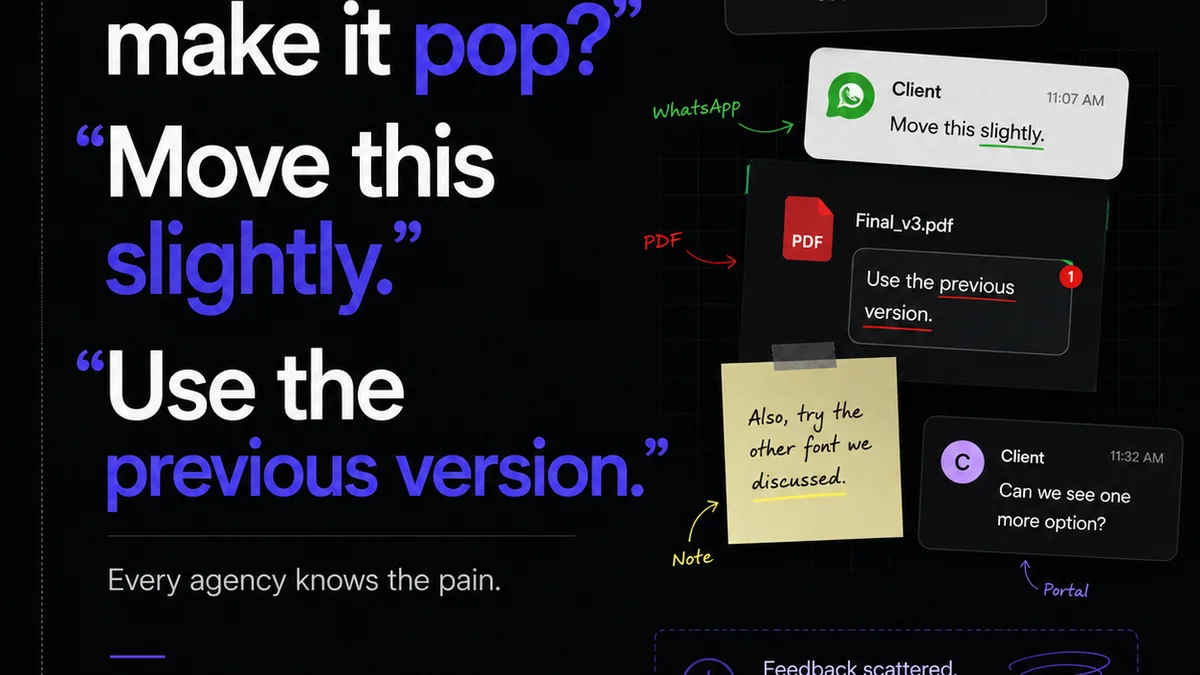
- Client frustration from endless, unproductive revision rounds.
- Internal burnout from chaotic workflows and constant firefighting.
- Wasted creative talent on administrative tasks.
- Inconsistent quality across projects and teams.
These aren't minor annoyances. They are systemic issues that directly impact an agency's bottom line and its ability to attract and retain talent.
2. Defining Creative Operations: The Engine, Not Just the Dashboard
Creative Operations, at its core, is the discipline of applying operational rigor to the creative process. It’s about building systems, processes, and technologies that enable creative teams to do their best work, more efficiently.
Think of it like this: a Formula 1 team doesn't just have a fast car (the creative output). They have a pit crew, data analysts, engineers, and a meticulously planned strategy (the operations) that ensures that car performs at its peak, lap after lap, under immense pressure.
Creative Ops is the pit crew, the engineers, and the strategy for your agency.
Key Pillars of Creative Ops
Effective Creative Operations typically focus on several critical areas:
- Workflow Management: Designing and implementing clear, repeatable processes for project intake, execution, review, and delivery.
- Resource Management: Optimizing the allocation of talent and time across projects to maximize utilization and minimize burnout.
- Technology Enablement: Selecting, implementing, and integrating the right tools to streamline tasks, improve collaboration, and provide visibility.
- Financial Management: Ensuring projects are scoped, tracked, and billed accurately to maintain profitability.
- Quality Assurance: Establishing standards and checks to ensure creative output meets client objectives and brand guidelines.
- Knowledge Management: Capturing and organizing project learnings, best practices, and assets for future reference.
It's not about stifling creativity; it's about freeing it up by removing the friction.
3. The Operational Truth: Efficiency Drives Creativity
Here’s the contrarian take: The more efficient your operations, the more creative your team can actually be. This sounds counterintuitive to those who believe process kills spontaneity.
But consider the alternative. When your team is bogged down in chasing feedback, deciphering ambiguous comments, manually tracking revisions, or constantly asking “who’s doing what?”, their mental energy is drained. They’re operating in reactive mode, not generative mode.
The Freedom of Structure
Well-defined Creative Operations provide:
- Clarity: Everyone knows what needs to be done, by whom, and when.
- Focus: Distractions and unnecessary tasks are minimized.
- Visibility: Progress is trackable, bottlenecks are identifiable.
- Control: Scope and budget are managed proactively, not reactively.
- Confidence: Teams can trust the process and focus on the creative challenge.
This structure doesn't dictate the *idea*; it streamlines the *execution* of the idea. It creates the space for brilliance to emerge without being suffocated by operational chaos.
4. Building Your Creative Operations Framework
Implementing Creative Operations isn’t an overnight switch. It’s an evolution. It starts with understanding your current state and identifying the biggest pain points.
Ask yourself:
- Where do projects get stuck most often?
- What tasks consume the most non-billable time?
- How clear are your project briefs and approval processes?
- Are you consistently hitting deadlines and budgets?
- Is client feedback clear and actionable, or a source of confusion?
Once you identify these areas, you can begin to build or refine your framework.
Common Starting Points
Agencies often find success by focusing on a few key areas first:
- Standardize Project Intake: Create a universal brief template and a clear process for receiving and qualifying new projects.
- Centralize Feedback: Implement a single source of truth for all client communication and markups.
- Define Revision Cycles: Establish clear limits and expectations for the number of revision rounds included in a project.
- Improve Time Tracking: Ensure accurate and consistent logging of time against specific tasks and projects.
- Automate Repetitive Tasks: Look for opportunities to use technology to handle tasks like file organization, version control, or basic reporting.
Start small, iterate, and involve your team in the process. Buy-in is crucial.
5. Where Revue Fits In
Managing creative workflows, especially client feedback and revisions, is a core challenge that Creative Operations aims to solve. This is precisely where a tool like Revue becomes invaluable.
Instead of juggling endless email threads, scattered feedback documents, and unclear approval statuses, Revue provides a centralized hub.
- Centralized Feedback: All comments, markups, and discussions live in one place, tied directly to the creative asset. No more hunting for that one crucial email.
- Revision & Approval Visibility: Track the history of changes, see who approved what, and manage revision rounds with clear version control. This eliminates ambiguity and speeds up the sign-off process.
- Quality Checks: By having a clear record of feedback and approvals, you can ensure that the final output aligns with all agreed-upon requirements, acting as a built-in quality gate.
Revue helps operationalize the notoriously tricky parts of the creative process, ensuring that feedback is captured accurately and approvals are unambiguous. It’s a practical application of Creative Ops principles.
6. Final Thought: Operations as a Creative Advantage
Creative Operations isn't about bureaucracy; it's about building a sustainable, scalable, and ultimately more creative agency. It’s the infrastructure that supports great work.
When you get your operations dialed in, you don't just become more efficient. You become more reliable, more profitable, and a more attractive place for top creative talent to work.
Are you building an agency that thrives on the chaos of creativity, or one that harnesses its power through intelligent operations?
Frequently asked questions
What is Creative Operations?
Creative Operations (Creative Ops) is the discipline of applying operational rigor to the creative process. It involves building systems, processes, and utilizing technology to enable creative teams to produce their best work more efficiently and profitably.
Why is Creative Operations important for agencies?
It's crucial because it addresses common agency pain points like missed deadlines, budget overruns, unclear feedback, and team burnout. By optimizing workflows and resource allocation, agencies can improve profitability, client satisfaction, and creative output.
Does Creative Operations stifle creativity?
No, quite the opposite. By removing operational friction, clarifying processes, and managing tasks efficiently, Creative Ops frees up creative talent to focus on ideation and execution, rather than getting bogged down in administrative chaos.
How can an agency start implementing Creative Operations?
Start by identifying your biggest workflow bottlenecks and pain points. Focus on standardizing project intake, centralizing feedback, defining revision cycles, improving time tracking, and automating repetitive tasks. Involve your team in the process for better adoption.