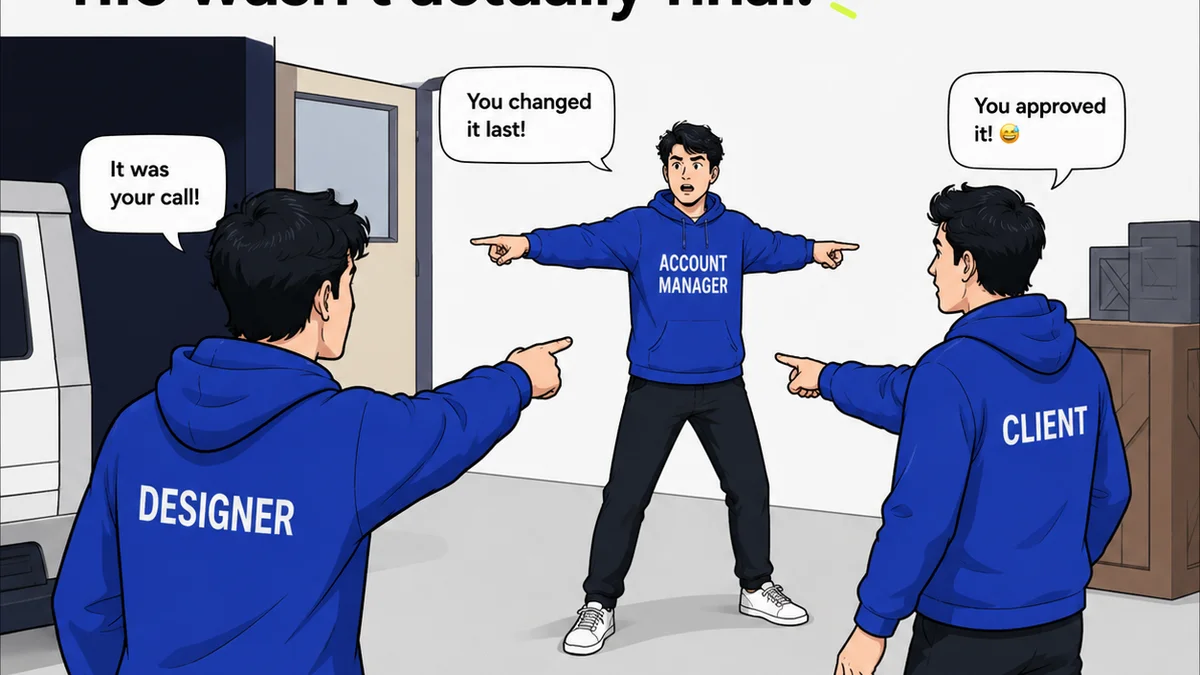
Everyone talks about creative operations. They say it’s about efficiency. About streamlining processes. About getting more done with less.
None of that is wrong. But it’s incomplete.
The hard truth? Creative operations isn’t just about efficiency; it’s about predictability and control in a chaos-driven industry. It’s the difference between a thriving agency and one constantly putting out fires.
1. The Myth of the 'Creative' Bottleneck
Agencies assume the bottleneck is always the creatives. That designers or writers are the slow part. That if you just hire more, or push them harder, everything speeds up.
This is a dangerous assumption. It blames the symptom, not the cause.
The real bottleneck is rarely the talent. It's the process. Or lack thereof.
The Hidden Costs of Ad Hoc Workflows
When work is managed informally, things break.
- Feedback gets lost in email chains.
- Revisions are made without clear direction.
- Approvals are missed, causing delays.
- Scope creep goes unchecked.
- Team members are constantly asking for clarification.
This isn't a creative problem. It's an operations problem.
Defining Your Creative Operations Workflow
A robust creative operations workflow is a system. It defines:
- How projects are initiated and scoped.
- How briefs are created and approved.
- How feedback is collected and actioned.
- How revisions are managed.
- How final assets are delivered.
- How quality is assured.
It’s about building guardrails, not roadblocks.
2. The Feedback Loop From Hell
Client feedback is the lifeblood of creative work. It’s also where most projects go to die.
The assumption is that feedback is inherently subjective and hard to manage. That it’s just part of the business.
The reality is that *unstructured* feedback is the problem. The process around collecting and acting on it is what needs fixing.
Common Feedback Failures
- The “Review Everything” Feedback: Clients are presented with too many options, leading to analysis paralysis and vague direction.
- The “Gut Feeling” Feedback: Comments lack specific reasoning, making them impossible to action effectively.
- The “Late-Stage Overhaul”: Major changes requested after significant work is done, often due to poor initial brief or lack of interim checkpoints.
- The “Multiple Voices, No Consensus” Feedback: Conflicting input from different stakeholders without a clear decision-maker.
This isn’t just frustrating; it’s expensive. Every revision cycle costs time and money.
Structuring the Feedback Process
Your workflow must dictate:
- Who provides feedback.
- When feedback is given (e.g., at specific milestones).
- How feedback is documented (e.g., a dedicated platform, not email).
- How feedback is interpreted and clarified.
- Who has the final say on incorporating feedback.
Clear structure turns subjective input into actionable tasks.
3. Revision Management: Beyond 'Make It Pop'
Revisions are inevitable. But endless, aimless revisions are a sign of operational failure.
Many agencies treat revisions as a reactive task. Something that happens *after* the client points it out.
The truth is, effective revision management is proactive. It’s built into the workflow from the start.
The Cost of Uncontrolled Revisions
What happens when revisions aren't managed?
- Creative teams get bogged down in repetitive tasks.
- Original scope gets lost.
- Morale plummets.
- Deadlines slip.
- Profits erode.
You end up doing more work for the same price, or worse.
Building a Revision Framework
A solid workflow includes:
- Defined Revision Rounds: Clearly state the number of revision rounds included in the project scope.
- Clear Briefing for Revisions: Ensure every revision request comes with specific instructions, not vague directives.
- Version Control: A system for tracking different iterations of the work.
- Impact Assessment: Understanding how requested changes affect timeline and budget.
- Client Sign-off on Scope Changes: Formal agreement before undertaking work outside the original brief.
This transforms revisions from a black hole into a controlled process.
4. Quality Assurance: The Last Line of Defense
The assumption is that good creatives deliver perfect work. That QA is just a final check.
But even the best creatives can miss things. Typos, broken links, incorrect specs, branding inconsistencies.
Quality assurance isn't just a final polish; it's a systematic check at critical junctures.
When QA Fails
A lack of rigorous QA leads to:
- Embarrassing errors in client deliverables.
- Damage to agency reputation.
- Client frustration and loss of trust.
- Costly rework after delivery.
It's the final impression. Don't let it be a bad one.
Integrating QA into the Workflow
QA should be:
- Built-in, Not Bolted-on: Checkpoints throughout the project lifecycle.
- Defined Standards: Clear checklists based on project requirements and brand guidelines.
- Accountability: Assign specific individuals or roles responsible for QA.
- Tools-Assisted: Leveraging software for automated checks where possible.
This ensures consistency and catches errors before they reach the client.
5. Where Revue Fits In
Managing these complex workflows and feedback loops manually is a recipe for disaster. Email, spreadsheets, and shared folders just can't keep up.
Revue provides the central nervous system for your creative operations.
It’s built to handle the messy reality of client feedback, revisions, and approvals.
- Centralized Feedback: Consolidate all client comments and markups directly on the creative assets. No more hunting through emails or Slack messages.
- Clear Revision Tracking: See every version, every change, and the exact feedback that prompted it. Understand the history and context of the work.
- Streamlined Approvals: Get clear, documented sign-offs at each stage. Reduce ambiguity and speed up the final delivery process.
- Quality Control: Ensure all stakeholders review the correct versions and that feedback is addressed systematically before final delivery.
Revue brings order to the creative chaos, allowing your team to focus on creating, not managing.
Final Thought
Creative operations isn't a department; it's a discipline. It’s the application of rigorous process to the inherently fluid world of creativity.
Are you building a predictable, scalable agency? Or are you just managing the next crisis?
Frequently asked questions
What is the core difference between creative operations and project management?
While project management focuses on delivering a specific project on time and budget, creative operations is a broader discipline focused on optimizing the entire creative production process. It involves systems, tools, and workflows to ensure consistent quality, efficiency, and predictability across all creative work, not just individual projects.
How can I make client feedback more actionable?
Structure the feedback process. Define who provides feedback, when they provide it (e.g., at specific milestones), and how it should be documented. Use a centralized platform like Revue where comments can be attached directly to the assets, reducing ambiguity and ensuring clarity. Train clients on providing constructive, specific feedback.
What are the key elements of a good revision management process?
A good revision process includes clearly defined revision rounds in your scope, specific briefs for each revision request, robust version control to track changes, an assessment of the impact on timeline and budget, and formal client sign-off for any scope changes. This prevents endless, aimless revisions.
How does Revue help with quality assurance in creative operations?
Revue centralizes feedback and approvals, ensuring all stakeholders review the correct versions of creative assets. By providing a clear audit trail of changes and decisions, it helps teams systematically address feedback and perform checks at critical junctures, reducing the likelihood of errors in final deliverables.