Everyone’s talking about AI, automation, and the metaverse transforming creative operations. It’s easy to get swept up in the futurism.
None of that is wrong. But it’s incomplete.
The hard truth is that the biggest shifts in creative operations workflow by 2026 won’t be about flashy new tech. They’ll be about mastering the fundamentals: clarity, control, and connection.
Agencies and in-house teams that focus on these core principles will thrive. Those that chase every shiny object will struggle.
1. The Illusion of Speed vs. The Reality of Efficiency
The common assumption is that new tools automatically mean faster creative output. More speed, more projects, more profit. Right?
Not necessarily. Speed without direction is just chaos, faster.
True efficiency in creative operations comes from eliminating waste. This means cutting down on:
- Unnecessary revisions born from unclear feedback.
- Wasted time searching for assets or project history.
- Bottlenecks caused by opaque approval processes.
- Rework due to missed quality checks.
By 2026, the most effective creative operations will be those that have surgically removed these inefficiencies. This isn't about working harder; it's about working smarter.
The Feedback Loop Breakdown
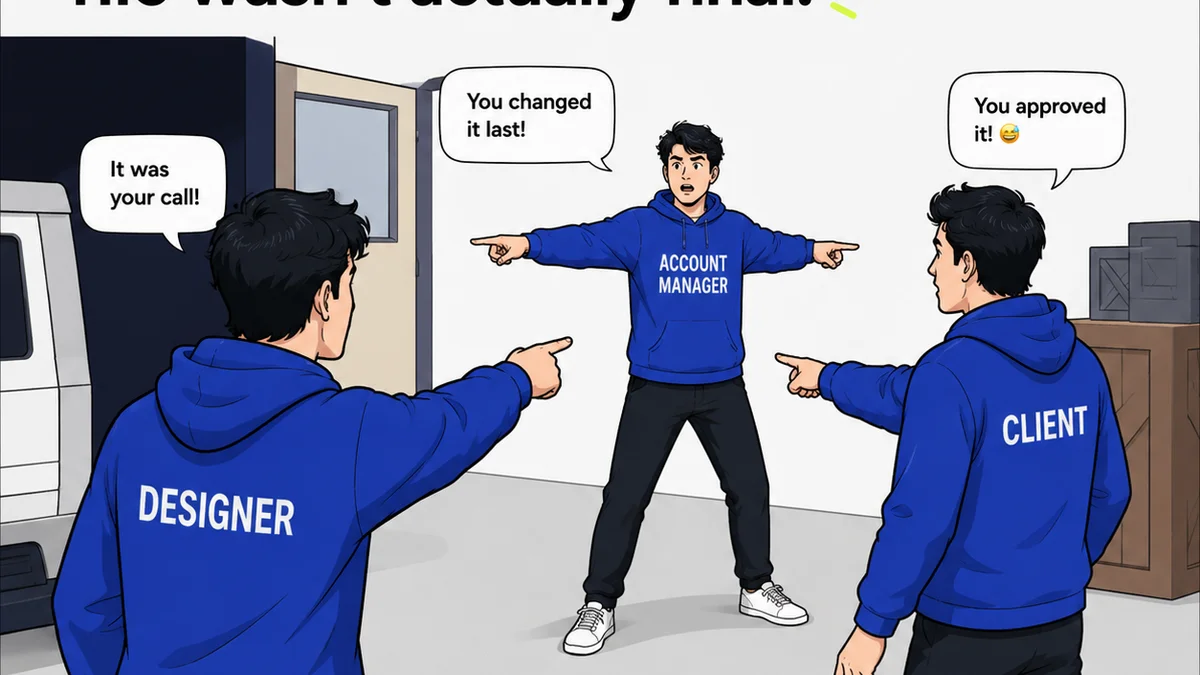
Client feedback is the lifeblood of creative work. It’s also a notorious friction point. Ambiguous comments, conflicting input, and delayed responses plague even the best teams.
The future of creative operations demands a structured approach to feedback. This means:
- Centralizing all client communication.
- Establishing clear annotation and markup tools.
- Implementing version control that tracks every iteration.
When feedback is clear, contextual, and easily managed, revisions become a productive part of the process, not a roadblock.
2. The Data Deluge: From Information to Insight
We’re drowning in data. Project management tools, communication platforms, time trackers – they all generate reams of information. The assumption is that more data equals better decision-making.
But raw data is just noise. Insight comes from analysis and application.
By 2026, creative operations leaders will need to be data-literate. This means understanding which metrics matter and how to use them to improve workflows.
Key Operational Metrics to Track
Focus on metrics that reveal workflow health, not just output volume:
- Cycle Time: How long does it take for a task or project to move from start to finish?
- Revision Cycles: How many rounds of revisions are typical for different project types?
- Resource Allocation: Are your teams overloaded or underutilized?
- Client Satisfaction with Process: Beyond the final deliverable, how do clients feel about the collaboration?
Leveraging this data allows for proactive adjustments. You can identify potential bottlenecks *before* they occur and optimize resource allocation for maximum impact.
3. The Human Element: Collaboration in a Digital Age
The narrative often paints a picture of automation replacing human creatives. While AI will undoubtedly change roles, the core need for human creativity, strategy, and collaboration remains.
The real challenge for 2026 creative operations is fostering effective collaboration, whether teams are in-office, remote, or hybrid.
This requires more than just video conferencing tools. It requires a deliberate focus on:
Building Trust and Transparency
Remote and hybrid work models can erode team cohesion if not managed carefully. Creative operations need to actively build trust through:
- Shared Visibility: Everyone on the team should have a clear understanding of project status, individual responsibilities, and upcoming deadlines.
- Consistent Communication Cadence: Regular, structured check-ins that are efficient and purposeful.
- Psychological Safety: Creating an environment where team members feel comfortable sharing ideas, raising concerns, and admitting mistakes without fear of reprisal.
When teams trust each other and have transparency into the workflow, collaboration flourishes, regardless of physical location.
4. Quality Assurance: The Non-Negotiable Foundation
It’s tempting to view QA as a final hurdle, a gatekeeper that slows down delivery. Many teams treat it as an afterthought, a box to tick before launch.
This is a critical error. Quality assurance isn't a phase; it's an integrated part of the entire creative operations workflow.
By 2026, leading creative operations will embed QA at every stage:
- Briefing: Is the brief clear, comprehensive, and aligned with objectives?
- Concepting: Do early concepts meet strategic requirements?
- Design & Development: Are there functional or usability issues? Is brand consistency maintained?
- Final Review: Does the final output meet all defined criteria and client expectations?
Integrating QA early and often prevents costly rework and ensures that the final deliverable meets the highest standards. It’s not about catching errors; it's about preventing them.
Accessibility as a Core Standard
A key aspect of quality in 2026 will be digital accessibility. Designing for inclusivity is no longer optional; it's a fundamental requirement for most projects.
Creative operations workflows must incorporate accessibility checks from the outset. This means understanding and applying principles from resources like the Web Content Accessibility Guidelines (WCAG).
Ignoring accessibility leads to exclusion, legal risks, and a diminished user experience. Integrating it ensures broader reach and better design for everyone.
5. Technology Integration: The Glue, Not the Engine
AI, automation, and new platforms will play a role. But their true value in 2026 creative operations lies in their ability to integrate seamlessly and support existing, efficient processes.
The mistake is to see technology as a silver bullet that will fix broken operations on its own.
The reality is that technology serves the workflow. It should:
- Automate repetitive tasks.
- Provide better visibility into project status.
- Facilitate clearer communication and feedback.
- Streamline asset management.
- Enhance quality control checks.
The focus should be on how tools connect and enhance the human-centric, efficient processes you've already established. Think of it as the sophisticated glue holding everything together.
Where Revue Fits In
Achieving efficient creative operations in 2026 requires a centralized hub for managing the entire lifecycle of creative work. This is precisely where Revue excels.
Revue provides a single source of truth for client feedback, ensuring that all comments, annotations, and discussions are captured in context. This eliminates the ambiguity and miscommunication that plague scattered email threads and chat messages.
The platform offers clear visibility into revision history and approval status, transforming a often-chaotic process into a transparent, manageable workflow. This clarity is essential for both internal teams and clients, reducing friction and speeding up decision-making.
Furthermore, by centralizing project assets and feedback, Revue enables more robust quality checks at every stage. Teams can ensure that revisions align with original briefs and that final deliverables meet all requirements before approval.
Ultimately, Revue helps creative teams move beyond the hype of new technology to focus on the operational fundamentals that drive real efficiency and client satisfaction in 2026.
Final Thought
As we look towards 2026, the landscape of creative operations is undoubtedly evolving. Yet, the most profound changes won't be driven by artificial intelligence alone, but by a renewed commitment to operational clarity, human collaboration, and unwavering quality.
Are your creative operations built for speed, or are they built for sustainable, efficient success?
Frequently asked questions
What are the key challenges in creative operations today?
Key challenges include managing unclear client feedback, dealing with excessive revision cycles, maintaining team collaboration in hybrid/remote settings, ensuring consistent quality, and effectively integrating new technologies without disrupting existing workflows.
How will AI impact creative operations by 2026?
AI will likely automate repetitive tasks, assist in content generation and analysis, and provide data-driven insights. However, human creativity, strategic thinking, and collaborative oversight will remain critical. The focus will be on integrating AI to enhance, not replace, core human functions.
Why is clear feedback crucial for creative operations?
Clear feedback is essential because ambiguous or conflicting input leads to wasted time, rework, and client dissatisfaction. Centralizing feedback and using contextual annotation tools helps ensure everyone is aligned, leading to more efficient revision cycles and better final outcomes.
What role does quality assurance play in future creative workflows?
Quality assurance will become more integrated throughout the entire workflow, not just a final step. This includes checking briefs, concepts, and deliverables at each stage to prevent errors early, reduce rework, and ensure accessibility and adherence to project goals.