Everyone talks about the final deliverable. The polished website. The viral campaign. The award-winning ad.
The assumption is that great work just *happens*. That genius strikes. That the final product is all that counts.
None of that is wrong. But it’s incomplete.
The hard truth? The creative process is the engine. Without a robust, well-oiled engine, you’re just coasting downhill, hoping for the best.
1. The Myth of Spontaneous Genius
We love the stories of overnight successes. The lone wolf designer who pulls a rabbit out of a hat. The brainstorm that sparks a million-dollar idea in five minutes.
But that’s usually mythologizing. Behind every seemingly spontaneous breakthrough is a foundation of disciplined practice, iteration, and feedback.
Think of a musician. Do they just pick up an instrument and play a symphony? No. They practice scales. They learn theory. They jam with others. They fail, loudly, in practice rooms.
The same applies to creative work. That “aha!” moment is often the culmination of hours, days, or weeks of structured thinking, sketching, prototyping, and refining.
The Hidden Work
- Early-stage concepting and mood boards.
- Wireframing and user flow mapping.
- Sketching and low-fidelity prototyping.
- Gathering initial stakeholder input.
- Defining project constraints and goals.
This isn't glamorous work. It’s the messy middle. It’s where ideas are tested, challenged, and sometimes discarded entirely.
Ignoring this phase is like trying to build a skyscraper on sand. It looks good for a while, but it’s destined to crumble.
2. Defining Your Agency's Creative Process
What *is* a creative process? It’s not a rigid, one-size-fits-all formula. It’s a framework. A series of stages and activities that guide a project from inception to completion.
A well-defined process brings clarity. It aligns teams. It sets expectations for clients. It allows for predictable quality.
Key Stages of a Creative Process
- Discovery/Briefing: Understanding the client's needs, goals, and audience. This is more than just taking notes; it's about asking the right questions.
- Research & Strategy: Diving deep into market trends, competitor analysis, and user behavior. Developing the strategic roadmap.
- Ideation & Concepting: Brainstorming, sketching, and exploring multiple creative directions.
- Design & Development: Bringing concepts to life through visual design, copywriting, coding, etc.
- Review & Feedback: Structured opportunities for stakeholders to provide input.
- Revision & Iteration: Incorporating feedback and refining the work.
- Finalization & Delivery: Preparing and handing over the final assets.
- Post-launch Analysis: Measuring success against initial goals.
Your process should be tailored to your agency’s strengths and your clients' typical project types.
It needs to be documented. And crucially, it needs to be *followed*.
The Cost of a Vague Process
- Missed deadlines.
- Scope creep.
- Frustrated clients.
- Burned-out teams.
- Mediocre work.
These aren't just inconveniences. They are direct drains on your agency's profitability and reputation.
3. The Feedback Loop: Your Process's Achilles' Heel
Most projects falter not at the design stage, but in the feedback and revision cycle. This is where ambiguity breeds chaos.
Clients provide vague comments. Revisions get lost. Stakeholders argue over subjective preferences. The project scope inflates like a balloon.
A robust creative process includes *defined* points for feedback. It specifies *who* provides feedback, *what kind* of feedback is expected, and *how* it will be incorporated.
Common Feedback Pitfalls
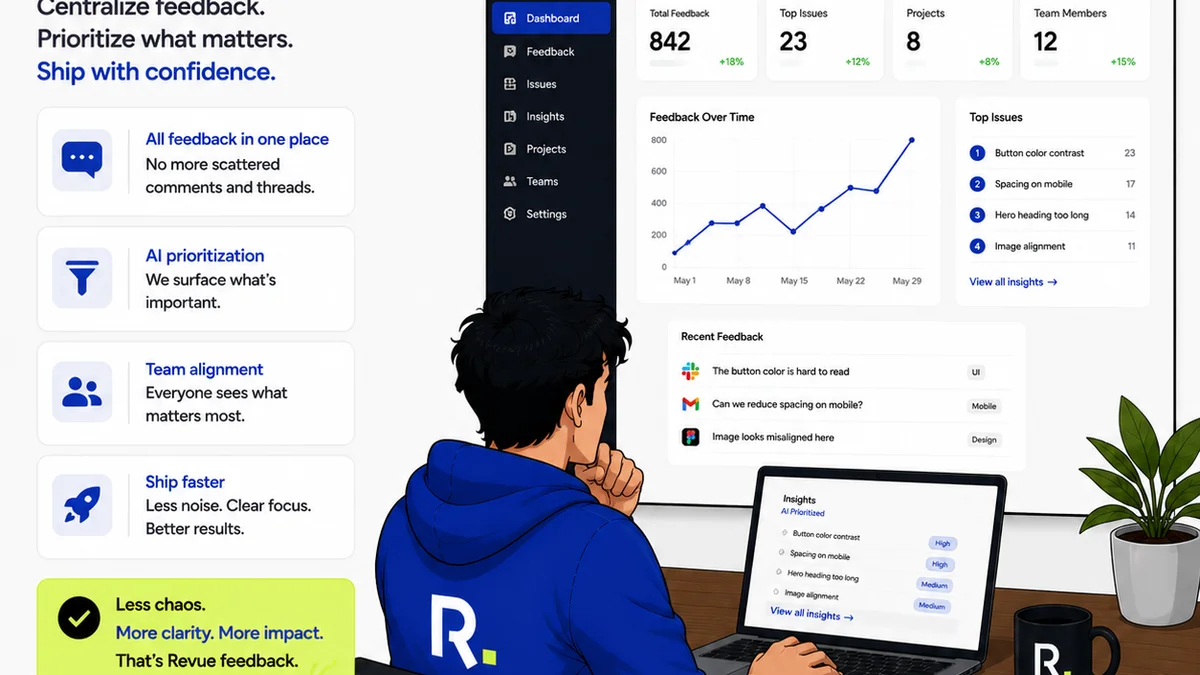
- Unstructured Feedback: Random emails, Slack messages, or verbal comments without context.
- Subjectivity Over Strategy: Feedback based on personal taste (
Frequently asked questions
What is a creative process?
A creative process is a structured framework of stages and activities that guides a project from its initial idea to its final completion. It helps teams organize their work, manage feedback, and ensure consistent quality.
Why is defining a creative process important for agencies?
Defining a creative process brings clarity, aligns teams, sets client expectations, allows for predictable quality, and helps avoid common pitfalls like missed deadlines, scope creep, and client frustration. It's the engine that drives successful project delivery.
How can I improve my agency's feedback loop?
Improve your feedback loop by establishing clear points for feedback, defining who provides it and what kind is expected, and using a centralized system to track comments and revisions. This reduces ambiguity and ensures feedback is actionable and strategic.
Is a rigid creative process always best?
No, a creative process should be a flexible framework, not a rigid set of rules. It needs to be adaptable to different project types and client needs while still providing structure and guidance.