Everyone talks about creative productivity. They point to late nights, caffeine-fueled bursts, and the elusive muse. They say it’s about finding your flow state, or having the right playlist.
None of that is wrong. But it’s incomplete. Dramatically so.
The hard truth is that sustained creative productivity isn’t born from spontaneous combustion. It’s engineered. It’s the result of robust systems, clear processes, and ruthless efficiency. It’s less about waiting for lightning to strike, and more about building a reliable generator.
1. The Myth of the Lone Genius
We’ve all bought into it. The idea that the best work comes from a solitary visionary, wrestling with their demons to produce a masterpiece. This narrative is romantic, sure. It makes for good movies. But it’s terrible for business.
In reality, most groundbreaking creative work is the product of intense collaboration, iteration, and often, a healthy dose of structured chaos. The “lone genius” is usually surrounded by a team quietly making their vision a reality, handling the grunt work, and providing critical feedback.
The Collaboration Bottleneck
When agencies rely too heavily on individual brilliance, they create bottlenecks. One person’s output dictates the pace for everyone else. This leads to:
- Missed deadlines
- Frustrated team members
- Burnout for the “genius”
- A reliance on external factors (like inspiration) that can’t be controlled
High-performing agencies understand that productivity is a team sport. They build processes that leverage collective talent, not hoard it.
2. Process Over Passion (Sometimes)
Passion is essential. It fuels creativity and drives us through tough projects. But passion alone doesn't deliver on time. Or on budget.
The agencies that consistently produce great work aren't just passionate; they're disciplined. They have processes that:
- Define project scope clearly
- Establish predictable workflows
- Create feedback loops that are efficient and actionable
- Ensure quality at every stage
This isn't about stifling creativity. It’s about creating guardrails so creativity can flourish without derailing the project.
The Feedback Frenzy
Client feedback is notoriously difficult to manage. It’s often vague, contradictory, or just plain wrong. Without a system, feedback becomes a black hole, sucking up time and energy.
Leading agencies treat feedback not as an interruption, but as a critical data point. They have systems to:
- Centralize all feedback in one place
- Track who provided what feedback and when
- Ensure feedback is specific and actionable
- Facilitate clear communication between clients and creatives
This structured approach turns a potential disaster into a productive conversation.
3. The Tyranny of the Inbox
Email. Slack. Teams. Project management tools. The modern creative’s inbox is a war zone. Important files get lost, decisions are buried under mountains of messages, and crucial context disappears.
This constant context switching kills productivity. It breaks focus and leads to errors.
Information Silos Are Productivity Killers
When information is scattered across multiple platforms, it’s impossible to get a clear picture. This is especially true for creative work where context—brand guidelines, previous iterations, client goals—is paramount.
Agencies that excel at productivity ensure that all project-related information is:
- Accessible to the right people
- Organized logically
- Up-to-date and version-controlled
This eliminates wasted time searching for information and ensures everyone is working from the same source of truth.
4. Revision Hell: A Workflow Killer
The revision process is where many agencies bleed time and profitability. Endless back-and-forth, unclear scope changes, and a lack of clear approval stages can turn a profitable project into a money pit.
This isn't just about client demands. It's often about internal processes failing to manage the revision cycle effectively.
The Approval Abyss
How many times has a project stalled because nobody knew who was supposed to approve the latest round of changes? Or because the feedback was ambiguous and led to more work than necessary?
The best agencies implement clear approval workflows:
- Define clear stages for review and approval
- Utilize tools that show exactly what needs approval
- Provide clear timestamps and version history
- Enable direct, contextual feedback on assets
This transparency and structure prevent scope creep and ensure projects move forward smoothly.
5. Quality Control: The Unsung Hero of Productivity
Many see quality control as a final check, an afterthought. But for highly productive agencies, it’s integrated throughout the process.
Catching errors early saves immense time and resources down the line. A misplaced comma, a slightly off-brand color, a broken link—these might seem small, but they add up.
The Cost of Rework
Rework is the enemy of productivity. It’s costly, demoralizing, and delays everything.
Agencies that prioritize integrated quality checks:
- Establish clear checklists for each stage
- Empower team members to flag issues early
- Use tools that automate parts of the QC process
- Conduct regular, structured reviews
This proactive approach minimizes costly mistakes and ensures a higher standard of output, consistently.
Where Revue Fits In
Managing creative projects effectively requires visibility and control. You need to know where every asset stands, what feedback has been given, and who needs to approve what next.
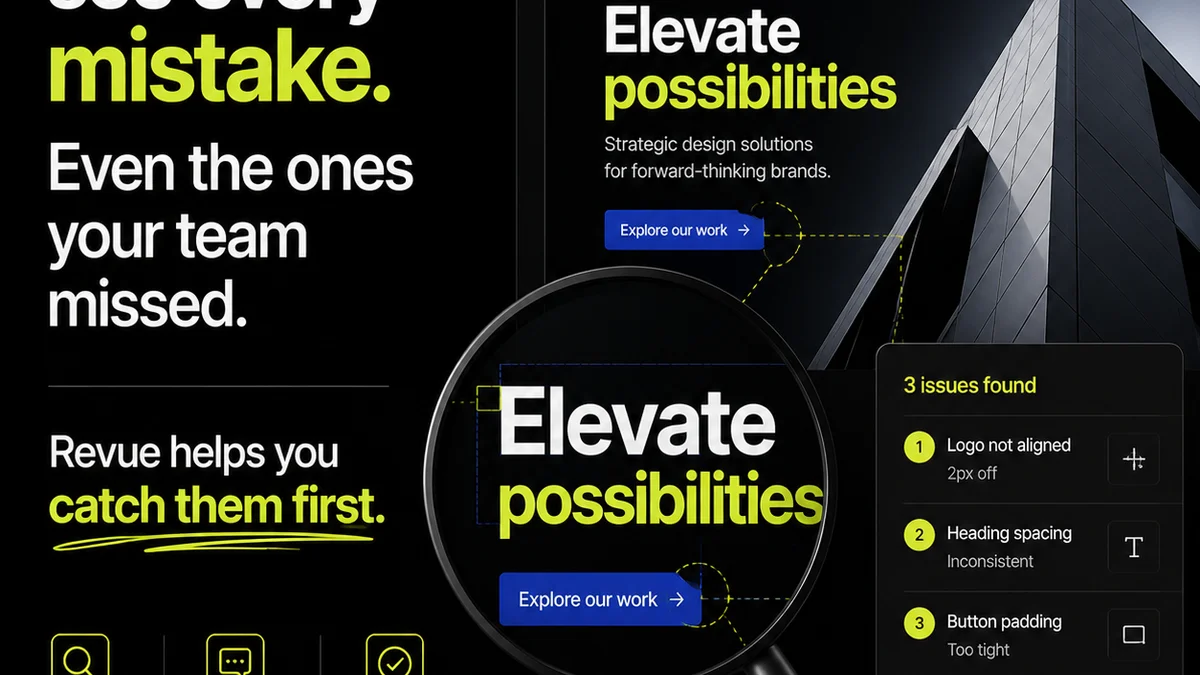
Revue is built for this reality. It centralizes client feedback, making it clear, actionable, and trackable. You can manage revisions with confidence, seeing the entire history and ensuring clear approval sign-offs.
By bringing all your creative assets, feedback, and approvals into one place, Revue helps you eliminate the chaos, reduce costly rework, and keep your creative teams focused on producing their best work, efficiently.
Final Thought
The next time you hear about creative productivity, remember it’s not just about inspiration. It’s about the operating system you build around your talent. Are you building a system that supports and amplifies your team’s best work, or one that hinders it?
Frequently asked questions
What's the biggest misconception about creative productivity?
The biggest misconception is that it relies solely on inspiration or individual genius. In reality, sustained creative productivity is engineered through strong processes, efficient workflows, and effective team collaboration.
How can agencies manage client feedback more effectively?
Leading agencies centralize feedback in one place, ensure it's specific and actionable, track who provided it, and facilitate clear communication. Tools that provide contextual feedback on assets are crucial.
Why is managing revisions so important for agency productivity?
Endless revisions can kill profitability and morale. Effective revision management involves clear approval workflows, tracking changes, and ensuring everyone knows what needs sign-off, preventing scope creep and rework.
How does quality control impact creative productivity?
Integrated quality control catches errors early, saving significant time and resources. Proactive checks minimize rework, reduce costs, and ensure a consistent, high standard of creative output.