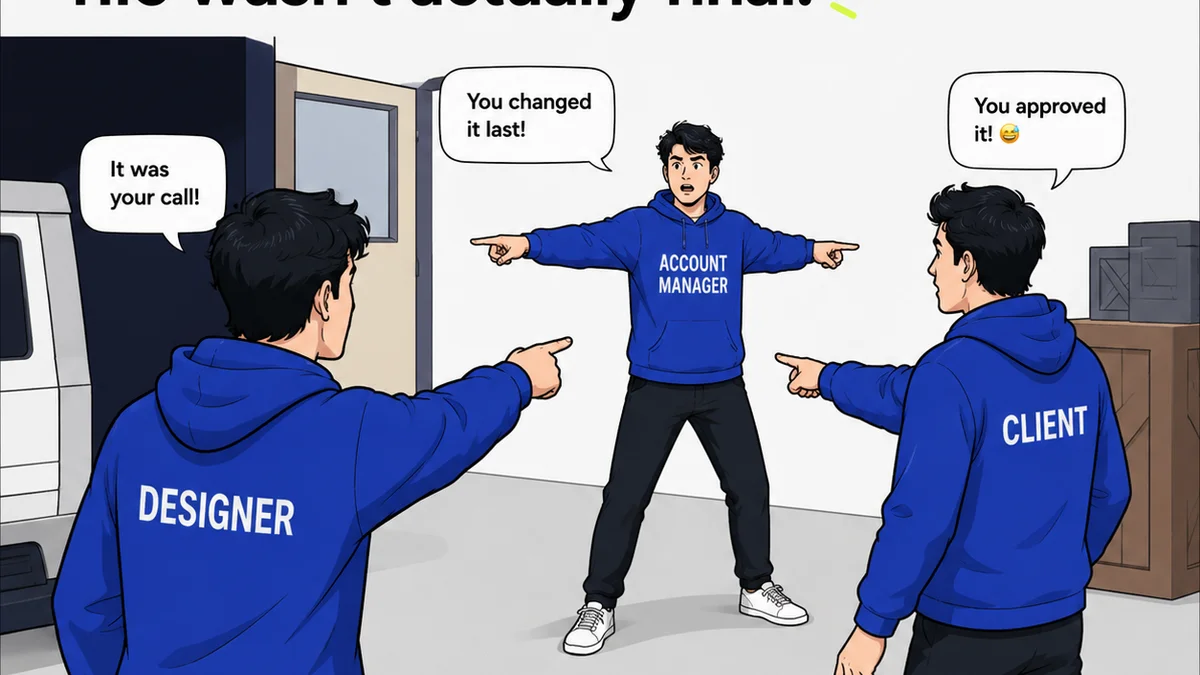
Everyone talks about billable hours when they discuss agency growth. More hours, more money, right? That’s the simple math.
None of that is wrong. But it’s incomplete.
The real engine of growth for a design agency isn’t just about logging time. It’s about creative productivity. It’s about how efficiently your team turns ideas into approved, high-quality work that clients love.
This is the hard truth: an agency can be busy, but if it’s not productive, it’s not truly growing. It’s just spinning its wheels.
1. The Billable Hour Myth vs. Productive Output
Agencies are built on selling time. This is a fundamental truth of the service industry. But focusing solely on billable hours creates a dangerous trap.
It incentivizes keeping people busy, not necessarily effective. It can lead to scope creep disguised as 'client needs more time.' It encourages internal processes that are slow and cumbersome because, well, they soak up hours.
The Productivity Paradox
You might think more time spent equals better output. Often, it’s the opposite.
Overworked teams become less creative, prone to errors, and eventually, burned out. Clients start to feel the drag, too – longer timelines, higher costs, and potentially diluted creative quality.
Shifting the Focus
True growth comes from maximizing the value delivered within a given timeframe. It’s about output quality and speed, not just input hours.
Consider this:
- What if you could deliver the same quality work in 20% less time?
- What if client revisions happened twice as fast because feedback was clear and consolidated?
- What if your team spent less time chasing down approvals and more time designing?
This is where focusing on creative productivity pays dividends. It’s not about working harder; it’s about working smarter.
2. The Hidden Costs of Inefficiency
Inefficiency isn’t just a time-waster. It’s a profit killer.
Every minute a designer spends searching for a file, waiting for feedback, or redoing work due to unclear instructions is a minute that isn’t spent on actual creative problem-solving. These minutes add up.
The Ripple Effect of Bottlenecks
A single bottleneck can cripple an entire project. Imagine a designer waiting three days for a single piece of feedback on a concept. The rest of their day is now fragmented. The next task is delayed. The client’s deadline looms.
This isn’t just about one project. It’s about the cumulative drag on your agency’s capacity and profitability.
- Lost Billable Time: Time spent on administrative tasks or waiting is time that can’t be billed.
- Extended Project Timelines: Inefficiency directly translates to longer project durations, impacting client satisfaction and your ability to take on new work.
- Increased Revision Cycles: Unclear feedback or delayed communication often leads to more rounds of revisions, consuming more resources than necessary.
- Team Burnout: Frustration with inefficient processes leads to low morale, reduced creativity, and higher staff turnover.
- Compromised Quality: Rushed work due to delays, or work done by a stressed team, often suffers in quality.
These aren’t abstract concepts. These are the daily realities for many agencies.
3. Measuring What Truly Matters: Output, Not Just Input
If billable hours are the wrong metric, what’s the right one? It’s a blend of factors that reflect genuine productive output.
Key Productivity Indicators
Start thinking about metrics that actually drive business value:
- Revision Cycle Time: How long does it take from delivering a draft to final approval?
- Time to Concept Approval: How quickly can you get a client to sign off on initial creative direction?
- Task Completion Rate: How efficiently are individual tasks moving through the workflow?
- Client Satisfaction Scores (Related to Process): Are clients happy with how smoothly projects run?
- Team Utilization (Focused on Value-Add Tasks): Are your team members spending their time on creative work, or on administrative overhead?
These metrics tell a story about your operational health. They highlight where the friction is and where improvements can yield the biggest gains.
The Data-Driven Approach
You can’t improve what you don’t measure. Implementing systems to track these indicators provides the data needed to make informed decisions about process improvements, tool adoption, and team training.
This isn’t about micromanagement. It’s about understanding the flow of work and identifying opportunities to optimize.
4. Streamlining Workflows for Peak Creative Flow
The path to higher creative productivity is paved with streamlined workflows.
This means looking critically at every step of your process, from initial brief to final delivery.
Identify and Eliminate Waste
What steps in your current workflow are redundant? What information is consistently missing? Where do handoffs break down?
Common areas for waste include:
- Manual feedback collection: Digging through emails, Slack messages, and PDF comments.
- Unclear briefs: Starting work without a solid understanding of client objectives.
- Disorganized file management: Wasting time searching for assets.
- Lack of clear approval stages: Endless back-and-forth because the path to sign-off is murky.
- Manual version control: Confusion over which file is the latest.
Each of these points represents lost time and potential for error.
Standardize Where Possible
Not every project requires a unique, bespoke process. Standardizing common elements—like brief templates, feedback collection methods, and approval checklists—creates consistency and reduces cognitive load on your team.
This doesn’t stifle creativity; it frees up mental energy.
Empower Your Team
Give your team the tools and processes they need to succeed. This means investing in technology that supports efficient collaboration and communication. It also means fostering a culture that values efficiency and continuous improvement.
When teams feel empowered and supported, their productivity naturally increases.
5. Where Revue Fits In
Managing creative projects involves a delicate dance of communication, feedback, and approvals. It’s also an area ripe with opportunities for inefficiency.
This is precisely why tools like Revue exist. They are built to address the operational friction points that plague creative agencies.
Centralized Feedback
Instead of chasing feedback across multiple channels—emails, Slack, comment threads, even handwritten notes—Revue centralizes all client comments and stakeholder feedback in one place, directly on the creative asset.
This eliminates ambiguity and ensures everyone is working from the same, consolidated input.
Revision and Approval Visibility
Revue provides a clear, chronological record of all feedback, revisions, and approvals. You can see exactly who said what, when, and what the final decision was. This transparency drastically reduces misunderstandings and speeds up the decision-making process.
No more
Frequently asked questions
What is creative productivity for a design agency?
Creative productivity refers to an agency's ability to efficiently produce high-quality creative work. It's about the speed, effectiveness, and quality of output, not just the number of hours logged.
How do billable hours hinder agency growth?
Over-reliance on billable hours can incentivize busywork over efficiency, lead to scope creep, encourage slow processes, and contribute to team burnout, ultimately limiting sustainable growth.
What are the hidden costs of inefficiency in an agency?
Hidden costs include lost billable time, extended project timelines, increased revision cycles, team burnout, and compromised creative quality. These directly impact profitability and client satisfaction.
How can agencies measure creative productivity?
Measure metrics like revision cycle time, time to concept approval, task completion rate, client satisfaction with the process, and team utilization on value-add tasks, rather than just billable hours.
How does a tool like Revue help improve creative productivity?
Revue centralizes client feedback, streamlines revision and approval processes, and provides clear visibility into project status, thereby reducing bottlenecks, clarifying communication, and freeing up creative time.