Everyone thinks creative productivity is about waiting for the muse. That inspiration strikes like lightning, and boom – you’re a creative machine. That’s a nice story.
It’s also a lie.
Inspiration is a byproduct, not a prerequisite. True creative productivity isn’t about luck or genius. It’s about systems. It’s about process. It’s about showing up and doing the work, consistently.
1. The Myth of the Lone Genius
We’re fed this narrative constantly. The solitary artist in a garret, fueled by coffee and angst, conjuring brilliance from nothing. Agencies, too, often fall into the trap of thinking their best work comes from a few 'star' creatives who operate outside the normal rules.
This romantic ideal ignores the messy, collaborative reality of actually producing great creative work, day in and day out.
It’s not about waiting for a flash of insight.
It’s about building a structure that allows insights to emerge, be refined, and be executed.
The Hard Truth: Productivity is Built, Not Born
The real engine of creative productivity isn’t innate talent. It’s a robust, repeatable workflow. It’s the ability to manage feedback, navigate revisions, and maintain quality without burning out your team or your clients.
This means less time waiting, less time chasing, and more time creating.
2. Deconstructing the Creative Workflow
Where does creative work actually happen? It’s not just in the 'idea' phase. It’s a multi-stage process, and each stage has its own friction points.
The Stages of Creation
- Briefing & Understanding: Grasping the client's needs, objectives, and constraints.
- Ideation & Concepting: Brainstorming, sketching, developing initial concepts.
- Development & Design: Executing the chosen concept, creating assets.
- Feedback & Revision: Gathering input, making changes, iterating.
- Approval & Delivery: Final sign-off, preparing for handover.
- Quality Assurance: Final checks for errors, consistency, and adherence to brief.
Each of these stages can be a productivity killer if not managed effectively.
Common Bottlenecks
- Vague briefs: Leads to wasted concepting time.
- Unclear feedback: Creates endless, aimless revisions.
- Lack of visibility: Teams don't know where a project stands.
- Manual review processes: Slows down approvals.
- Email overload: Important feedback gets lost.
- Scope creep: Uncontrolled changes derail timelines.
These aren't minor annoyances. They are systemic failures that crush productivity.
3. The Power of Structured Feedback
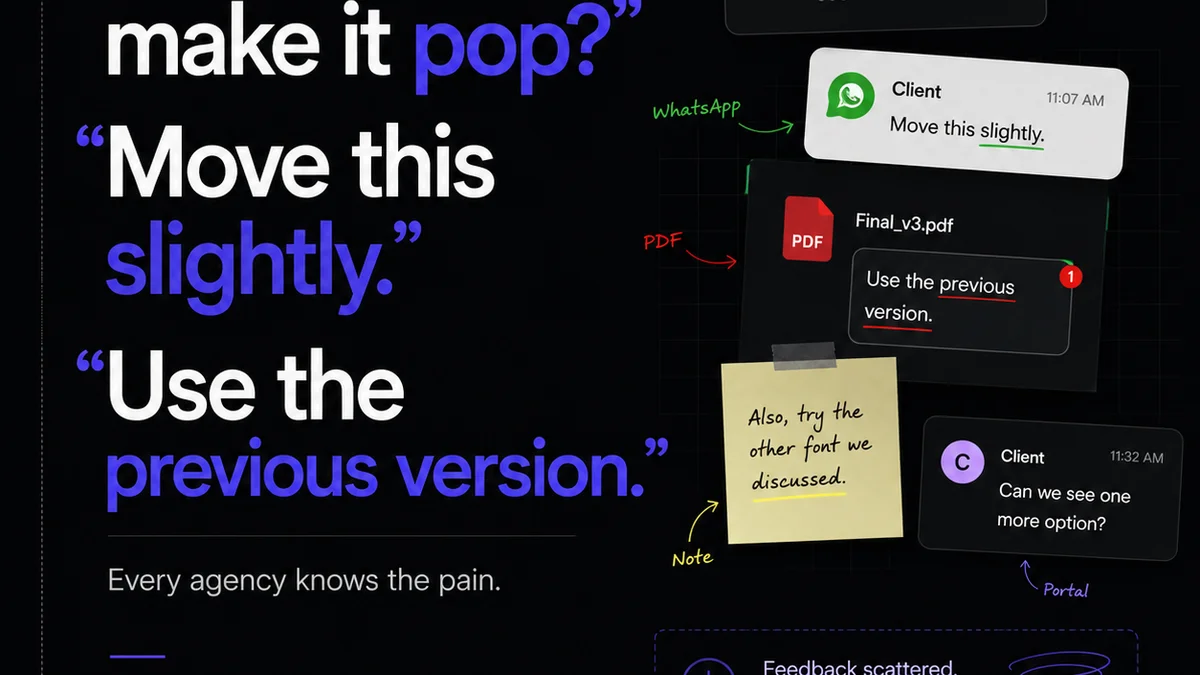
This is where most agencies stumble. Feedback is essential, but it’s often a chaotic mess.
Clients mean well. They want to be involved. But they aren't designers. They don't speak the same language. And they definitely don't have time to learn your complex file-sharing system.
Why Feedback Fails
- Disorganized channels: Feedback scattered across emails, Slack, calls, and sticky notes.
- Subjective comments:
Frequently asked questions
What's the biggest myth about creative productivity?
The biggest myth is that creative productivity relies solely on inspiration or innate talent. The reality is that consistent, high-quality creative output is built on robust systems, repeatable processes, and effective workflow management.
How can agencies improve client feedback processes?
Agencies can improve feedback by centralizing communication, using visual annotation tools, setting clear feedback guidelines, and establishing defined review cycles. This reduces confusion and ensures actionable input.
What role does revision management play in productivity?
Effective revision management is crucial. It involves tracking changes, ensuring all feedback is addressed, maintaining version control, and communicating progress clearly to both the creative team and the client. This prevents scope creep and unnecessary rework.
How does a centralized platform help creative teams?
A centralized platform streamlines the entire creative process. It provides a single source of truth for projects, feedback, and approvals, reducing miscommunication, saving time on administrative tasks, and allowing teams to focus on creative execution.