Everyone talks about creative productivity. They push time-blocking, inbox zero, and endless to-do lists. They sell you on fancy apps and radical methods.
None of that is wrong. But it’s incomplete.
The real engine of creative productivity isn’t just personal discipline; it’s robust operational workflow. It’s about how you handle the actual *work* – the feedback, the revisions, the approvals, the inevitable chaos.
The Hard Truth About Creative Productivity
Most creative teams operate like well-meaning amateurs, reacting to demands rather than orchestrating output. They assume creativity is a mystical spark that can’t be systematized. This leads to:
- Missed deadlines
- Scope creep disguised as collaboration
- Burnout from constant context switching
- Client frustration from unclear progress
- Internal friction over who’s doing what
This isn’t a productivity problem. It’s an operational breakdown.
True creative productivity is built on predictable, repeatable processes that handle the friction points inherent in creative work. It’s about designing your workflow to *enable* creativity, not hinder it.
1. Redefine 'Done' — Beyond the Pixel
We often equate 'done' with the final deliverable. That’s only half the story.
For a creative agency or an in-house team, 'done' also means:
- Feedback consolidated and understood
- Revisions clearly tracked and implemented
- Approvals formally recorded
- Quality assurance checks passed
- Project documentation complete
If any of these steps are fuzzy, your project isn’t truly done. It’s just paused.
The Feedback Loop is the Bottleneck
Client feedback is essential. But it’s also a black hole if not managed.
Think about it:
- Emails get buried.
- Comments on PDFs get lost.
- Verbal feedback is forgotten.
- Multiple stakeholders give conflicting input.
This fragmentation kills momentum. It forces your team to hunt for information, guess intentions, and re-do work.
Standardize Your Intake and Output
Every project needs a clear intake process. What information do you need *before* starting?
And every deliverable needs a clear output process. How will you present it? How will feedback be requested?
Without these standards, you’re building a house without blueprints.
2. Map Your Revision and Approval Process
This is where most creative operations fall apart. The assumption is that revisions are a simple back-and-forth.
The reality is far messier.
The Illusion of Simplicity
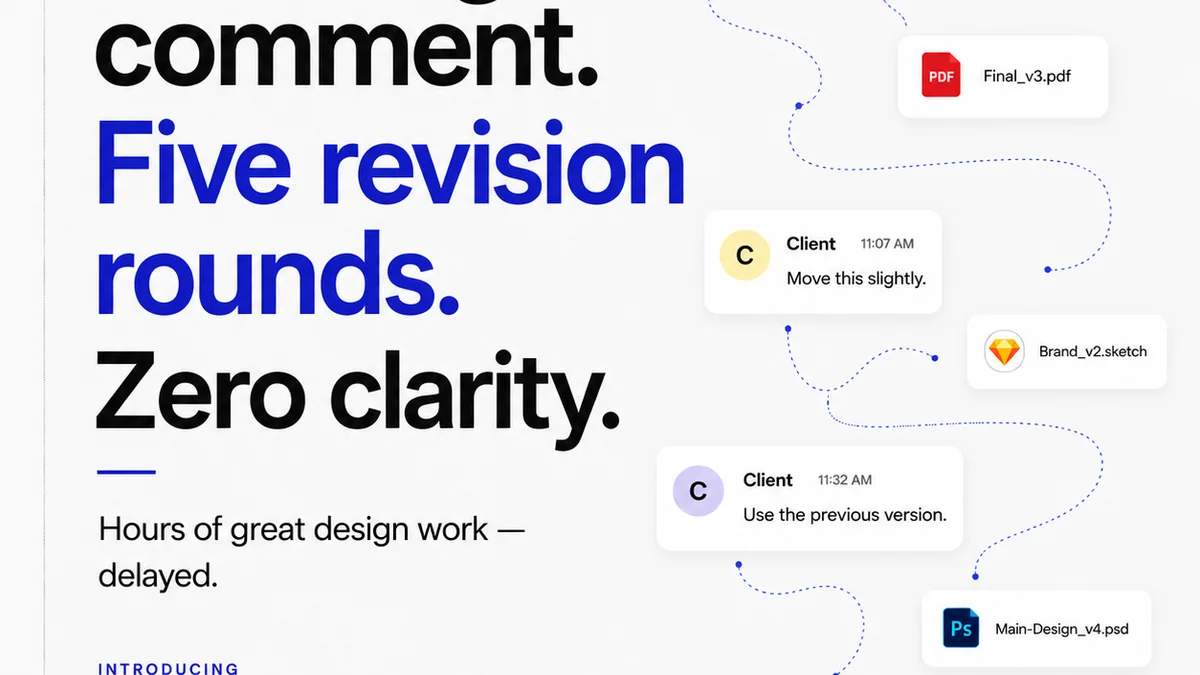
A client says, “Just one more tweak.” That one tweak often spawns three more. Then someone else on the client side sees it and adds their opinion.
Your team is left juggling conflicting instructions, often with no clear record of who asked for what, or why.
Visibility is Key
Who is responsible for approving the work at each stage?
What’s the current status of the design?
Has the client seen the latest version?
Without clear visibility, you invite delays, misunderstandings, and duplicated effort. Your team wastes time chasing down status updates instead of creating.
The Cost of Ambiguity
Ambiguity in revisions and approvals costs more than just time. It costs:
- Team morale (frustration over rework)
- Client trust (perceived incompetence)
- Profitability (hours spent on non-billable clarification)
You need a system that makes these steps explicit and trackable.
3. Embed Quality Assurance (QA) Early and Often
QA is often treated as a final gate before launch. A last-minute check for typos or broken links.
This is a mistake.
True quality assurance is baked into the process from the start.
QA is Not Just Proofreading
It’s about ensuring the creative meets the brief. Does it align with the strategy?
Does it meet technical specifications?
Is it on-brand?
These aren't just final checks; they are continuous evaluations.
The Risk of Late-Stage QA
Finding a significant issue late in the game is a crisis. It means:
- Expensive rework
- Delayed launch dates
- Strained client relationships
- Cuts to the profit margin
Proactive QA saves you from reactive firefighting.
Empower Your Team to Flag Issues
Every team member should feel empowered to identify and flag potential quality issues, regardless of their role. This requires a culture and a system that supports it.
Where Revue Fits In
Managing creative feedback, revisions, and approvals is a core operational challenge. It’s the messy middle of every project.
Revue is built to bring order to this chaos.
It centralizes client feedback, so no comment gets lost in an inbox or buried in a chat thread. Every stakeholder’s input is recorded in one place, tied to the specific version of the creative they’re commenting on.
This provides unparalleled visibility into the revision and approval process. You can see exactly where a project stands, who needs to provide input, and what the history of changes has been. No more guessing games or chasing down status updates.
By streamlining these critical steps, Revue helps ensure that quality checks are not an afterthought, but a natural part of a well-managed workflow. It frees your team from administrative burdens so they can focus on what they do best: creating great work.
Final Thought
Are you optimizing for personal productivity hacks, or for robust team operations? The former is a band-aid. The latter is the foundation for sustainable creative output. Building systems that manage the workflow friction – the feedback, the revisions, the approvals – is the real path to unlocking your team’s true creative potential.
Frequently asked questions
What's the biggest mistake teams make when trying to be more productive?
Focusing solely on individual time management tactics like time blocking or to-do lists, while neglecting the underlying operational workflow for handling feedback, revisions, and approvals. This leaves the core friction points unaddressed.
How does managing feedback improve productivity?
Centralizing feedback eliminates the time wasted hunting through emails, chats, or documents. It ensures clarity on client requests, reduces misunderstandings, and prevents rework, allowing the creative team to focus on execution.
Why is standardizing the revision and approval process important?
Standardization brings clarity and accountability. It ensures everyone knows who needs to approve what, tracks changes systematically, and provides a clear history, preventing scope creep and delays caused by ambiguity.
When should quality assurance (QA) be done in a creative project?
Quality assurance shouldn't be a final step. It should be embedded throughout the process, starting from the initial brief. Proactive QA identifies issues early, saving costly rework and preventing late-stage crises.