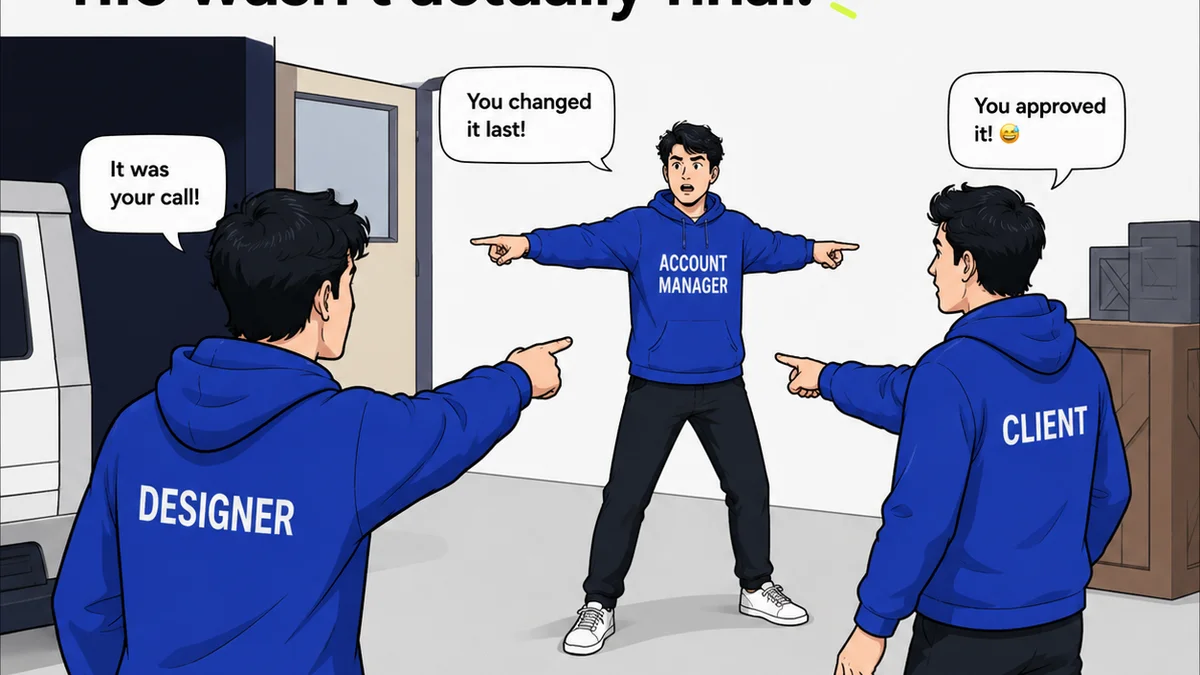
Everyone talks about creative productivity. They tell you to use the right tools, get enough sleep, and maybe try some mindfulness. None of that is wrong. But it’s incomplete.
The hard truth is that true creative productivity for marketing teams isn't about individual hacks. It's about relentless operational excellence. It’s about building systems that amplify your team’s best work, not hinder it.
1. The Myth of the Solitary Genius
We love the narrative of the lone creative bursting with brilliant ideas. It’s a compelling story. But it rarely reflects the reality of modern marketing.
Most creative work today is collaborative. It involves multiple stakeholders, rounds of feedback, and complex approval chains. This friction is where productivity dies.
Think about it:
- How much time is lost deciphering vague feedback?
- How often do revisions get lost in email threads?
- When was the last time everyone involved was on the same page about the latest version?
This isn't a talent problem. It's a process problem.
2. Feedback: The Bottleneck You Can't Afford
Client feedback is essential. It ensures the work meets objectives. But it’s often the single biggest drain on creative resources.
Vague feedback is the worst offender. “Make it pop.” “I don’t love it.” These aren't actionable. They require guesswork and endless iterations.
Uncentralized feedback is another killer. When feedback comes from Slack, email, a quick phone call, and a forwarded PDF, you have a mess. No one knows which version is current or which comments take precedence.
This chaos leads to:
- Wasted hours on revisions that don't address the core issues.
- Frustrated creatives and clients.
- Missed deadlines.
Effective feedback management requires clear channels and structured input. It’s about getting specific, actionable notes in one place.
The Cost of Ambiguity
Ambiguous feedback forces creatives to play a guessing game. This isn't creative problem-solving; it's emotional labor disguised as work.
It erodes trust and can lead to a cycle of dissatisfaction. The client doesn't get what they *think* they want, and the creative team feels their expertise is ignored.
3. Revision Cycles: Optimizing the Iterative Process
Revisions are part of the creative process. They refine the work. But uncontrolled revision cycles can spiral into infinity.
The problem isn't the *number* of revisions, but the *management* of them. Are they tracked? Are they clearly linked to specific feedback? Is there a defined limit?
Without clear processes, revision cycles become:
- Endless loops of minor tweaks.
- Opportunities for scope creep.
- A breeding ground for version control nightmares.
You need visibility into each stage of the revision process. Knowing who is reviewing what, what feedback has been addressed, and what the current status is crucial.
This visibility prevents redundant work and ensures forward momentum. It keeps the project on track and within scope.
4. Approvals: The Final Gatekeeper
Approvals are the final hurdle. They signify a sign-off and allow the project to move forward. But they can also be a black hole.
When approvals are informal or scattered, they create uncertainty. Did the right person approve? Was it the final version? What happens if someone changes their mind *after* approval?
This lack of a clear audit trail leads to:
- Disputes over what was agreed upon.
- Projects stalling indefinitely.
- Increased risk of errors slipping through.
A structured approval workflow provides accountability. It creates a definitive record of decisions.
The Danger of
Frequently asked questions
What are the biggest productivity killers for creative marketing teams?
Vague client feedback, uncentralized communication, uncontrolled revision cycles, and unclear approval processes are the primary productivity killers. These issues lead to wasted time, frustration, and missed deadlines.
How can marketing teams improve their feedback process?
Implement a centralized system for feedback. Train clients and internal stakeholders on providing specific, actionable notes. Define clear review stages and assign responsibility for consolidating feedback.
What is the role of technology in creative productivity?
Technology, like dedicated creative workflow tools, can centralize communication, track revisions, manage approvals, and provide clear visibility into project status. This reduces friction and frees up creative time.
How do I prevent endless revision cycles?
Establish clear revision limits and scope upfront. Ensure all feedback is consolidated and addressed systematically. Use a tool that tracks changes and provides a clear history of revisions.