Everyone talks about creative productivity like it’s some mystical force. You either have it, or you don’t. It’s about waiting for the muse, the flash of genius, the all-nighter fueled by caffeine and desperation. That’s the story everyone tells.
None of that is wrong. But it’s incomplete. Dangerously incomplete.
The hard truth? Creative productivity isn’t a switch you flip. It’s a machine you build. And like any machine, it needs a robust process to run effectively, consistently, and at scale.
1. The Myth of the Lone Genius
We’re bombarded with images of the solitary artist, the brilliant coder toiling away in isolation. This romantic ideal suggests that the best ideas emerge from a vacuum, free from the constraints of process and collaboration.
But that’s a recipe for chaos in a professional setting. Agencies and in-house teams aren’t set up for solitary genius. They’re set up for delivery. For clients. For deadlines.
Trying to operate without a defined process is like trying to build a skyscraper with a hammer and a prayer.
The Symptoms of Process-Free Work
- Endless, unproductive revision cycles.
- Missed deadlines and rushed work.
- Internal teams fighting over who owns what.
- Clients constantly asking, “Where are we with this?”
- Burnout masquerading as dedication.
If any of this sounds familiar, you’re probably sacrificing productivity at the altar of a false god.
2. Deconstructing the Creative Workflow
Productivity isn't just about *doing* the creative work. It’s about the entire ecosystem surrounding that work. Think of it as the entire journey from brief to final delivery.
A solid process maps out every step. It anticipates bottlenecks and builds in solutions.
It’s not about stifling creativity; it’s about freeing it up by removing the friction.
Key Stages to Define
Every creative project has core phases. Your process needs to account for each one:
- Briefing & Understanding: Is the brief crystal clear? Are objectives, scope, and deliverables explicitly defined?
- Ideation & Concepting: How are ideas generated? How are they captured and refined? What’s the feedback loop *before* significant work begins?
- Development & Production: This is where the bulk of the craft happens. How is work organized? How are assets managed?
- Review & Feedback: This is often the messiest part. How is feedback collected? How is it consolidated and prioritized?
- Revision & Iteration: Based on feedback, how are changes made efficiently? What’s the limit?
- Approval & Delivery: How is final sign-off secured? How are final assets handed over?
- Post-Mortem & Learning: What worked? What didn’t? How can the process improve next time?
3. Building Your Process Engine
A process isn’t a rigid cage; it’s a flexible framework. It needs to be adaptable but also firm enough to provide structure.
Start with the Brief
The foundation of any productive creative endeavor is a killer brief. If your briefs are vague, your entire workflow will be built on shaky ground.
Actionable Tip: Develop a standardized creative brief template. Make it mandatory for clients and internal teams to complete it thoroughly. Include sections for:
- Project objectives
- Target audience
- Key messaging
- Deliverables and formats
- Mandatories and constraints
- Budget and timeline
- Success metrics
A detailed brief upfront saves countless hours of guesswork and redirection later.
Streamline Feedback and Revisions
This is where most creative teams bleed time and energy. Unstructured feedback is the enemy of productivity.
The Problem: Emails get lost. Comments on screenshots are vague. Different stakeholders give conflicting input. The actual creative work gets buried under a mountain of disjointed communication.
The Solution: Centralize everything. Use a platform designed for creative collaboration.
- Consolidated Comments: All feedback in one place, tied directly to the asset.
- Version Control: Track every iteration clearly.
- Clear Approval Workflows: Define who needs to sign off and when.
- Actionable Insights: Easily see what feedback needs to be addressed and what can be ignored.
This isn’t about making feedback harder; it’s about making it *productive*. It’s about ensuring the right people give the right feedback at the right time, so creatives can act on it efficiently.
Define Roles and Responsibilities
Ambiguity breeds inefficiency. When everyone *thinks* someone else is handling a task, it often falls through the cracks.
Actionable Tip: For each stage of your workflow, clearly define:
- Who is responsible for initiating the task?
- Who is responsible for completing it?
- Who needs to review it?
- Who has final approval authority?
Use RACI charts (Responsible, Accountable, Consulted, Informed) if your projects are complex. Even a simple list helps.
Establish Communication Protocols
How should updates be shared? When is a meeting necessary, and when is an email sufficient? What’s the protocol for urgent requests?
Setting clear communication expectations reduces noise and ensures important information is seen and acted upon.
Actionable Tip: Define core communication channels for different purposes:
- Project Management Tool: For task updates, status checks, and general project comms.
- Dedicated Feedback Platform: For all creative review and annotation.
- Email: For formal client sign-offs and external communication.
- Instant Messaging: For quick, informal team check-ins (with clear boundaries).
- Scheduled Meetings: For strategic discussions, kick-offs, and complex problem-solving.
4. Where Revue Fits In
Building a productive creative workflow isn’t about reinventing the wheel. It’s about using the right tools to make the existing wheel turn faster and smoother.
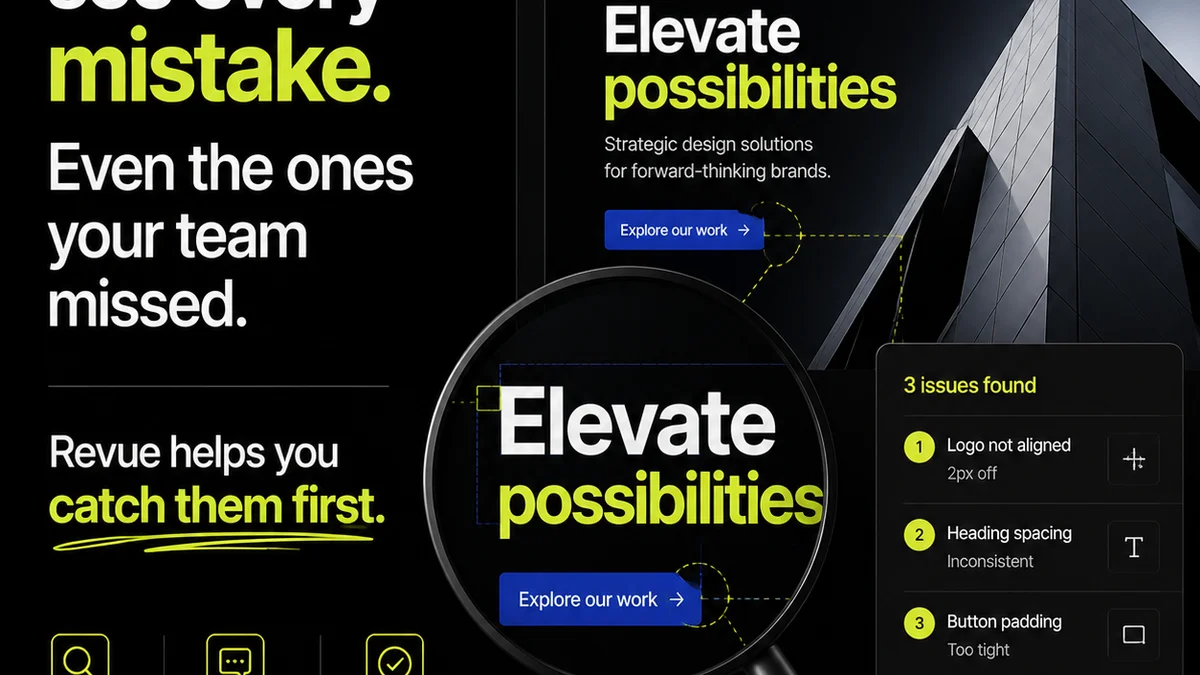
Revue acts as the central hub for your creative operations. It’s where feedback converges, revisions are tracked, and approvals are managed with clarity.
Instead of digging through email chains or deciphering Slack messages, your team has a single source of truth for all creative assets and their associated feedback.
This means less time spent on administrative overhead and more time spent on actual creative thinking and execution. It streamlines the entire review and approval process, turning a notorious bottleneck into a predictable, manageable step.
With Revue, you can:
- Centralize Client Feedback: All comments and annotations live directly on the creative asset.
- Manage Revisions Visibly: See the history of changes and understand the evolution of the work.
- Streamline Approvals: Define clear approval stages and get sign-offs efficiently.
- Ensure Quality Checks: Maintain a clear record of feedback and revisions to uphold standards.
It’s about making the process work *for* your creativity, not against it.
5. The Iterative Nature of Process Improvement
Your process isn’t a one-and-done project. It needs constant attention.
Regular Audits are Key
Set aside time, perhaps quarterly, to review your existing process. What’s working well? What’s causing friction?
Gather Team Feedback
The people using the process every day have the best insights. Create a safe space for them to voice concerns and suggest improvements.
Be Willing to Adapt
Market needs change. Client expectations evolve. Your process must be agile enough to adapt without breaking.
A rigid process becomes obsolete. An adaptive process becomes a competitive advantage.
Final Thought
If you’re still waiting for inspiration to strike before you can be productive, you’re leaving your creative output to chance. Building a robust, iterative process transforms creative work from an unpredictable event into a reliable outcome. It’s not about killing creativity; it’s about cultivating it within a structure that allows it to flourish. Are you building a machine, or just waiting for lightning to strike?
Frequently asked questions
What's the difference between creative inspiration and creative productivity?
Inspiration is the spark – the initial idea or motivation. Productivity is the sustained output that results from a system of work. While inspiration is valuable, it's unreliable for consistent results. A process turns that spark into a steady flame.
How can I make my creative feedback process more efficient?
Centralize feedback using a dedicated platform like Revue. Ensure feedback is specific, actionable, and tied directly to the asset. Define clear approval stages and stakeholders to avoid conflicting input and endless revisions.
Is it possible to have too much process for creative work?
Yes, an overly rigid or bureaucratic process can stifle creativity. The goal is to build a flexible framework that removes friction and administrative burdens, allowing creatives more time and mental space to focus on the work itself. It should support, not restrict.
How do I get buy-in from my team for a new process?
Involve your team in defining and refining the process. Explain the 'why' behind the changes, focusing on how it will reduce frustration and improve their work-life balance. Gather their feedback regularly and be willing to adapt the process based on their experiences.