Everyone talks about creative productivity. More output, faster turnaround, happier clients. It sounds simple, right?
Just get your team to work harder, to be more efficient, to cut out the distractions. None of that is wrong. But it’s incomplete.
The hard truth? True creative productivity isn’t about squeezing more out of your team’s time. It’s about optimizing their workflow so they spend less time fighting friction and more time doing high-value creative work.
Your agency’s ROI isn’t directly tied to how many hours your designers bill. It’s tied to how effectively those hours translate into client satisfaction, successful projects, and profitable outcomes. And that hinges on genuine, focused creative output, not just activity.
Let’s cut through the noise.
1. The Illusion of Busyness vs. Actual Productivity
We’ve all seen it. The designer who’s constantly in meetings, replying to emails, or “researching” the next big thing. They look busy. But are they productive?
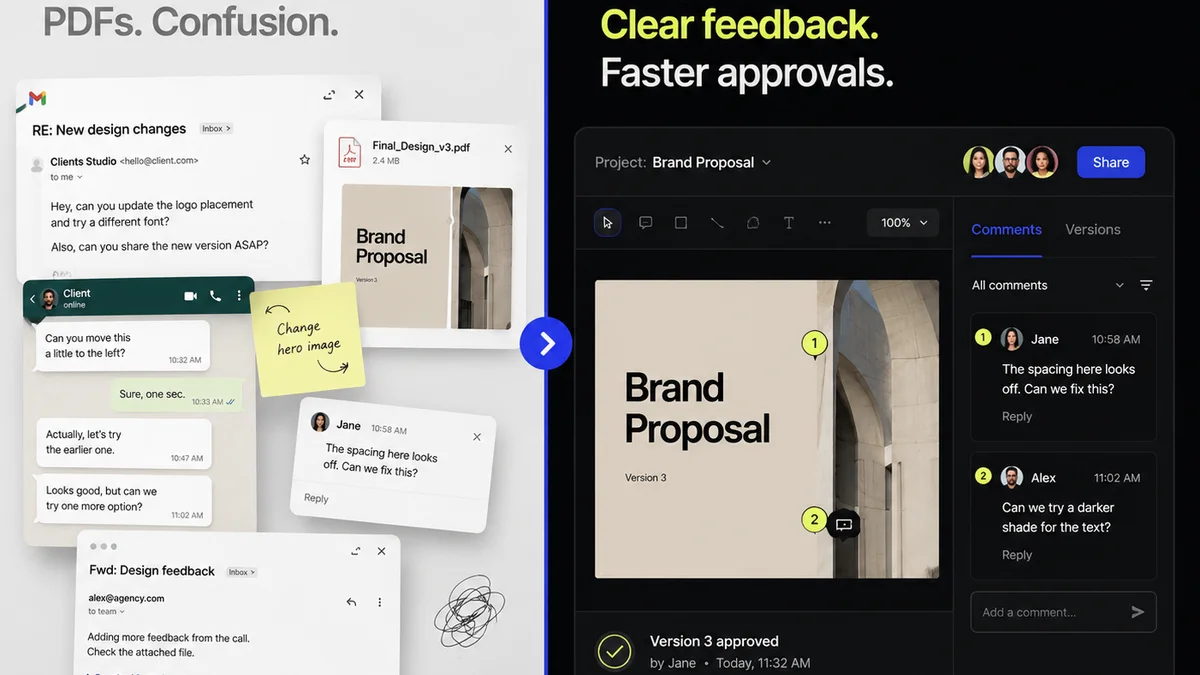
Busywork is the enemy of ROI. It’s the endless back-and-forth emails, the disorganized file sharing, the unclear feedback loops, the constant context switching.
This isn’t just annoying; it’s expensive. Every minute your team spends navigating these roadblocks is a minute they aren’t designing, strategizing, or innovating.
Consider the hidden costs:
- Wasted hours deciphering vague feedback.
- Delayed projects due to unclear approval chains.
- Rework caused by version control nightmares.
- Frustration leading to burnout and turnover.
- Missed opportunities because your team is stuck in operational drag.
This operational friction eats into your profit margins faster than you can imagine.
2. Identifying Your Agency's Productivity Killers
Where is your team losing valuable creative time? Be honest.
Is it the constant barrage of Slack notifications? The struggle to find the latest version of a client file? The confusion over who’s supposed to approve what?
The Feedback Fiasco
Client feedback is essential, but it’s often a black hole of inefficiency. Vague comments, conflicting opinions, feedback buried in email threads – it all adds up.
Imagine a client says, “I don’t love it.” What does that even mean?
This ambiguity forces your creatives to guess, leading to wasted revisions and frustration on both sides.
Revision Roulette
How many times has a project been “finalized,” only for a new request to pop up days later? Or worse, a mistake is discovered *after* delivery?
Lack of clear revision tracking means you can’t easily see what’s been changed, by whom, and why. It’s a recipe for errors and scope creep.
Approval Paralysis
Who needs to sign off? Is it the marketing manager, the brand director, or someone else entirely?
When approval workflows are unclear, projects stall. Decisions get delayed, and your team sits idle, waiting for the green light.
Tool Overload and Context Switching
Are you using five different tools to manage one project? A project management tool, a chat app, a file-sharing service, an email client, and a separate proofing tool?
Every time your team has to switch between these tools, they lose momentum. It’s like asking a chef to cook in five different kitchens simultaneously.
3. Building a Workflow That Champions Creative Output
Improving productivity isn’t about demanding more. It’s about removing obstacles and creating clarity.
This means establishing systems that streamline communication, centralize information, and automate tedious tasks.
Centralize Everything
Your team needs a single source of truth for project assets, feedback, and approvals. No more digging through email chains or shared drives.
Consolidating information reduces confusion and saves precious time.
Clarify Feedback Loops
Implement a system for collecting and responding to feedback that is specific, actionable, and traceable.
This means moving beyond vague statements. Your process should encourage clients to point to specific elements and explain their reasoning.
Streamline Approvals
Define clear approval stages and responsibilities upfront. Make it obvious who needs to approve what, and when.
Automated notifications and clear status indicators can prevent projects from getting stuck.
Embrace Focused Work Blocks
Protect your creatives’ time. Encourage deep work sessions free from interruptions.
This might mean setting specific times for meetings, limiting notifications, or establishing “quiet hours” for focused design sprints.
4. Where Revue Fits In
You’re probably juggling a dozen tools already. So where does Revue fit into this picture?
Revue is designed to eliminate the friction points that kill creative productivity.
It’s not another task to manage. It’s the central nervous system for your client creative workflow.
Centralized Feedback & Annotation
Revue provides a clear, visual space for clients to leave feedback directly on creative assets. No more scattered emails or confusing chat messages. Comments are tied to specific versions and elements, leaving no room for ambiguity.
Visible Revision & Approval Tracking
Every change, every comment, every approval is logged. Your team can see the entire history of a project, understand what revisions were made and why, and track approval status in real-time. This eliminates guesswork and prevents costly rework.
Streamlined Quality Checks
Before anything goes to the client, you can use Revue to run internal quality checks. Ensure all feedback has been addressed, all approvals are in place, and the final asset meets your agency’s standards.
This focus on clarity and control means your team spends less time on administrative overhead and more time doing what they do best: creating brilliant work.
5. Measuring the Real ROI of Productivity
So how do you measure the impact of these changes? It’s not just about faster delivery times, though that’s a nice side effect.
It’s about:
- Reduced Rework: Fewer errors and misunderstandings mean less time and money spent fixing mistakes.
- Improved Client Satisfaction: Clear communication and efficient processes lead to happier clients who trust your agency.
- Higher Profit Margins: By cutting down on wasted hours and operational drag, you increase the profitability of every project.
- Enhanced Team Morale: When creatives can focus on their craft without constant frustration, they’re more engaged and less likely to burn out.
- Increased Capacity: A more productive agency can take on more work without sacrificing quality or burning out its team.
This isn’t about working harder; it’s about working smarter. It’s about building systems that amplify your team’s talent, not hinder it.
Final Thought
Are you measuring your agency’s success by the volume of activity, or by the quality and profitability of its output? If you're still stuck in the busywork trap, it's time to rethink what
Frequently asked questions
What's the difference between being busy and being productive in a creative agency?
Being busy often means being occupied with tasks that don't directly contribute to high-value creative output, like managing endless email chains or searching for files. True productivity, in contrast, focuses on optimizing workflows to minimize friction, allowing creatives to spend more time on designing, strategizing, and delivering exceptional work that drives client success and agency profit.
How can vague client feedback be managed effectively?
Effective management of vague feedback involves establishing a clear process. Encourage clients to provide specific, actionable comments, ideally with visual annotations directly on the asset. Use tools that allow for precise feedback placement and require clarification before revisions are made. This transforms ambiguity into clear direction.
What are the biggest hidden costs of poor creative productivity?
The hidden costs include wasted billable hours spent on non-creative tasks, costly rework due to misunderstandings or errors, delayed project timelines impacting client satisfaction, increased team frustration and burnout leading to higher turnover, and missed opportunities because your team is bogged down by operational inefficiencies.
How does a centralized platform like Revue improve agency ROI?
A centralized platform like Revue improves ROI by reducing operational friction. It consolidates feedback, streamlines approvals, and tracks revisions, saving valuable time and preventing errors. This allows your team to focus on high-value creative work, leading to more efficient project delivery, improved client satisfaction, and ultimately, higher profit margins.