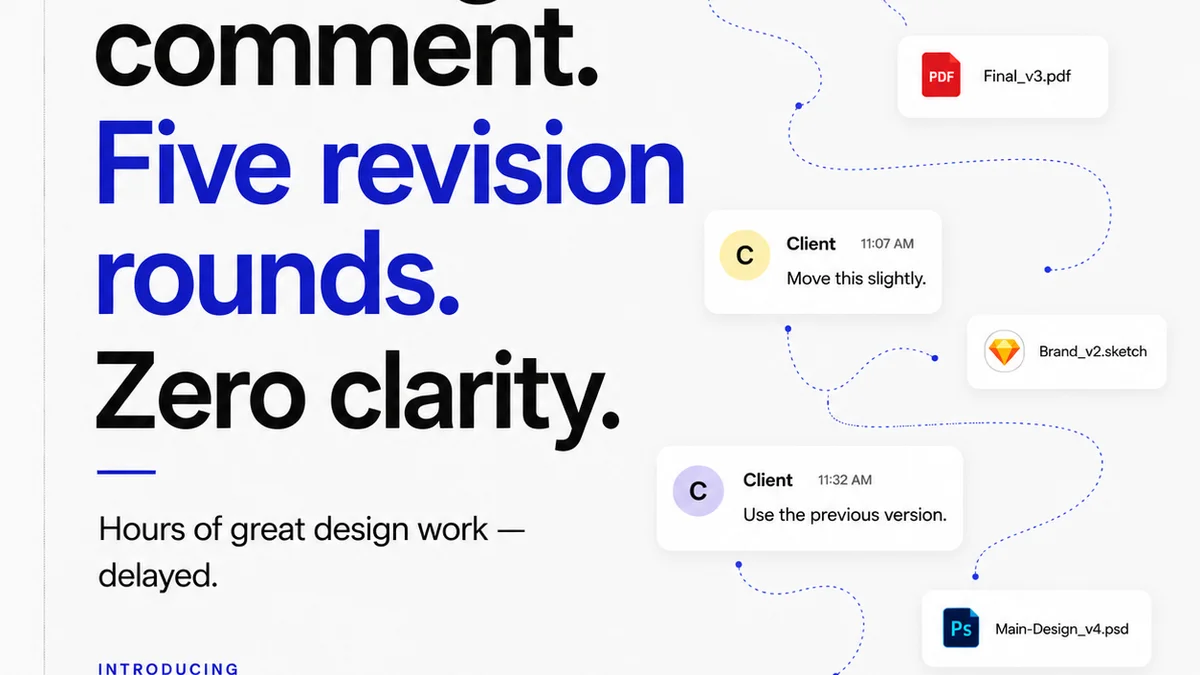
Everyone wants more creative output. Agencies, in-house teams, clients – they all clamor for faster turnarounds, more ideas, and quicker revisions. The common assumption? That more productivity means more pressure, more hours, and ultimately, a more stressed-out team. It’s a recipe for burnout, not brilliance.
None of that is wrong. But it’s incomplete.
The hard truth is that true creative productivity isn't about squeezing more juice from a tired team. It's about optimizing the workflow itself. It’s about removing friction, clarifying communication, and building systems that allow creativity to flow, not get dammed up at every turn.
1. The Illusion of Busyness vs. Real Output
We’ve all seen it. The team that’s always “busy.” Phones ringing, Slack buzzing, endless meetings. They look productive. But are they delivering high-quality work, on time, with happy clients? Often, the answer is no.
Busyness can be a mask for inefficiency. It’s the sound of people scrambling, putting out fires, and dealing with the fallout of poor planning and unclear processes.
The Symptoms of Fake Productivity
- Constant context switching that kills deep work.
- Endless revisions due to unclear initial briefs or feedback.
- Teams working late not because of a genuine rush, but because of process breakdowns.
- A general feeling of overwhelm and panic, rather than focused progress.
- Clients chasing the agency for updates.
This isn’t about working less. It’s about working smarter.
2. Deconstructing Creative Friction Points
Where does your team’s creative energy get bogged down? It’s rarely the actual creative act itself. It’s the stuff *around* the creative work.
Think about it:
- The time spent hunting for the latest version of a file.
- The hours lost deciphering vague client comments.
- The back-and-forth emails trying to schedule a single approval.
- The internal arguments about what the client *actually* meant.
- The anxiety of wondering if the final deliverable meets all specs.
These aren't minor annoyances. They are productivity killers. They drain mental energy and derail momentum. Addressing them is the first step to unlocking genuine creative velocity.
3. The Power of a Crystal-Clear Brief
Garbage in, garbage out. It sounds harsh, but it’s the operational reality of creative work. A weak or ambiguous brief is the bedrock of wasted effort.
A truly effective brief isn’t just a list of requirements. It’s a strategic document that sets clear goals, defines success, outlines the target audience, and establishes the core message. It’s the North Star for the entire project.
What a Great Brief Includes:
- The Core Problem: What business challenge are we solving?
- The Objective: What does success look like, specifically?
- The Audience: Who are we talking to? What do they care about?
- The Key Message: What is the one thing the audience must take away?
- Mandatories & Constraints: What absolutely must be included or avoided? Brand guidelines, legal requirements, technical specs.
- Deliverables: Exactly what assets are needed, in what formats.
- Timeline & Budget: Realistic expectations for both.
Investing time upfront in a robust brief pays dividends throughout the entire project lifecycle. It minimizes assumptions and reduces the need for extensive rework later.
4. Streamlining Feedback and Revisions
This is where most creative projects go off the rails. Feedback is essential, but the *process* of collecting and acting on it is often chaotic.
Imagine a client reviewing a video. They send a rambling email: “Make the music a bit more upbeat, the blue is too dark, and can we add that logo somewhere prominent?” What does that even mean?
Without a structured way to capture and interpret feedback, your team is left guessing. This leads to multiple rounds of revisions, frustration, and a diluted final product.
Tactics for Better Feedback Loops:
- Centralized Feedback Hub: A single source of truth for all comments, linked directly to the creative asset.
- Contextual Annotations: Feedback tied to specific elements – a word, a shape, a section of a video.
- Clear Action Items: Translating subjective comments into concrete tasks for the creative team.
- Defined Revision Rounds: Setting expectations for how many rounds of feedback are included.
- Direct Client Collaboration: Facilitating clear, concise communication channels.
The goal is to make feedback actionable, not ambiguous.
5. The Approval Gauntlet: Clarity Over Speed
Approvals are the gatekeepers of progress. But too often, they become bottlenecks.
Who needs to sign off? When? What are they approving – the concept, the execution, the final pixel? Without clarity, approvals can drag on, leaving projects in limbo.
This isn't just about getting a 'yes' or 'no'. It's about ensuring that the right stakeholders are reviewing at the right time, with the right context, and that their decisions are recorded and communicated efficiently.
Establishing an Approval Workflow:
- Identify Key Stakeholders: Who has the final say?
- Define Approval Stages: Concept, creative, final.
- Set Clear Deadlines: When are approvals needed by?
- Use a System: A tool that tracks who needs to approve what, and when.
- Document Everything: Every approval, every rejection, every note.
A smooth approval process prevents projects from stalling and keeps momentum high.
6. Quality Control: The Final Polish
The last mile is often the most neglected. We’re so focused on hitting deadlines that the final quality check can become an afterthought. This is a mistake.
A poorly executed final check means typos in headlines, incorrect image resolutions, broken links, or brand elements used incorrectly. These are the details that undermine the perceived quality of your agency’s work.
Integrating Quality Assurance:
- Checklists: Standardized lists for different types of deliverables.
- Dedicated QA Time: Building buffer time into the schedule for review.
- Cross-Team Review: Having someone *other* than the creator do the final check.
- Technical Audits: Verifying file formats, sizes, and specifications.
- Proofreading: Dedicated time for copy and content review.
A rigorous QA process ensures that every piece of work leaving your studio is polished, professional, and error-free.
Where Revue Fits In
Navigating these complexities requires more than just good intentions. It requires the right tools.
Revue is built to address these exact friction points in the creative workflow.
- Centralized Client Feedback: Instead of scattered emails and Slack messages, all client comments live in one place, directly on the asset. This means no more hunting for feedback or deciphering vague notes.
- Clear Revision and Approval Tracking: See exactly who has reviewed what, what decisions have been made, and what the next steps are. This transparency eliminates bottlenecks and keeps projects moving.
- Streamlined Quality Checks: With all feedback and approvals documented, your team has a clear record of what’s been agreed upon, making final quality assurance more efficient and less prone to missed details.
Revue helps you move from a reactive, chaotic process to a proactive, organized system. It’s about giving your team the clarity and structure they need to do their best creative work, without the unnecessary drag.
Final Thought
Is your team truly productive, or just busy? The difference lies not in the hours logged, but in the efficiency of the workflow. Are you building systems that empower creativity, or unintentionally stifling it with friction and confusion? The answer might just be the key to unlocking your team's full potential.
Frequently asked questions
How can I improve creative productivity without increasing team stress?
Focus on optimizing your workflow. Streamline feedback loops, ensure clear project briefs, and implement efficient approval processes. Reducing friction points allows creativity to flow more freely, minimizing stress and burnout.
What's the biggest mistake agencies make regarding productivity?
Confusing busyness with actual output. Teams might appear busy with constant communication and activity, but if the underlying processes are inefficient, they aren't truly productive. This often leads to wasted time, rework, and missed deadlines.
How important is a clear project brief for creative productivity?
Extremely important. A well-defined brief acts as a roadmap, setting clear objectives and expectations from the start. This significantly reduces ambiguity, minimizes the need for extensive revisions, and allows the creative team to focus on execution rather than interpretation.
How can technology help improve creative team productivity?
Tools that centralize communication, feedback, and approvals can drastically reduce workflow friction. For instance, platforms that allow for contextual feedback directly on assets eliminate the need to hunt for comments across emails and messages, saving significant time.