Everyone wants more output. More ideas. More finished work. The common wisdom? Give creatives more freedom, more caffeine, and fewer meetings. Maybe a standing desk.
None of that is wrong. But it’s incomplete.
The real bottleneck for creative productivity isn’t a lack of individual genius or even a packed calendar. It’s the friction in the system. The endless back-and-forth. The forgotten feedback. The approval loops that drag on for weeks.
This friction kills momentum. It erodes confidence. And it makes even the most talented teams feel like they’re wading through mud.
1. The Illusion of 'Busy'
We mistake activity for productivity. A packed inbox, a calendar full of stand-ups, a flurry of Slack messages – these feel like progress. But are they moving the needle on actual creative output?
Often, no. They’re just noise.
The Symptoms
- Constant context switching between tasks.
- Urgent requests overriding important projects.
- Hours spent in meetings that could have been emails.
- Team members feeling overwhelmed but unable to point to specific blockers.
This isn't a problem of individual time management. It's a systemic issue. The tools and processes we use inadvertently create more work around the creative work, rather than supporting it.
2. Feedback as a Black Hole
Client feedback is crucial. But it’s also a notorious productivity killer when mishandled.
Think about it:
- Feedback arrives piecemeal, often in different channels.
- Comments are vague, contradictory, or buried in long email threads.
- There’s no clear record of what was discussed or agreed upon.
- Revisions go out, only for the client to say, “I thought we decided against that.”
This isn't just frustrating; it’s actively destructive. It forces creatives to guess, to re-do work, and to waste valuable time chasing down clarity. It creates a perception of unresponsiveness, even when the team is working around the clock.
3. The Approval Paralysis
Getting a final sign-off shouldn’t be an ordeal. Yet, for many agencies and in-house teams, it is.
The process often looks like this:
- Work is sent via email, Dropbox link, or a shared drive.
- The client or stakeholder sits on it for days.
- Multiple rounds of minor tweaks are requested, each requiring a new version and a new chase.
- The final approval is given, but only after significant delays and repeated nudges.
This delay isn't just about waiting for a signature. It’s about the lost momentum. The project stalls. Other tasks get pushed back. The entire workflow grinds to a halt, waiting for one person’s OK.
4. Quality Checks as an Afterthought
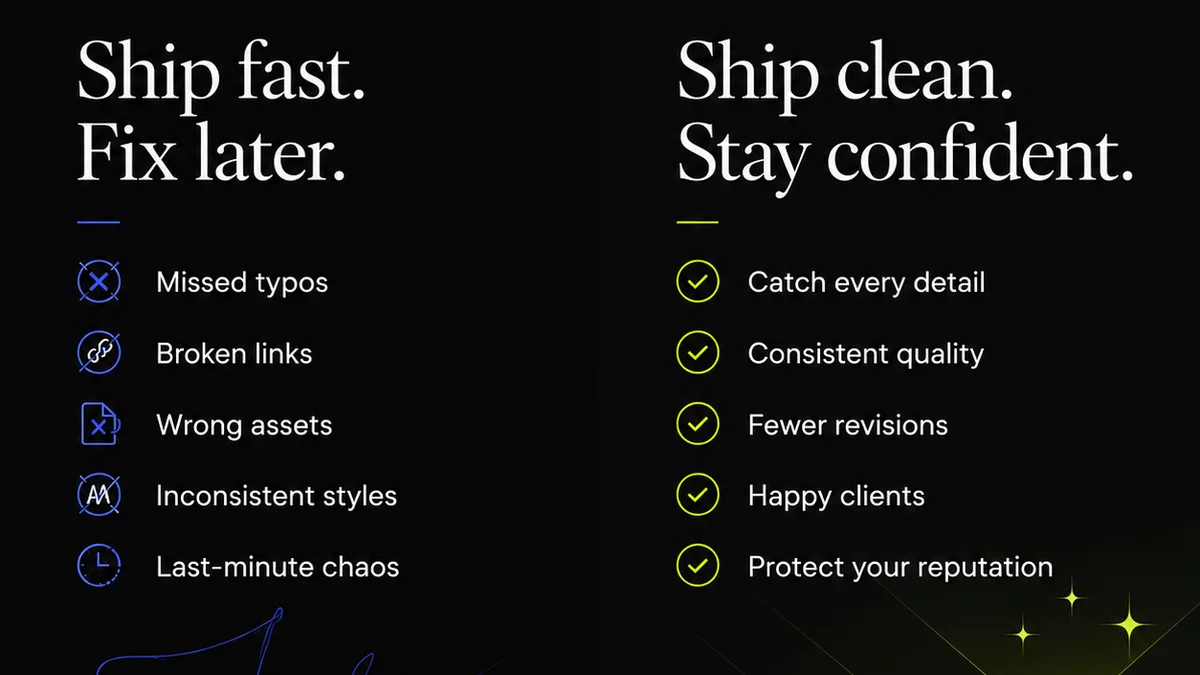
The final output is only as good as the process that got it there. When quality checks are rushed or skipped, the cracks start to show.
This means:
- Typos and grammatical errors slip through.
- Brand guidelines are inconsistently applied.
- Technical specs are missed (e.g., wrong file format, incorrect dimensions).
- The client spots errors the team should have caught.
These aren't just aesthetic flaws. They’re signs of a broken workflow. They erode trust and suggest a lack of attention to detail, no matter how brilliant the core creative concept might be.
5. The Mismanagement of Revisions
Revisions are part of the creative process. But managing them efficiently is a different story.
Without a clear system:
- It's hard to track what changes have been made and why.
- There’s no easy way to compare versions and see the evolution of the work.
- Scope creep becomes a constant threat, as
Frequently asked questions
What's the difference between busy and productive for a creative team?
Being busy means engaging in a lot of activity, like attending meetings or responding to emails. Being productive means actively moving creative projects forward towards completion and client approval.
How can client feedback be managed better?
Centralize all feedback in one place, ensure comments are specific and actionable, and establish clear communication channels to avoid confusion and reduce back-and-forth.
What are common issues with the creative approval process?
Delays in sign-offs, unclear feedback leading to multiple revision rounds, and a lack of visibility into the approval status are common problems that stall projects.
How does Revue help with creative productivity?
Revue provides a centralized platform for feedback, revision tracking, and approvals, reducing system friction and allowing creative teams to focus on producing great work.