Everyone thinks creative project management is about Gantt charts, deadlines, and resource allocation. And sure, that’s part of it.
But that’s like saying a symphony is just about counting beats. It misses the entire point of the performance.
The hard truth for marketing teams is that managing creative projects effectively isn't about rigid process; it's about enabling creative flow while maintaining accountability. It’s a balance that most tools and teams get wrong.
1. The Myth of Predictable Creativity
Marketing creative is inherently unpredictable. You’re not building a bridge where the materials and physics are constant. You’re trying to capture attention, evoke emotion, and drive action in a dynamic market.
Assumptions about linear progress, fixed scope, and predictable timelines are fantasies in the world of creative work. Campaigns evolve. Client feedback shifts. Market conditions change.
Trying to force creative work into a rigid, waterfall-style project management box is a recipe for frustration and mediocre results. It stifles innovation and breeds resentment.
The Symptoms of Rigidity
- Endless scope creep discussions that go nowhere.
- Team members feeling boxed in and uninspired.
- Deliverables that feel ‘safe’ but miss the mark.
- Constant firefighting and missed deadlines despite detailed plans.
- Client relationships strained by perceived ‘delays’.
These aren't signs of a bad team. They're often symptoms of a management approach that doesn't fit the work.
2. Understanding Creative Workflow Stages
Effective creative project management recognizes that different stages require different approaches. It’s not one-size-fits-all.
Think of it less as a line and more as a series of interconnected cycles, each with its own demands.
Discovery & Strategy
This is where the foundation is laid. It’s about understanding the brief, the audience, the goals, and the competitive landscape. It requires deep thinking, research, and collaboration.
Project management here means facilitating clear communication, ensuring alignment on objectives, and defining success metrics. It’s less about tracking tasks and more about ensuring strategic clarity.
Ideation & Concepting
This is the messy, generative phase. Brainstorming, sketching, mood boards, rough copy. Quantity often leads to quality here.
Management’s role? Create a safe space for exploration. Provide the right prompts and constraints, but avoid premature judgment. Ensure diverse perspectives are included.
This stage thrives on freedom, not strict task management. It’s about generating possibilities.
Development & Production
Here’s where concepts get refined and built. Design mockups, copywriting, video editing, coding.
This is where more traditional project management tools become useful. Tracking progress, managing asset versions, coordinating handoffs between specialists.
But even here, flexibility is key. Unexpected technical challenges or design refinements are normal. The plan needs to accommodate iteration.
Review & Refinement
This is the critical feedback loop. Presenting work, gathering input, making revisions.
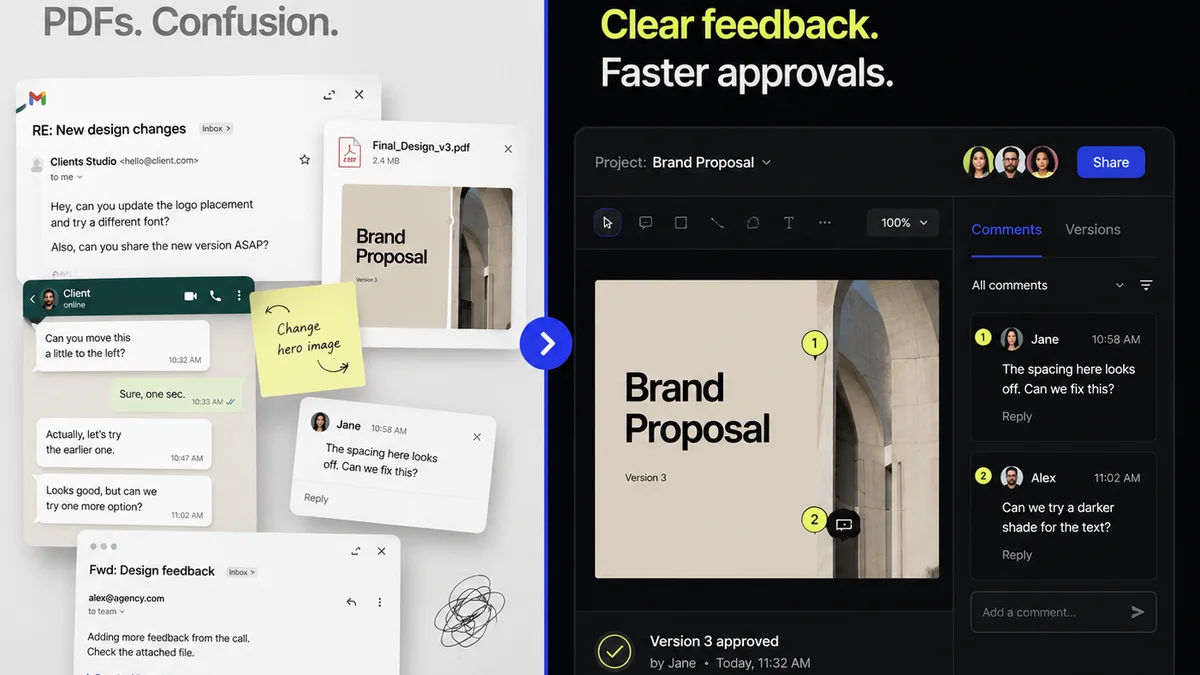
This stage is notorious for derailing projects. Unclear feedback, subjective opinions disguised as objective critique, and endless revision cycles are common.
Effective management here means structuring feedback, ensuring it’s actionable, and having clear approval gates. It’s about channeling feedback productively.
Launch & Analysis
The final push. Deploying the creative, monitoring its performance, and learning from the results.
Project management ensures smooth deployment and that performance is tracked against the initial goals. It’s about accountability and learning.
3. The Human Element: Motivation and Collaboration
Creative work is fueled by human energy, passion, and collaboration. Project management that ignores this is doomed.
Your team members aren't cogs in a machine. They are individuals with different working styles, motivations, and creative processes.
Fostering Psychological Safety
Creatives need to feel safe to take risks, propose unconventional ideas, and admit when something isn't working. Project managers create this environment by:
- Encouraging open communication.
- Valuing diverse opinions.
- Separating critique of the work from critique of the person.
- Celebrating effort and learning, not just perfect outcomes.
Enabling Seamless Collaboration
Creative projects are rarely solo efforts. They involve designers, writers, strategists, clients, and other stakeholders.
Project management should facilitate, not hinder, this collaboration. This means ensuring everyone has access to the latest information, understands their role, and can communicate effectively.
Tools that silo information or create communication friction are actively harmful.
4. Feedback: The Double-Edged Sword
Feedback is essential for great creative. It’s how work gets better. But it's also the number one project killer when mismanaged.
Generic, vague, or contradictory feedback is worse than no feedback at all.
Making Feedback Actionable
This requires discipline from both the feedback giver and the project manager.
- Specificity: Instead of
Frequently asked questions
What's the biggest mistake marketing teams make in creative project management?
The biggest mistake is treating creative projects like predictable, linear processes (e.g., construction). Marketing creative thrives on iteration, adaptation, and sometimes, unpredictability. Forcing it into rigid frameworks stifles innovation and leads to frustration.
How can I make client feedback more productive?
Structure the feedback process. Define who gives feedback, when, and how. Train stakeholders to provide specific, actionable, and objective input rather than vague opinions. Use tools that allow for contextual feedback directly on the creative assets.
What's the role of a project manager in a creative team?
A creative project manager acts as a facilitator and enabler, not just a taskmaster. They ensure clear communication, manage timelines and resources, remove roadblocks, foster collaboration, and protect the creative process while ensuring accountability and alignment with project goals.
How does a marketing team balance creative freedom with project deadlines?
By understanding the different stages of the creative process. Allow more freedom and exploration during ideation and discovery. Implement clearer structure and process during development and production. Set realistic expectations and build buffer time into schedules for inevitable iterations and refinements.