Everyone thinks creative proofreading is about spotting typos and grammatical errors. That’s the easy part. The real work—the kind that saves projects and reputations—happens long before you get to the final read-through.
The hard truth? Effective creative proofreading is less about final polish and more about building quality into the entire creative process. It’s an operational discipline, not just a final check.
1. The Myth of the 'Final Eye'
We all know the drill. A project is nearing deadline. The client has signed off on the core concept. Now, someone needs to give it a 'final look' before it goes live.
This often falls to the most junior person, or whoever has a spare five minutes. They’re expected to catch everything: typos, formatting issues, broken links, brand consistency problems, and even strategic misalignments.
This isn't proofreading. This is a desperate last-ditch effort to salvage a process that likely had quality lapses at multiple earlier stages.
The Real Problem: Late-Stage Detection
When proofreading becomes a last-minute task, it’s reactive, not proactive. It’s like trying to fix a leaky roof during a hurricane.
- Errors caught this late are expensive to fix.
- They cause project delays.
- They erode client confidence.
- They can lead to costly mistakes in production or deployment.
The goal shouldn't be to find mistakes at the end, but to prevent them from happening in the first place.
2. Building Quality In: The Proofing Workflow
True creative quality assurance starts at project kickoff. It requires a systematic approach, not a hopeful prayer.
Defining 'Done' for Every Stage
What does a 'finished' draft look like at each milestone? This needs to be clear from the outset.
- Briefing: Is the brief clear, unambiguous, and agreed upon?
- Concepting: Does the concept directly address the brief? Is it strategically sound?
- Design/Copywriting: Does the execution align with the approved concept and brief? Are there any inherent flaws?
- Internal Review: Is there a structured review process before client-facing deliverables?
- Client Feedback: How is feedback captured, interpreted, and actioned?
- Final Asset Creation: Are all technical specifications met?
Each of these stages needs its own quality checkpoints. Proofreading is the final checkpoint, but it’s only effective if the preceding ones were robust.
The Role of Standards and Checklists
Creative teams often operate on intuition. That's fine for ideation, but deadly for execution. You need documented standards.
- Style Guides: Brand voice, tone, grammar preferences, capitalization rules.
- Technical Specs: File formats, resolution, color profiles, character limits, URL structures.
- Accessibility Guidelines: Ensuring content is usable by everyone. Refer to resources like the Web Content Accessibility Guidelines (WCAG) for best practices.
- Process Checklists: A step-by-step guide for specific tasks, ensuring no critical action is missed.
These aren't bureaucratic hurdles; they are essential tools for consistency and quality control.
3. Types of Creative Proofreading
Proofreading isn't monolithic. Different types of review address different issues.
Proofreading vs. Editing vs. Copyediting
These terms are often used interchangeably, but they represent distinct activities:
- Editing: Big-picture changes. Focuses on clarity, flow, structure, and overall message effectiveness. This happens early.
- Copyediting: Mid-level changes. Focuses on grammar, punctuation, spelling, consistency in style and terminology, and factual accuracy. This happens after editing.
- Proofreading: Final-level check. Focuses on surface errors—typos, formatting glitches, punctuation mistakes—that slipped through earlier stages. This is the absolute last step.
Trying to do copyediting or editing during the final proofread is inefficient and indicates a breakdown in earlier quality control.
Specialized Proofing for Creative Deliverables
Beyond text, creative work involves many elements:
- Design Proofreading: Checking layout, alignment, visual hierarchy, color consistency, image quality, and adherence to design specs.
- Web/Digital Proofreading: Verifying links, interactive elements, responsiveness across devices, form functionality, and tracking codes.
- Video/Audio Proofreading: Ensuring accurate captions, correct audio levels, smooth transitions, and proper rendering.
- Print Proofreading: Checking bleed, trim marks, color separation, font embedding, and paper stock specifications.
Each requires a specific lens and often specialized tools or knowledge.
4. The Human Element: Skill, Focus, and Burnout
Even with the best processes, human error is a factor. But we can mitigate it.
Who Should Proofread?
The 'final eye' shouldn't be the person who created the work. They're too close to it. Ideally, it’s someone:
- With a keen eye for detail.
- Who understands the project goals and brand standards.
- Who wasn't directly involved in the creation of the specific piece.
- Who has the time and focus to do it thoroughly.
This often means assigning proofreading as a distinct role or task, not an afterthought.
Combating Fatigue and Distraction
Proofreading is mentally taxing. Long sessions lead to diminishing returns.
- Take Breaks: Short, frequent breaks are more effective than one long one.
- Change Mediums: If proofing on screen, print it out. If proofing a PDF, try converting it to a Word doc (carefully).
- Read Aloud: This forces you to slow down and catch awkward phrasing or missed words.
- Focus on One Error Type at a Time: First pass for typos, second for grammar, third for formatting.
Treat proofreading as a specialized skill, not a general admin task.
5. Where Revue Fits In
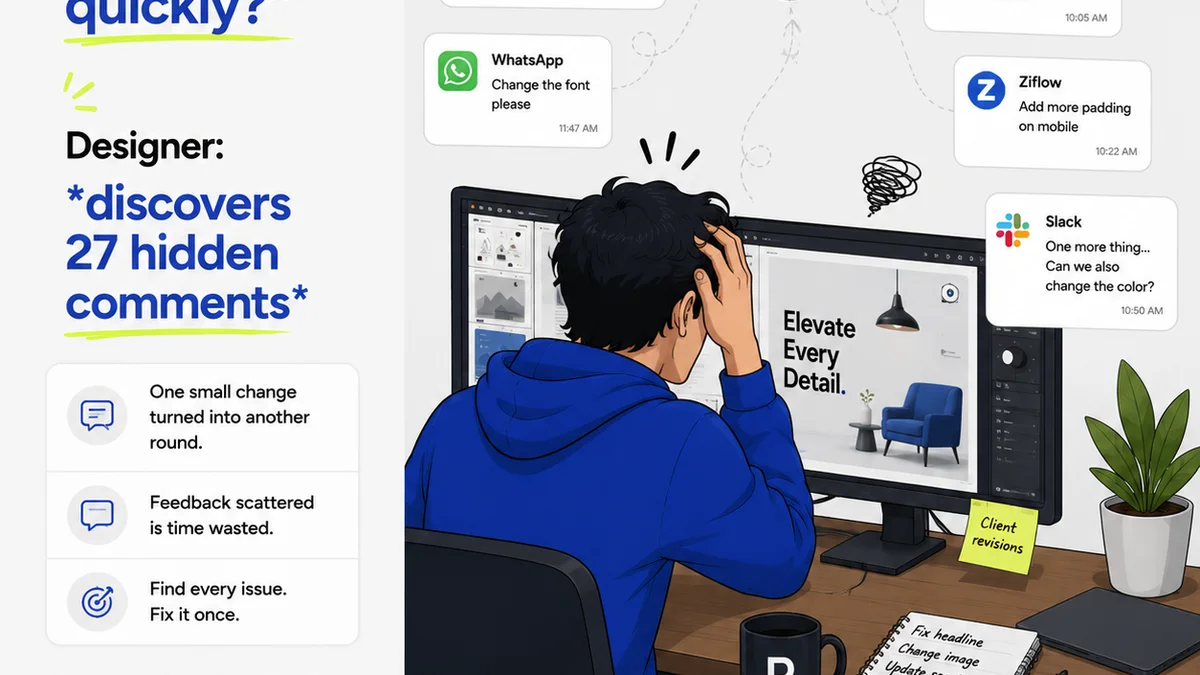
The best proofreading happens when feedback is clear, organized, and actionable. Disconnected email chains and scattered comments lead to missed details.
Revue helps centralize client feedback and internal reviews. Instead of hunting through disparate sources, all comments, annotations, and revision histories live in one place.
This visibility means fewer errors slip through the cracks.
- Centralized Feedback: All stakeholder comments are in one location, reducing the chance of miscommunication or missed feedback.
- Revision Tracking: See exactly what changed, when, and why, making final checks more efficient.
- Clear Approval Flows: Understand the status of each review stage, ensuring nothing is overlooked before final delivery.
When feedback is managed effectively, the final proofreading stage becomes a confirmation of quality, not a frantic search for flaws.
6. Final Thought
Is your agency treating proofreading as a final hurdle, or as an integrated step in delivering exceptional creative work?
The difference isn't just about fewer typos. It's about operational excellence, client trust, and the consistent delivery of polished, professional results.
Frequently asked questions
What's the difference between editing, copyediting, and proofreading?
Editing focuses on big-picture elements like structure and clarity. Copyediting refines grammar, spelling, and consistency. Proofreading is the final check for surface errors like typos and formatting mistakes.
Who is the best person to proofread creative work?
Ideally, it's someone detail-oriented who understands the project goals but wasn't directly involved in its creation. This ensures a fresh perspective.
How can I make proofreading more effective?
Build quality into every stage, use checklists and style guides, take breaks, read aloud, and consider proofreading different error types in separate passes.
Why is proofreading often a last-minute task?
It's often seen as the final polish, but ideally, it should be an integrated part of the workflow. Treating it as an afterthought leads to rushed checks and missed errors.