Everyone in the agency world talks about creative quality. We nod along when clients mention brand consistency, pixel perfection, or on-message copy. We assume that if the work looks good and the client is (mostly) happy, then our quality assurance process is humming along just fine.
None of that is wrong. But it’s incomplete.
The hard truth is that a robust creative QA process isn't just about catching typos or misaligned logos. It’s about de-risking the entire project lifecycle, protecting your margins, and building a reputation for unflinching reliability. It’s the difference between being a vendor and being an indispensable partner.
1. The Myth of 'Good Enough'
Many agencies operate on a 'good enough' principle for QA. They might do a quick internal review, a spell-check, and a browser test. If the core requirements are met, it’s sent out. This approach is a slow-motion train wreck.
It ignores the cascading impact of small errors.
A slightly off-brand color can dilute a campaign. A clunky user flow can frustrate users and tank conversion rates. A missing alt-text tag can exclude potential customers and invite accessibility lawsuits. These aren't minor details; they're foundational elements that, when flawed, undermine the entire creative investment.
The Real Cost of Cutting Corners
- Increased client revision cycles (and frustration).
- Damaged client trust and potential loss of future business.
- Wasted billable hours on last-minute fixes.
- Reputational damage, both with clients and in the industry.
- Missed opportunities for strategic impact due to superficial execution.
Your client hired you for expertise, not just execution. They expect you to catch things they’d never even consider. That’s the value they pay for.
2. Defining Creative QA for Your Agency
Creative Quality Assurance (QA) is the systematic process of evaluating creative assets against predefined standards, client objectives, and best practices before delivery. It’s not a single step; it’s a mindset woven into every stage of production.
Think of it as risk management for creativity.
Beyond the Obvious Checks
A comprehensive QA framework goes far beyond surface-level checks. It involves:
- Strategic Alignment: Does the creative directly address the brief and client goals?
- Brand Consistency: Does it adhere to brand guidelines (logos, colors, typography, tone of voice)?
- Technical Accuracy: Are files correctly formatted, sized, and coded? Are there any bugs in digital assets?
- Usability & Accessibility: Is the design intuitive? Does it meet accessibility standards (e.g., WCAG)?
- Content Integrity: Is the copy error-free, on-message, and legally compliant?
- Platform Compliance: Does it meet the technical specifications and best practices for the intended platform (social media, web, print)?
Each of these areas requires specific checks and, often, different skill sets.
3. Building a Scalable QA Workflow
How do you implement this without drowning your team in process? Start by embedding QA from the outset, not tacking it on at the end.
Phase-Based Quality Gates
Implement quality gates at key project milestones. This isn't about slowing down; it's about preventing costly rework later.
- Briefing & Strategy Review: Ensure the brief is clear, measurable, and understood by the creative team. Confirm strategic alignment.
- Concept/Wireframe Review: Check that the foundational structure and approach align with the brief before detailed design begins.
- Mid-Production Check-in: Review work-in-progress against initial concepts and brand guidelines. Catch deviations early.
- Pre-Client Review: A thorough internal review before anything is shown to the client. This is your last chance to catch internal errors.
- Client Feedback Review: Systematically assess client feedback against the brief and strategic goals. Identify conflicting or unreasonable requests.
- Final Production QA: The last line of defense. Check all final assets for technical specs, brand adherence, and content accuracy.
Each gate should have a clear checklist and designated reviewer.
Leverage Checklists, But Don't Be a Slave to Them
Checklists are essential for consistency. They ensure no critical item is missed, especially under pressure.
However, they should be living documents, tailored to project type and client needs. A social media ad has different QA needs than a full website redesign.
Empower your team to think critically *beyond* the checklist. Does this *feel* right? Does it solve the client's problem effectively? Is there a more elegant solution?
Assign Clear Ownership
Who owns QA? In many agencies, it’s a shared, nebulous responsibility. This is a mistake.
Designate specific individuals or roles responsible for different aspects of QA. This might be:
- Creative Leads: For strategic and brand alignment.
- Project Managers: For adherence to brief, scope, and technical specs.
- Dedicated QA Specialists (if available): For technical and functional testing.
- Copy Editors: For content accuracy and tone.
Clear ownership means accountability. It ensures someone is actively looking for potential problems.
4. The Human Element: Training and Culture
Technology and process can only go so far. Great QA relies on skilled people with the right mindset.
Invest in Training
Your team needs to understand *why* QA matters and *how* to perform it effectively. This includes training on:
- Brand guideline nuances.
- Accessibility standards (like WCAG).
- Common technical pitfalls for different platforms.
- Effective client feedback interpretation.
Make QA a core competency, not an add-on.
Foster a Culture of Quality
The best QA comes from a team that genuinely cares about the work and the client's success. This means:
- Celebrating thoroughness, not just speed.
- Encouraging team members to speak up about potential issues, no matter how small.
- Learning from mistakes – when things slip through, conduct a blameless post-mortem to understand how to prevent recurrence.
Quality isn't just a department; it's a shared value.
5. Where Revue Fits In
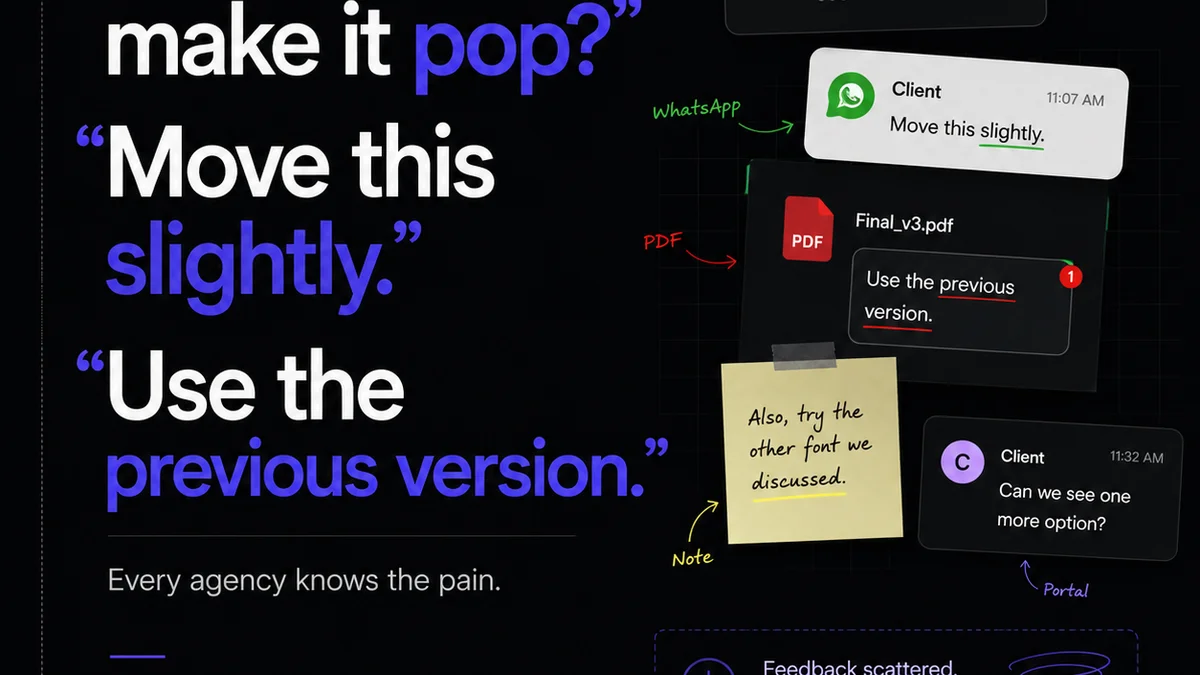
Managing feedback, revisions, and approvals across multiple stakeholders and projects can quickly devolve into chaos. This chaos is the enemy of effective QA.
Revue provides a centralized hub designed to bring clarity and control to this process.
Instead of sifting through endless email threads or Slack messages, all client feedback is captured in one place, linked directly to the specific creative asset being reviewed. This makes it easy to:
- Track Feedback: See exactly who said what, when, and on which version.
- Manage Revisions: Clearly understand the scope of requested changes and their impact.
- Streamline Approvals: Get clear sign-offs, reducing ambiguity and preventing scope creep.
- Ensure Consistency: Maintain a clear audit trail, crucial for QA and future reference.
- Conduct Quality Checks: Use the platform to perform systematic reviews against the brief and feedback history.
By centralizing communication and version control, Revue helps ensure that no feedback gets lost and that the final output accurately reflects the agreed-upon scope and quality standards.
6. Final Thought
Creative QA isn't a bureaucratic hurdle designed to slow down your production pipeline. It's the engine that drives client satisfaction, protects your profitability, and builds a lasting agency reputation.
Are you treating it as a critical strategic function, or just another task to check off a list?
Frequently asked questions
What is the difference between creative review and creative QA?
Creative review often focuses on subjective aspects like aesthetics and initial concept alignment. Creative QA is a more systematic, objective process that checks for adherence to technical specifications, brand guidelines, accessibility standards, and overall functional integrity before delivery.
How can a small agency implement effective creative QA without a dedicated team?
Start by embedding QA into existing roles. Assign specific QA responsibilities to creative leads, project managers, and copy editors. Develop standardized checklists tailored to your most common project types. Utilize project management tools to track feedback and versions.
What are the key benefits of strong creative QA for an agency?
Key benefits include reduced errors and rework, increased client satisfaction and trust, protection of profit margins by avoiding costly fixes, enhanced team efficiency, and a stronger agency reputation for reliability and high-quality output.
How does accessibility fit into creative QA?
Accessibility is a critical component of modern creative QA. It involves ensuring that digital assets are usable by people with disabilities, adhering to standards like WCAG. This includes checks for color contrast, keyboard navigation, alt text for images, and semantic HTML structure.