Everyone assumes quality assurance (QA) in a creative agency means a final, nail-biting review before a client sees the work. You gather the team, check for typos, make sure the logo isn't upside down, and cross your fingers.
None of that is wrong. But it’s incomplete.
It’s a band-aid on a bullet wound.
The hard truth is that effective QA isn't a last-minute scramble. It’s a continuous process woven into the fabric of your entire creative workflow, starting from the moment a project brief lands on your desk.
1. The Illusion of the Final Check
Think about the typical agency process. Concepts are developed, designs are made, copy is written. Then, at some point, someone says, “Okay, let’s do QA.” This usually means:
- A mad dash to find errors.
- A subjective “does it look good?” debate.
- A race against the clock before the client deadline.
This approach is fundamentally flawed. It treats quality as an add-on, a gate at the exit, rather than a core component of creation.
By the time you reach this “final check,” most of the errors are baked in. Fixing them late is expensive, stressful, and often leads to compromises.
The Cost of Late QA
What happens when QA is an afterthought?
- Scope Creep by Accident: Small fixes snowball into larger revisions, pushing timelines and budgets.
- Client Frustration: They catch things you missed, eroding trust and making them feel like they're doing your job.
- Team Burnout: Constant last-minute fire drills drain morale and creativity.
- Compromised Output: Rushed fixes rarely match the original intent or quality.
It’s a recipe for disaster, not stellar creative work.
2. Building Quality In, Not Bolting It On
The real shift in thinking is from “checking quality” to “building quality.” This means integrating checks and balances at every stage.
Briefing: The Bedrock of Quality
Quality begins with absolute clarity. If the brief is vague, the output will be flawed, no matter how many eyes look at it later.
- Crystal-Clear Objectives: What does success *actually* look like? Quantifiable if possible.
- Defined Audience: Who are we talking to, and what resonates with them?
- Mandatories & Constraints: Legal, brand, technical – get these nailed down upfront.
A robust briefing process is your first line of defense against errors and misalignment.
Concepting & Strategy: Aligning the Vision
Before pixels are pushed or words are set, ensure the core idea is sound and aligned with the brief.
- Internal Concept Reviews: Do the proposed concepts directly address the brief’s objectives?
- Strategic Alignment: Does the approach make sense for the target audience and market?
- Risk Assessment: Are there any potential pitfalls or misinterpretations we need to address now?
This isn't about finding fault; it's about validating the direction.
Creative Development: Iterative Quality Checks
As work progresses, quality checks should be bite-sized and frequent.
- Milestone Reviews: Instead of one big review, have smaller checks at key milestones (e.g., wireframes approved, first draft copy, initial design comps).
- Peer Reviews: Encourage designers to review each other’s work *during* the process, not just at the end.
- Copyediting as You Go: Don't wait for a final draft. Copyeditors should be involved from the early stages of content creation.
This iterative approach catches deviations early when they are easiest and cheapest to fix.
Technical & Functional QA: Early and Often
For digital projects, technical QA is not just a final step. It’s a continuous build.
- Component Testing: If you're building a website, test individual components (buttons, forms, navigation) as they are developed.
- Cross-Browser/Device Testing: Start this early. Don't wait until the entire site is built.
- Accessibility Checks: Integrate accessibility from the start, not as a patch-up job.
These checks prevent the cascading issues that plague late-stage development.
3. The Human Element: Culture Over Checklist
Process is crucial, but culture is king. A culture of quality means everyone feels responsible.
Shared Ownership
QA shouldn't be a siloed department or a single person's job. It's everyone's responsibility.
- Empower Junior Staff: Encourage them to question things and speak up if something doesn't seem right.
- Client Collaboration: For certain projects, involve clients in more frequent, structured feedback loops earlier on.
- Post-Mortems Focused on Learning: When errors *do* slip through, analyze *why* without blame. What process gap allowed it?
This fosters a proactive mindset.
Clear Communication Channels
Misunderstandings are a primary source of errors. Ensure feedback is clear, actionable, and tracked.
- Standardized Feedback Formats: Make it easy for reviewers to provide consistent, structured feedback.
- Centralized Feedback Hub: Avoid scattered email chains and Slack messages.
- Context is Key: Ensure reviewers have all necessary project context when providing feedback.
Ambiguity breeds mistakes. Clarity kills them.
4. Where Revue Fits In
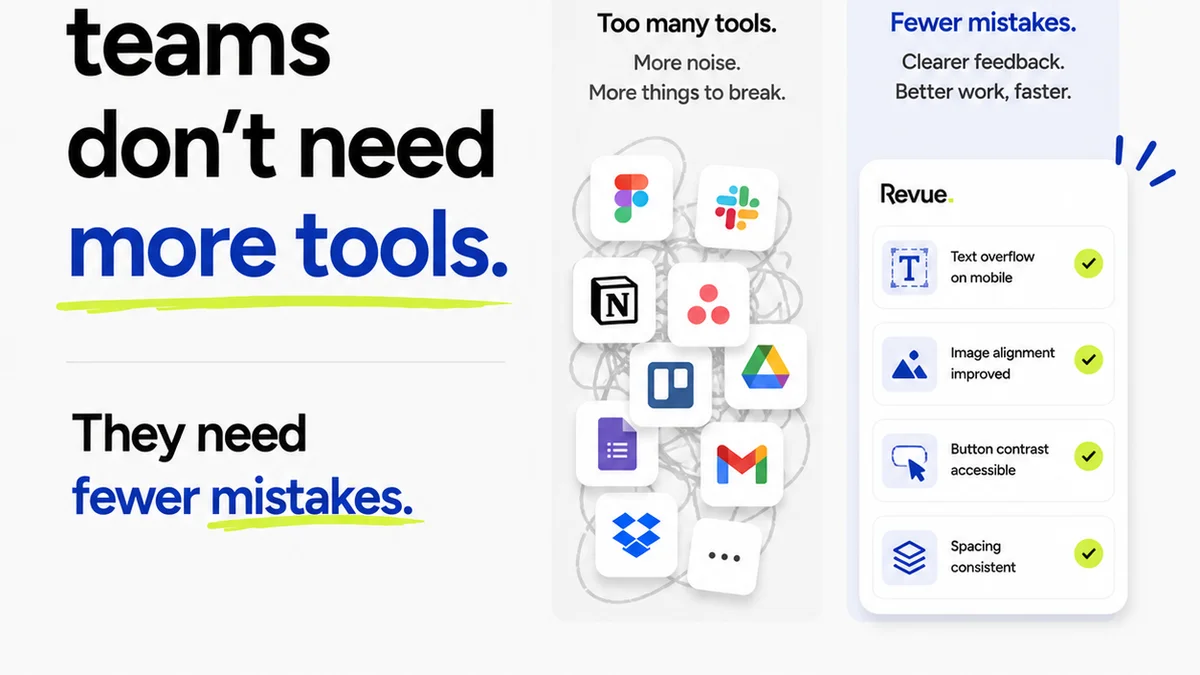
Managing a truly integrated QA process across multiple projects and teams can be chaotic. This is where a tool like Revue becomes indispensable.
Revue isn't just about collecting feedback; it's about structuring it and making it visible throughout the project lifecycle.
- Centralized Feedback: All client and internal feedback lives in one place, linked to specific assets. No more hunting through emails.
- Revision Tracking: See the history of changes, understand the rationale, and track approvals at every stage. This visibility is a form of continuous QA.
- Version Control: Ensure everyone is working off the latest approved version, preventing outdated assets from being reviewed or delivered.
- Streamlined Approvals: Formalize sign-offs at key milestones, acting as built-in quality gates.
By integrating Revue into your workflow, you move from reactive error-finding to proactive quality building. You create a clear, auditable trail of decisions and feedback, embedding quality assurance into every step.
5. Final Thought
The rush to the finish line often obscures the real work of creative production. Quality isn't a final polish; it's the integrity of the entire structure.
Are you building quality into your projects from the ground up, or are you just hoping to catch the cracks before the client does?
Frequently asked questions
When is the best time to start quality assurance in a creative project?
Quality assurance should begin at the very start of a project, during the briefing phase, and continue iteratively throughout concepting, development, and final review. It's about building quality in, not checking it at the end.
What are the risks of only doing QA at the final review stage?
Relying solely on final review QA leads to costly late-stage fixes, scope creep, client frustration, team burnout, and potentially compromised creative output. Errors are much harder and more expensive to fix once work is nearly complete.
How can a creative agency foster a culture of quality assurance?
Foster quality by making it a shared responsibility, not just a task for one person. Encourage clear communication, empower junior team members to speak up, and conduct blame-free post-mortems to learn from errors.
How does a tool like Revue help with early QA?
Revue centralizes feedback, tracks revisions, and streamlines approvals at key milestones. This visibility and structure embed quality checks throughout the workflow, making QA a continuous process rather than a final hurdle.