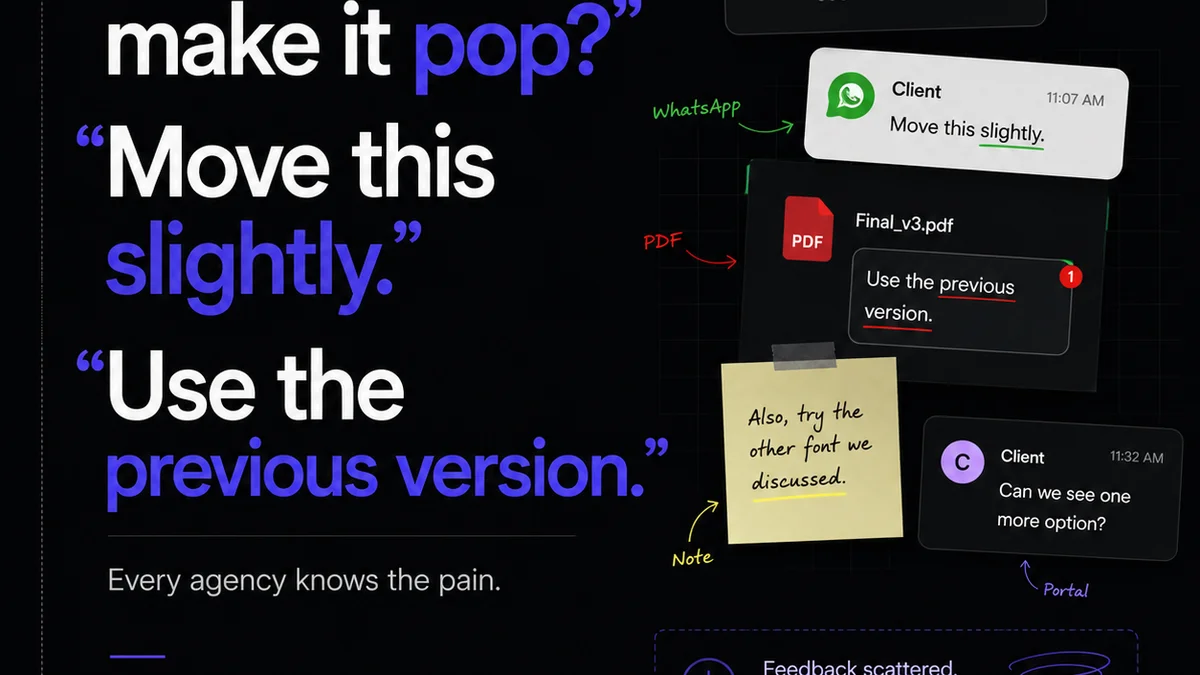
Everyone talks about creative quality. It’s the holy grail, right? The thing that separates the agencies that soar from the ones that… well, don't.
You probably assume that if you’re hiring good people, you’re automatically getting good creative. That gut instinct and a strong portfolio are enough to guarantee excellence.
None of that is wrong. But it’s incomplete.
The hard truth? If you’re not *measuring* creative quality, you’re operating on hope, not a system. And hope, as they say, is not a strategy.
What happens when you can’t quantify what ‘good’ looks like? You’re flying blind.
1. The Slippery Slope of Subjectivity
When quality is purely subjective, it becomes a moving target. What one client’s cousin’s friend loves, another might hate. What you thought was a slam dunk yesterday might be a “meh” today.
This isn’t about client taste. It’s about internal drift.
- Decisions get made based on who shouts loudest.
- The most confident voice, not necessarily the best idea, wins.
- Designers and copywriters second-guess their own instincts, leading to bland, safe work.
- Feedback becomes a vague, unhelpful mess.
You end up with a portfolio that’s inconsistent. Some pieces might be brilliant, others… not so much. You can’t reliably replicate success.
The 'We'll Know It When We See It' Trap
This is the siren song of creative teams everywhere. It sounds sophisticated. It sounds like artistic freedom.
It’s usually an excuse for a lack of clarity.
Without defined parameters,
Frequently asked questions
Why is measuring creative quality so difficult for agencies?
It's difficult because creativity is inherently subjective. Moving beyond gut feelings requires establishing objective criteria, defining success metrics, and implementing systems to track them, which many agencies haven't prioritized.
What are the signs that an agency isn't measuring creative quality?
Signs include inconsistent project outcomes, frequent scope creep due to unclear feedback, high revision rounds, client dissatisfaction despite subjective 'liking' the work, and internal team burnout from subjective decision-making.
How can agencies start measuring creative quality?
Begin by defining clear objectives for each creative deliverable. Establish key performance indicators (KPIs) tied to those objectives and client goals. Implement feedback and revision tracking tools to monitor progress against these metrics.
Does measuring creative quality stifle creativity?
Not if done correctly. Measurement should focus on whether the creative achieves its strategic goals, not on dictating artistic style. Clear, measurable objectives can actually free up creatives to focus on innovative solutions within defined parameters.